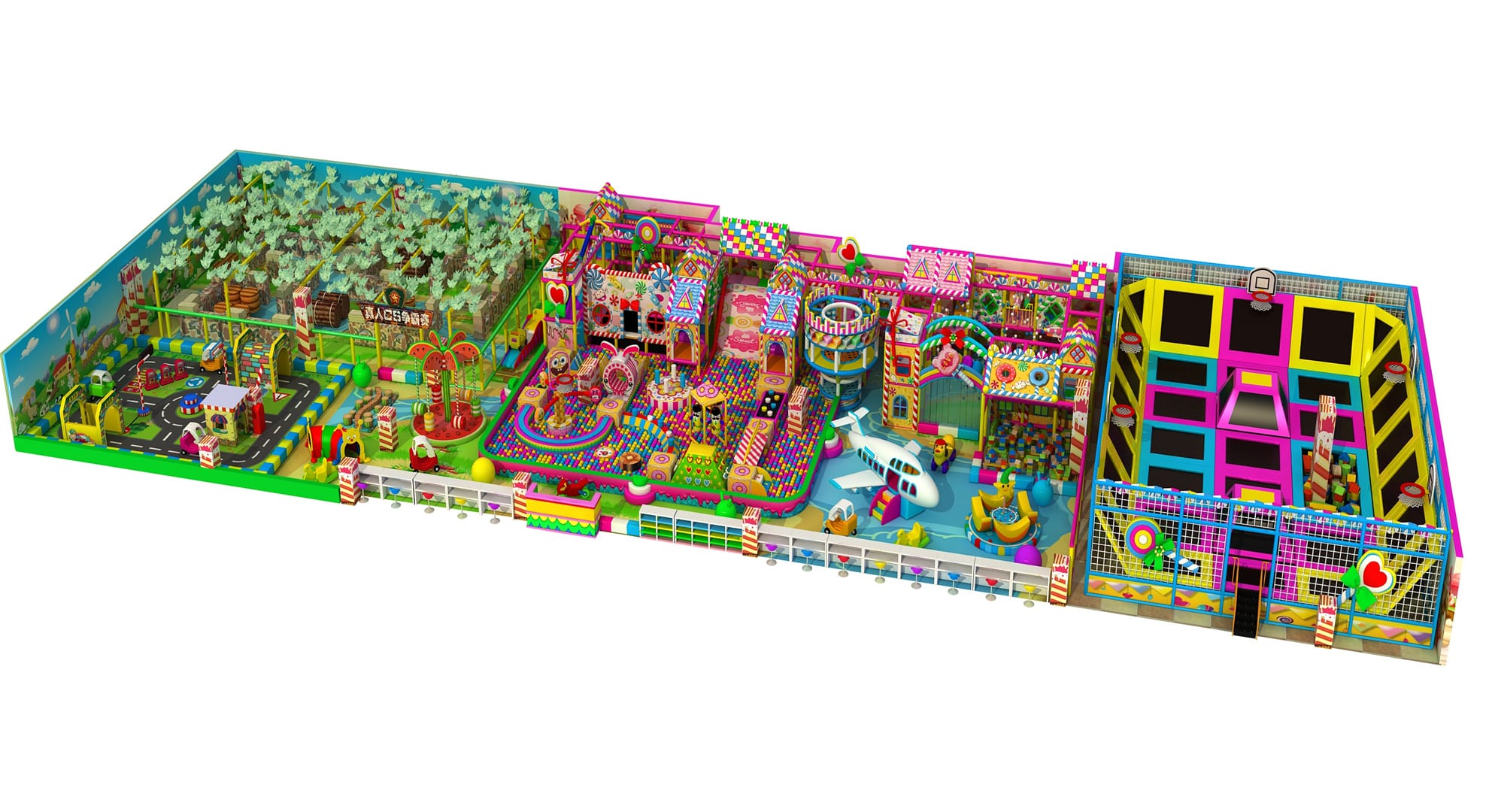
If you want to open a profitable indoor adventure park, you need to plan well, lay out the venue, select the equipment, and set the budget in advance. Many beginners simply place orders for the equipment without fully understanding the venue and the target audience. Only when the initial preparations are well done can you retain repeat customers and stabilize your income.
The following are practical suggestions from planning to opening, applicable to both shopping malls and amusement parks, which can help you avoid wasting funds.
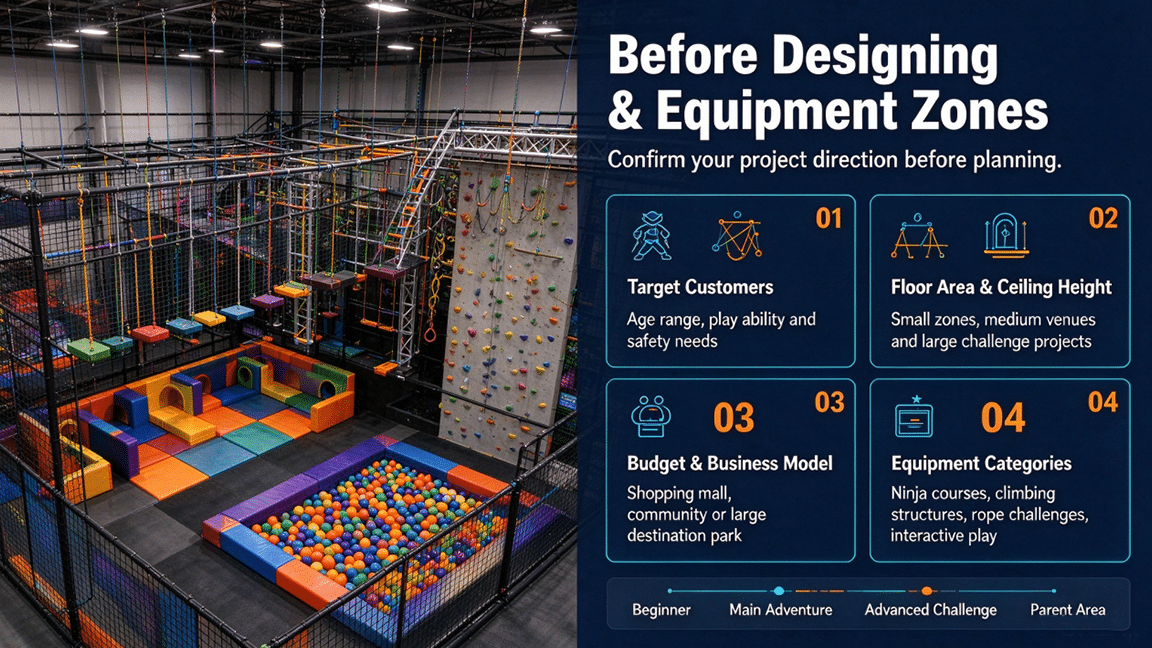
You cannot pick commercial playground equipment until you lock in your basic project facts. Small wrong choices in this phase create big troubles later for your indoor adventure park.
Think hard about who will visit your adventure park. Most venues welcome mixed groups: kids, teens, and family groups.
Study nearby competing play centers too. Offer something different so your indoor adventure park stands out in the local market.
Available usable play space shapes almost every decision for your adventure park. Ceiling height is equally important for climbing and high rope adventure play.
Low ceilings stop you from installing tall climbing or rope structures. Measure clear inner height before you sign any lease. Do not trust building drawings alone; visit and measure the space yourself.
The available recreational area is the most important factor influencing the cost. Prepare two budgets: the cost of equipment and the total project expenses.
Determine the main profit channels: individual ticket sales, birthday parties, group reservations, or nearby food sales. The profit model will directly determine the overall design of the park.
Good levels are designed with different difficulties, suitable for people of all ages. No need to prepare all the equipment; just select based on the target audience and the location.
Ninja obstacles are a popular attraction in the park, with adjustable difficulty levels. Many owners will hold small challenge events to attract repeat customers and also shoot short videos for promotion.
The atmosphere of rope and climbing walls is very strong. The quality of the steel frames and safety nets must be guaranteed. The low net area is suitable for children, while the high walls are more popular among teenagers.
Swings, hanging railings, balance beams, moving hurdles, etc., can be mixed and matched in different difficulty levels. The high areas must be covered with soft cushioning pads to ensure the safety of tourists’ bodies.
Projection and light-sensitive interactive games can be installed to enhance the fun of the visit. The effect of combining this equipment with physical obstacles is very good. Remember to conduct regular software maintenance.
Reasonable division of areas can enable tourists to enjoy their visit smoothly and safely, gradually progressing from simple activities to more challenging ones, and avoiding the crossing of crowds.
Mainly suitable for young children or novice players, the obstacles are close to the ground and are equipped with soft padding for protection. Let tourists get familiar with the environment first, and then gradually build their confidence in the game.
The core area of the park, featuring ninja tracks and medium-difficulty climbing projects, can be enjoyed by most people.
Reserved for teenagers and experts, with high-difficulty climbing and ninja obstacles. The entrance should be marked with height and age restrictions to ensure the safety of tourists.
This is also very important. The rest area for parents should have a good view and be able to see the playing area. A small coffee corner can be built to enhance the tourists’ experience.
Not every amusement ride works for indoor adventure parks, y’know? Don’t just judge ’em by how they look. Make sure you check these 3 key points before placing an order:
The rides gotta match the age of your main visitor group. If your guests cover a super wide age range, set up separate zones instead of forcing everyone to use the same set of rides.
Estimate the foot traffic during peak hours. Your whole layout needs to fit that many people so no single attraction gets way too crowded. Overloading the rides is a total accident waiting to happen, plus it’ll totally ruin the fun for your visitors.
Commercial adventure park equipment faces heavy daily use. Ask manufacturers about raw‑material details: steel‑pipe thickness, foam density, and PVC quality.
Low‑maintenance designs cut your long‑term running costs for your adventure park.

Your usable play space drives equipment pricing for an indoor adventure park. Below is a clear reference table for commercial playground equipment investment (factory-direct price range:
| Project Scale | Usable Play Area | Equipment Budget (USD) | Factory Unit Price |
| Small Adventure Zone
| Under 200 m²
| 25,000‑60,000
| $120‑280 per m² |
| Medium‑size Project
| 200‑600 m²
| 60,000‑150,000
| $120‑280 per m², partial bulk discount |
| Large Indoor Adventure Park
| Over 600 m²
| 150,000‑300,000+
| Bigger projects get larger bulk discounts to lower per‑unit cost |
Note: these numbers cover commercial playground equipment only. You still need separate money for venue fit‑out, shipping, local installation work, insurance, and operating capital. Always ask your manufacturer for a full detailed quotation for your exact indoor adventure park layout.
Safety sits above fun for any adventure park business. Your commercial playground equipment must meet local market standards such as ASTM or EN safety series.
For daily operations, arrangements should also be made in advance: carry out cleaning work, properly store backup equipment, and train the staff on how to guide visitors to enjoy and participate in these activities. Paying attention to the details can help reduce the occurrence of sudden closures of the park.
Many overseas amusement park owners prefer turnkey all-inclusive services. Choose a reliable manufacturer, and leave the complex matters to them. You only need to be responsible for the local site and marketing.
Send the floor plan and actual photos of the site to the manufacturer. They will consider the actual conditions of the walls, columns, and floor height to determine if the plan can be implemented. Before official production, they will help you eliminate the unfeasible design options.
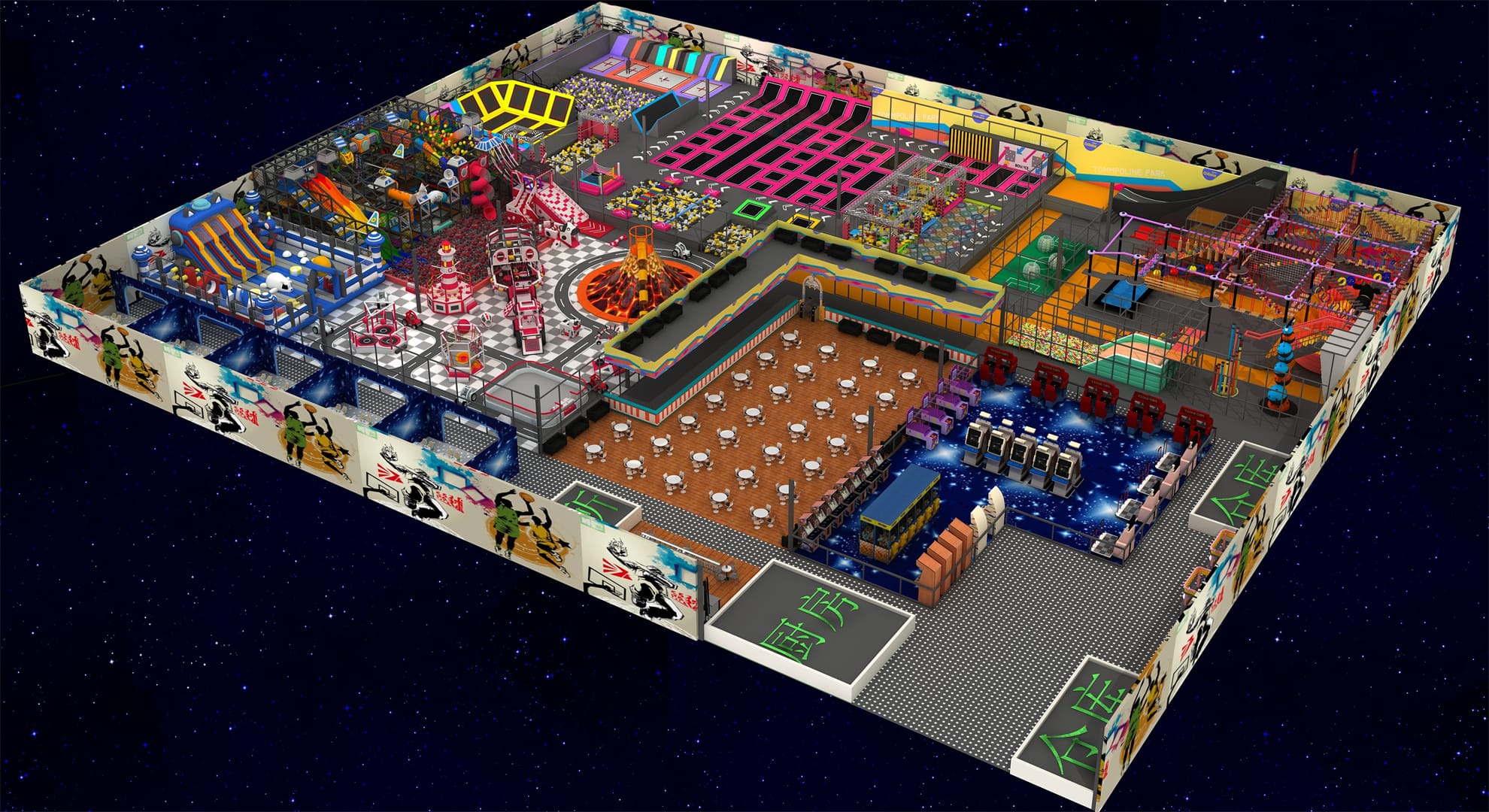
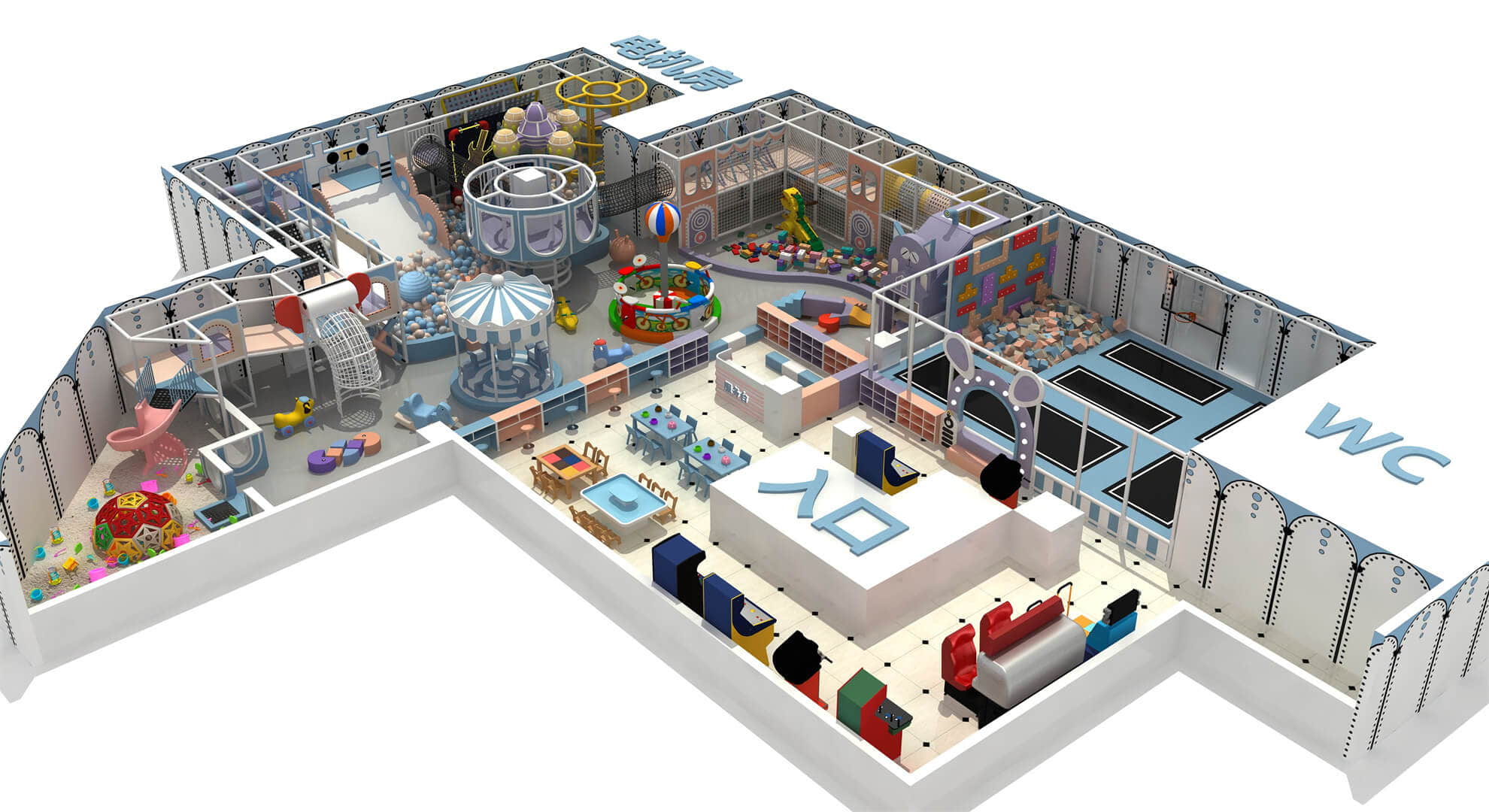
First, provide the floor plan, then add the 3D effect. Even before production, the zoning, color matching, and equipment combination can all be adjusted.
After the plan is confirmed, production begins. The cycle is generally 45-60 days, depending on the size of the project. Reliable manufacturers will conduct a full set of quality inspections before shipment.
The equipment is packed and transported to the designated port according to export standards. Two installation options are available: the manufacturer sends a team or provides remote guidance to local workers. After installation, a final safety test is conducted to meet the opening conditions.
Choosing the right manufacturer is crucial as it directly affects the success of the park. Don’t just focus on the price; the key points to check are as follows:
NanPlay is a reliable partner with 14 years of industry experience. It has successfully implemented over a thousand amusement projects in 50+ countries and can customize park equipment according to your ideas.
New adventure‑park operators often repeat these avoidable errors:
Take extra time in your planning phase to steer clear of these expensive missteps for your indoor adventure park.
Cost mostly depends on usable play‑space size. Small adventure zones sit from $25k‑60k for commercial playground equipment. Medium‑size projects run $60k‑150k, and large indoor adventure parks start above $150k. Remember this excludes rent, building fit‑out, and local labour costs.
You can build a compact indoor adventure park starting below 200 m². Most well‑rounded mixed‑age adventure‑play venues perform best from 300 m² upward. Larger parks over 600 m² support richer zone division and higher visitor capacity.
Balance ninja obstacles, rope‑climbing structures, challenge units, plus beginner‑friendly soft adventure‑play sections. Add interactive features if your budget allows. Always match equipment selection to your target‑customer age groups.
Simple low‑level adventure‑play can work with lower ceilings. Ninja courses and climbing‑based commercial playground equipment usually require higher clear height. Confirm minimum ceiling heights with your manufacturer before you lock your venue contract.
The design phase can take two to four weeks. Manufacturing generally takes 45‑60 days. Then add shipping time plus 7‑30‑day on‑site installation. The full project timeline changes with your indoor adventure‑park scale and global shipping conditions.

Building an indoor adventure park is a great entrepreneurial opportunity. To succeed, you need to have proper planning in the early stage, clear zoning of the venue, safety measures, and high-quality, durable amusement equipment.
If you want to start the project, contact NanPlay. By providing the size of the venue, the target audience, and your budget, you can get free advice and personalized quotes from NanPlay, which will help you create your own park.
Thank you very much for your inquiry! Your trust is our greatest motivation. We are committed to offering playgrounds that combine high quality with affordable pricing. Let us bring vitality to your venue!