21 September 2026
15 September 2026
14 September 2026

14 September 2026
14 September 2026
On the whole, trampoline park franchises still have room for growth in the future. Different market reports estimate the market size is not exactly the same, but the common trend is that the trampoline park market and family entertainment center market are still expanding, and the growth momentum mainly comes from indoor recreation, family entertainment, and experiential entertainment.
More and more investors are beginning to pay attention to trampoline park franchise opportunities, because this business model not only sells tickets, but also increases revenue sources through birthday parties, memberships, food and beverage, school events, and corporate events.
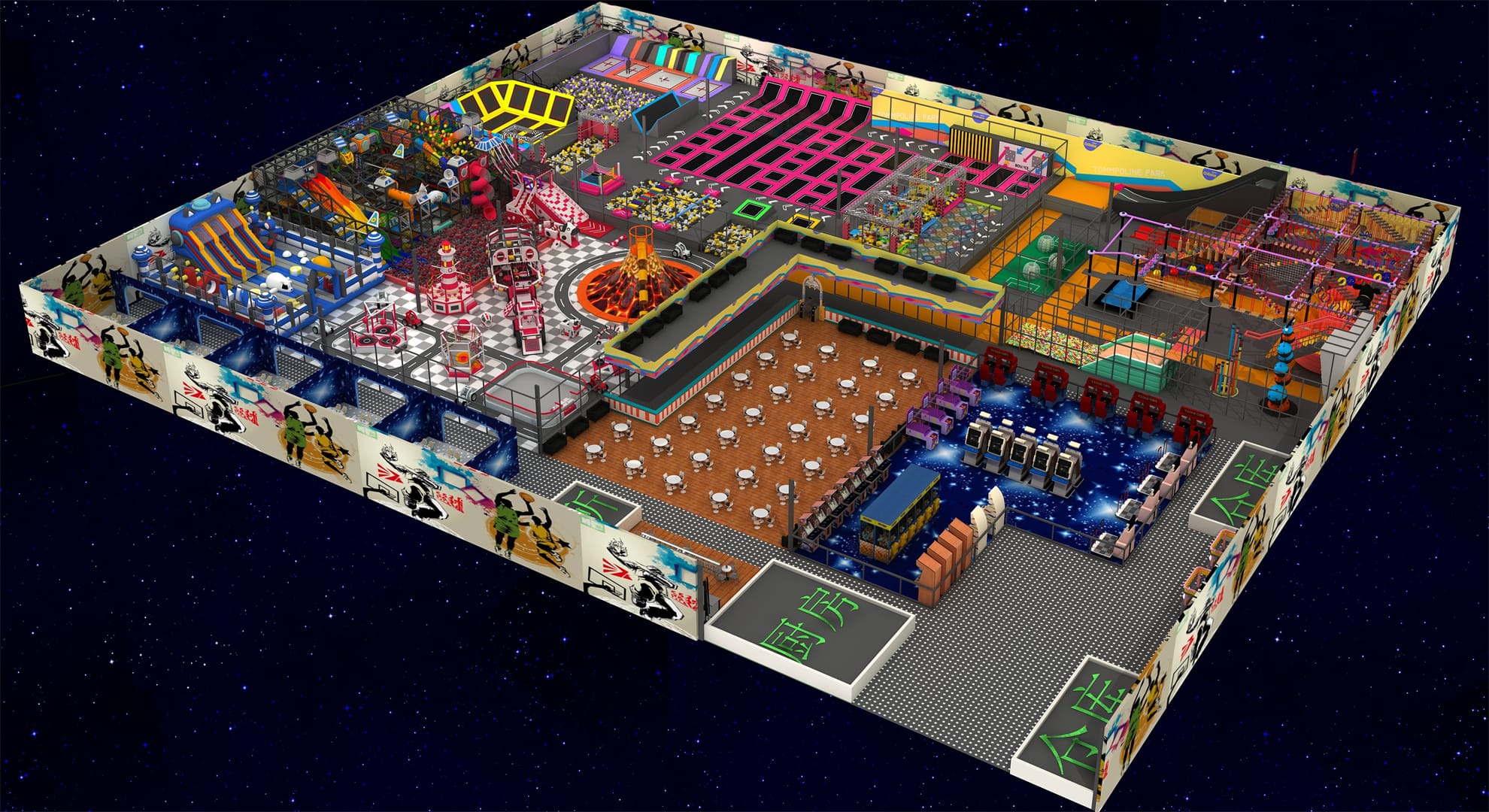
Early trampoline parks mainly relied on open jump areas to attract children and teenagers. Now that the industry is upgrading, many parks have begun to join ninja courses, soft play, arcade games, climbing walls, VR attractions, and cafés, gradually turning to the family entertainment center model.
The future of trampoline parks will not stop at “jumping”. Truly competitive brands will become multi-attraction, technology-driven, membership-based, and experience-focused indoor entertainment destinations.

Household consumption is still the most important driver in trampoline park industry trends. Parents need an indoor venue that is safe, clean, controllable, and suitable for children to develop physical strength, especially in cities with bad weather and limited outdoor activities.
Compared with traditional playgrounds, trampoline park franchises provide active recreation. It has both entertainment value and physical activity value, so it is easier to attract children, teenagers, and young adults.
Nowadays, consumers don’t just want to buy an admission ticket but want to buy an experience. IAAPA also emphasizes that indoor entertainment is changing family fun, and affordable, memorable, and social attractions will be more popular.
For franchise brands, standardized design, training, booking system, safety process, and marketing package can help new investors open stores faster. Therefore, trampoline park franchise opportunities will be more concentrated on the turnkey model and regional expansion in the future.
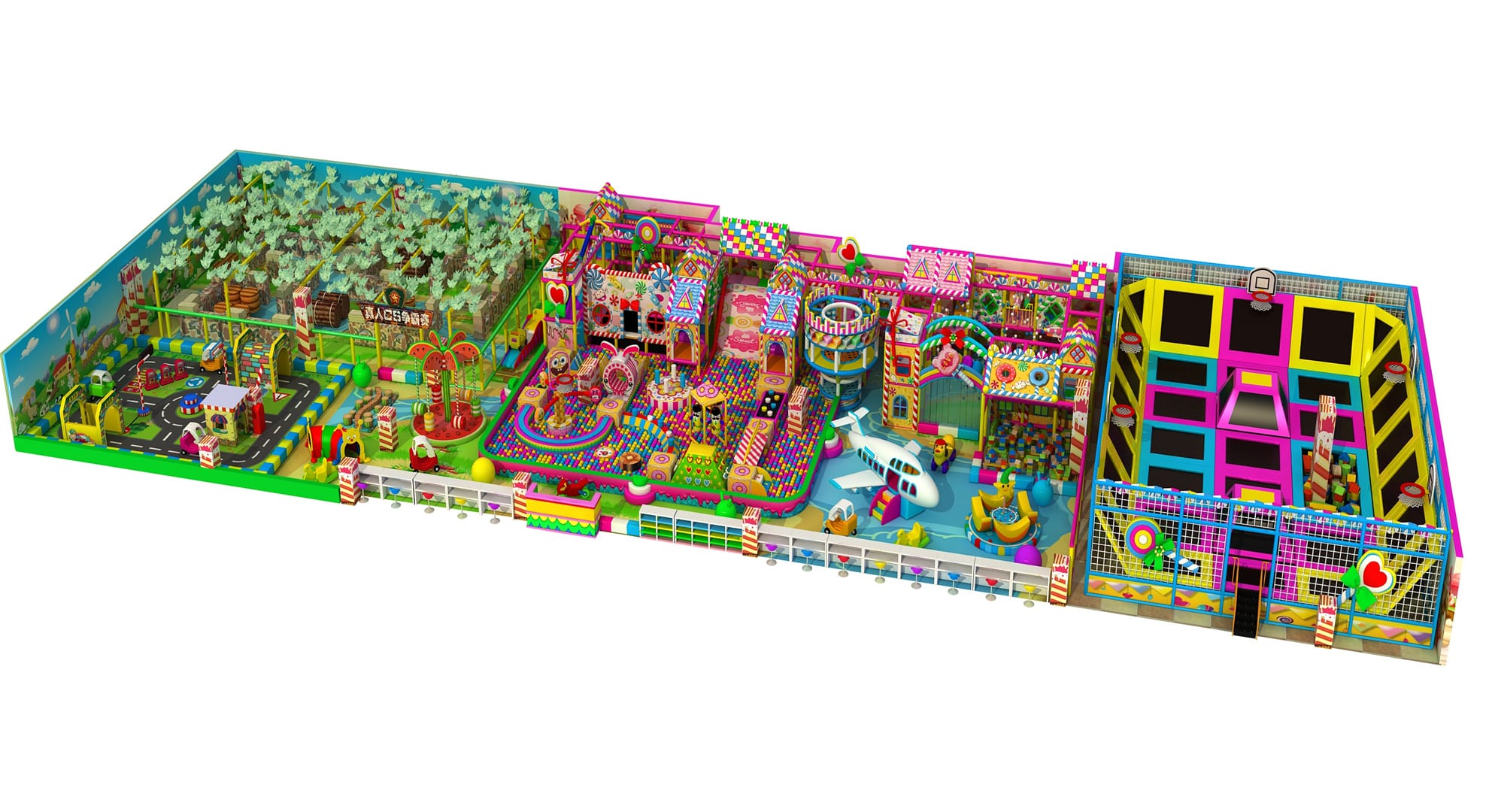
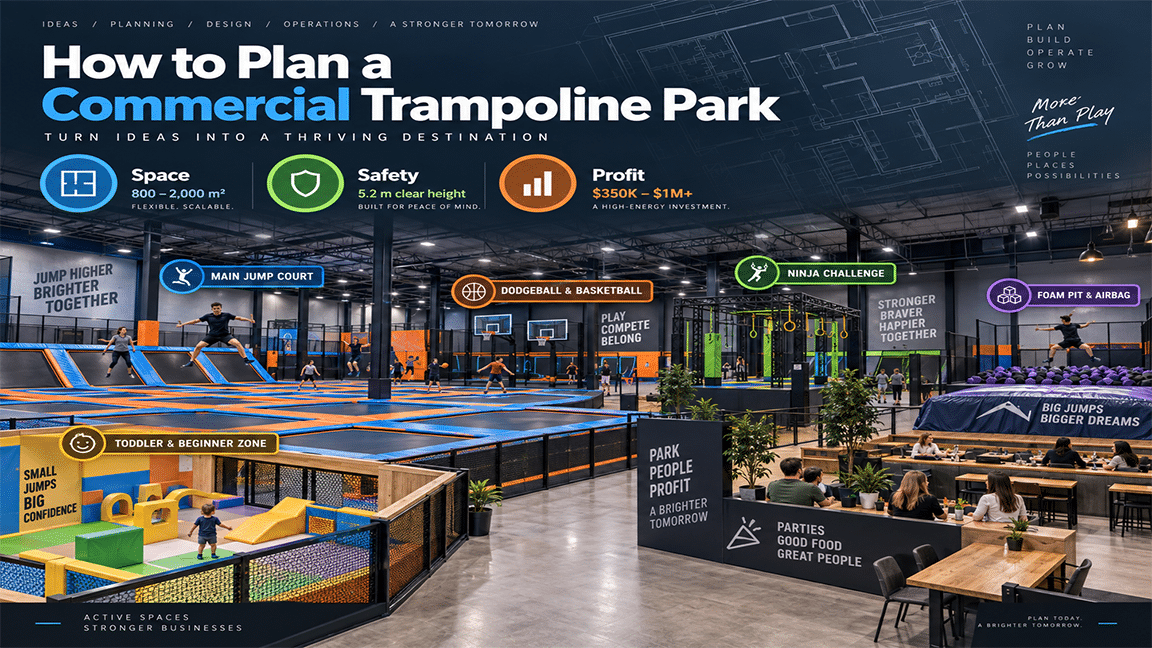
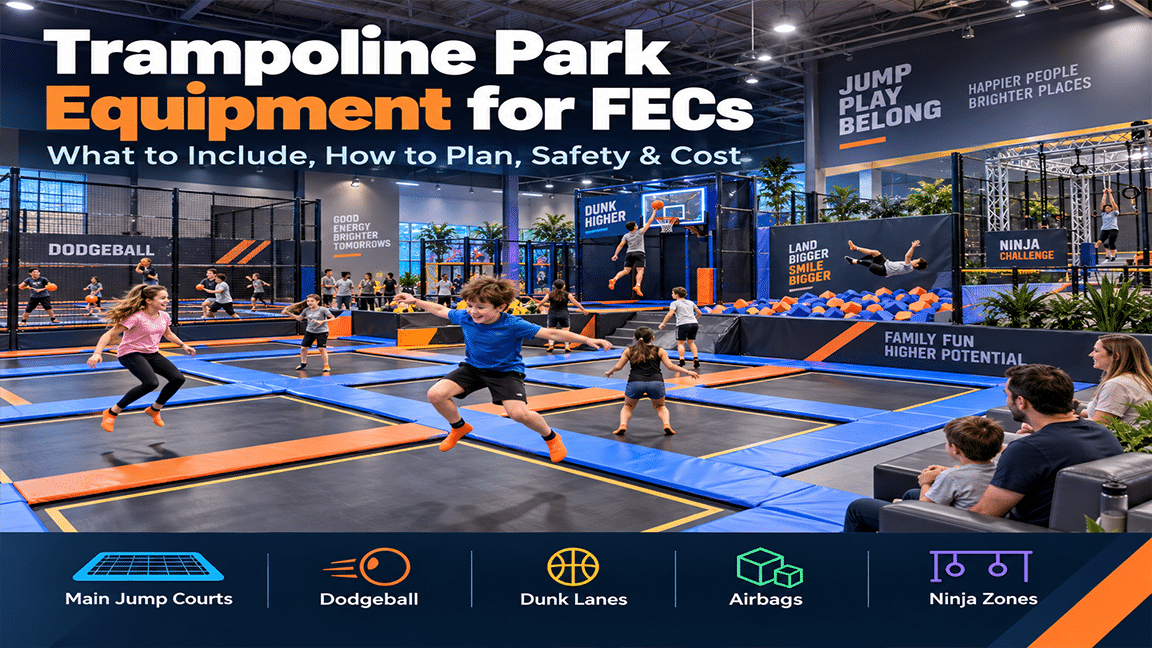
The attractiveness of a single trampoline zone is declining. In the future, stronger parks will add dodgeball courts, basketball dunk lanes, foam pits, ninja warrior courses, soft play, arcade and party rooms, so that customers can stay longer.
Technology integration will change the operation mode of the park. Online booking, digital waiver, CRM system, capacity control, and customer data analysis can help operators better predict peak hours, control people flow, and increase repeat visits.
In the future, the membership model will become more and more important. Compared with a one-time ticket, a monthly membership can bring more stable cash flow and improve customer retention. For the franchisee, this is safer than relying entirely on weekend traffic.
Through customer data, parks can push birthday party packages, after-school deals, family passes, or teen night according to different customer groups. The future competition is not who has the largest venue, but who knows their customers better.
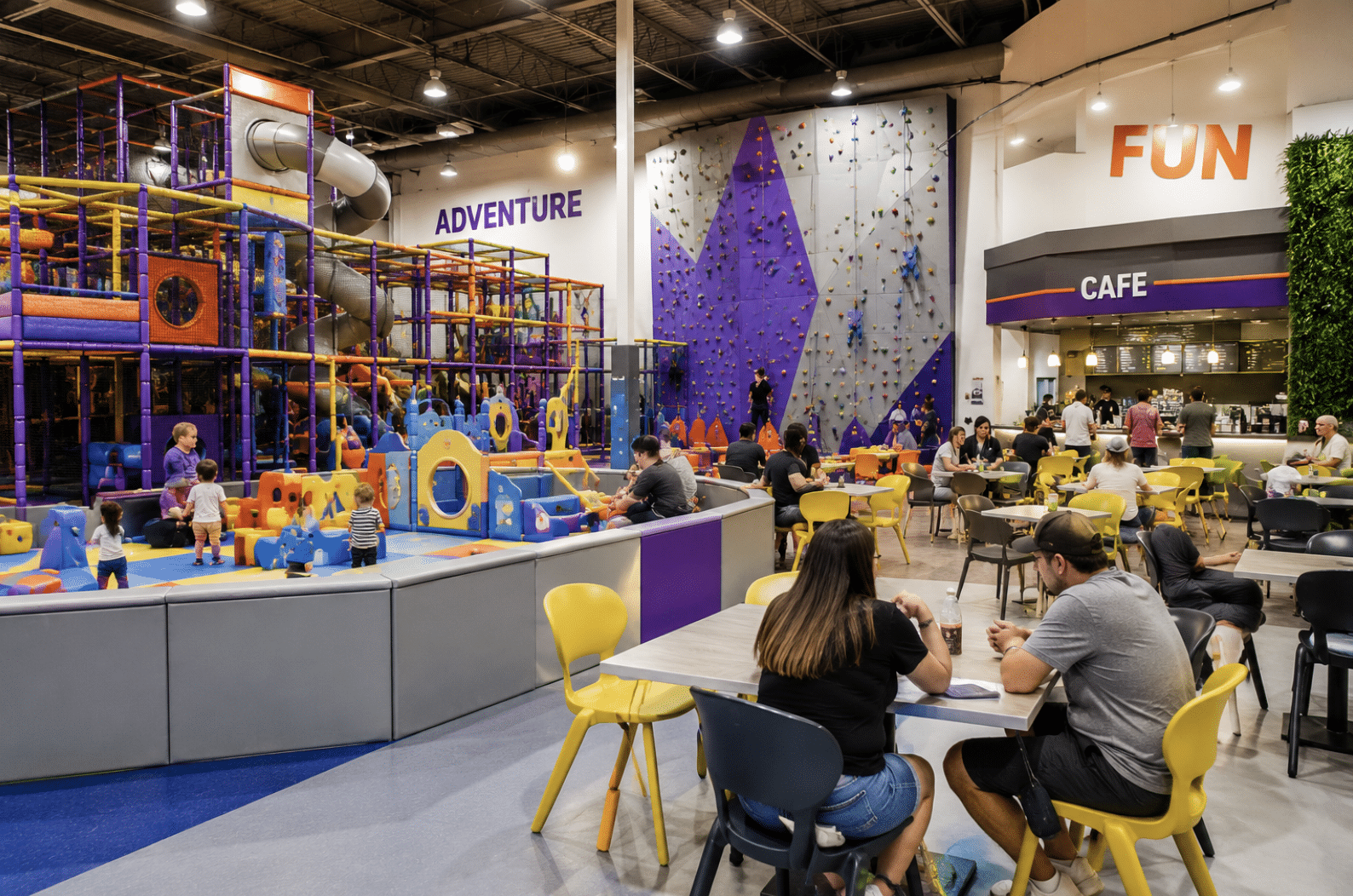
Family entertainment center trends show that trampoline parks are becoming a hybrid entertainment space. A successful venue may include trampoline, arcade, soft play, climbing, café, and event space at the same time, not a single jumping area.
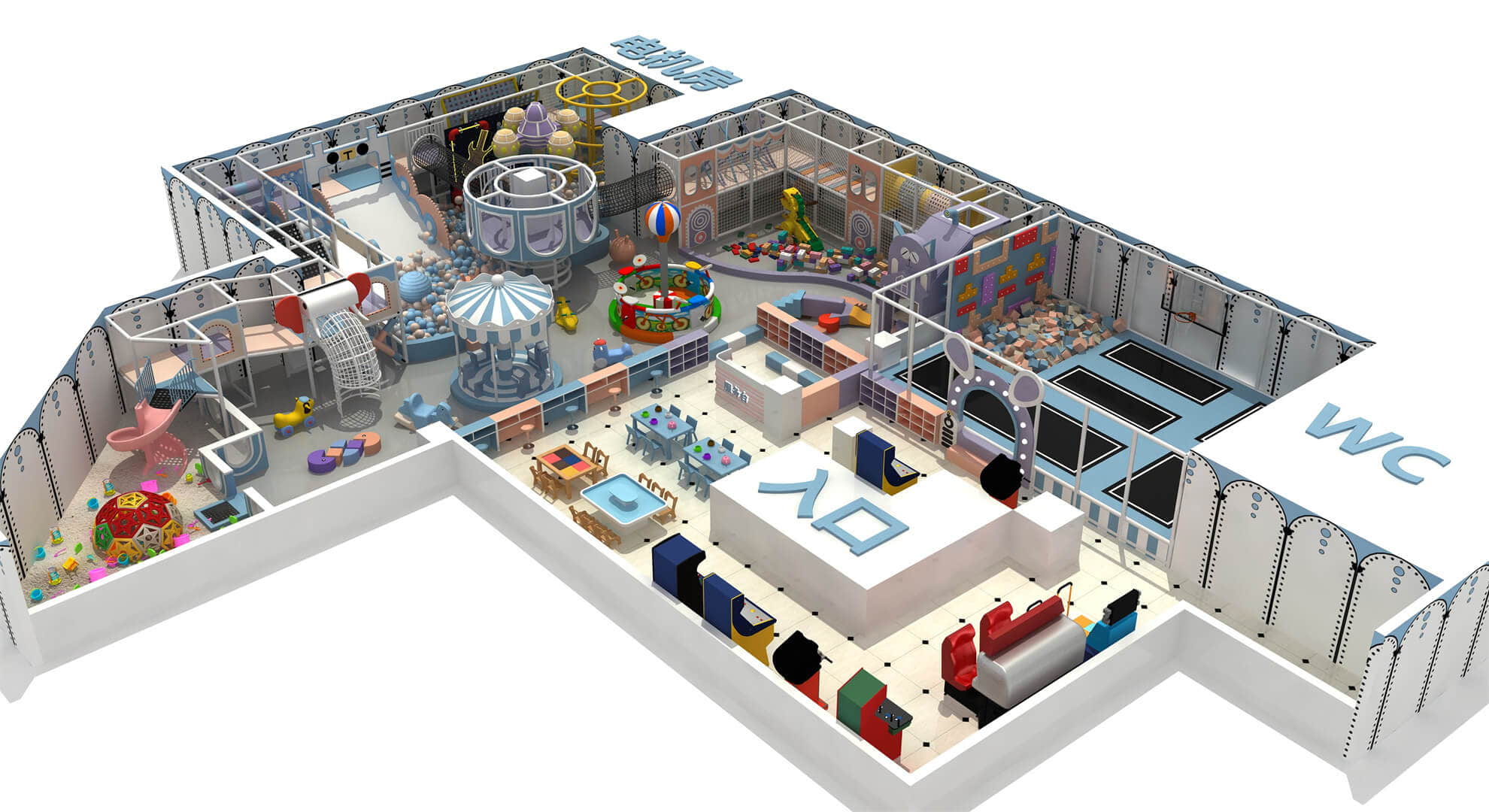
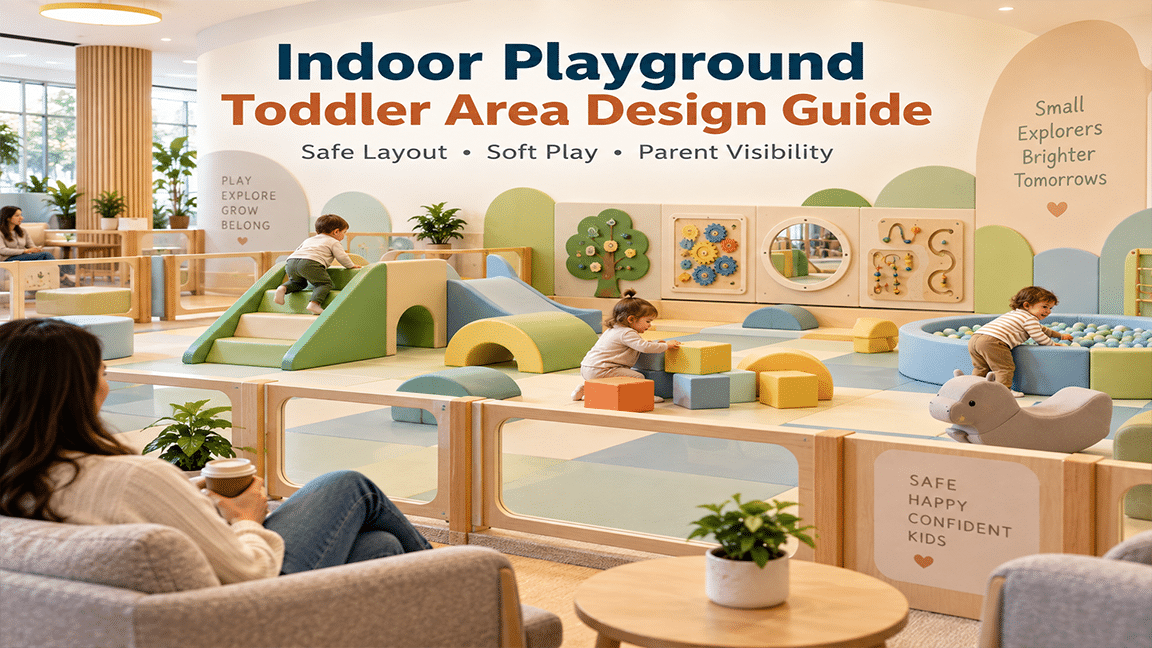
In the future, trampoline park franchises cannot only serve children. They need to design a toddler zone, a kids zone, teen challenges, a parent seating area, and adult-friendly social attractions to cover a wider age group.
Food and beverage integration will become an important part of revenue. Parents need coffee, snacks, and light meals when their children play; birthday parties also need packaged meals. If F&B is done well, it can significantly increase per-customer spending.
Birthday parties, school trips, team building, and private events will continue to promote revenue growth. For many parks, party rooms are not an additional area, but a core profit center.
In the future, AI-powered customer analytics can help franchise operators analyze customer frequency, popular time slots, membership usage, and promotion response. In this way, marketing is no longer just a discount, but a more accurate conversion.
A smart booking system can reduce queues, improve customer experience, and control peak-time capacity. For trampoline parks, capacity management is also directly related to safety, staff allocation, and cleaning schedule.
Digital waiver has become the basic configuration of many indoor parks. In the future, the waiver system will be connected with booking, customer profile, safety briefing, and incident report to make risk management more systematic.
Automation tools can be used for staff scheduling, inventory tracking, equipment inspection reminders, and maintenance logs. In this way, franchisees can reduce manual work and spend more time on customer service and local marketing.
Many parents want their children to watch screens less and participate in more physical activities. Trampoline parks just meet the needs of screen-free, active, and social, which is also an important reason for the persistence of future demand.
In the future, consumers will prefer group-based entertainment, such as friends gathering, birthday parties, school activities, and corporate team building. A trampoline park is not only a children’s play space, but also a social venue.
In the future, immersive entertainment will be more popular. For example, glow night, music jump session, interactive games, projection walls, and themed events can make the traditional jumping experience fresher.
The biggest advantage of the indoor venue is year-round operation. Whether the weather is hot, cold, or rainy, an indoor trampoline park can operate stably, which is attractive to shopping malls, urban leisure centers, and community areas.
In the future, advanced safety technologies will be more widely applied to capacity control, camera monitoring, incident reporting, and maintenance tracking. Safety is not only an equipment issue but also includes staff supervision and operational processes.
Commercial trampoline courts need to pay attention to the relevant safety standards. ASTM F2970 applies to institutional trampoline courts in entertainment, recreation, and amusement facilities, involving design, operation, maintenance, and inspection. Working with certified equipment suppliers like NanPlay can help operators meet these standards from the start.
Staff training will be the key to franchise success. Even if the equipment is qualified, if the supervision is not enough, the rules are unclear, and the incident response is slow, it will also increase the liability risk.
Eco-friendly Park design will be more important in the future. LED lighting, energy-efficient HVAC, recyclable materials, durable padding, and low-maintenance flooring can help parks reduce long-term operating costs.
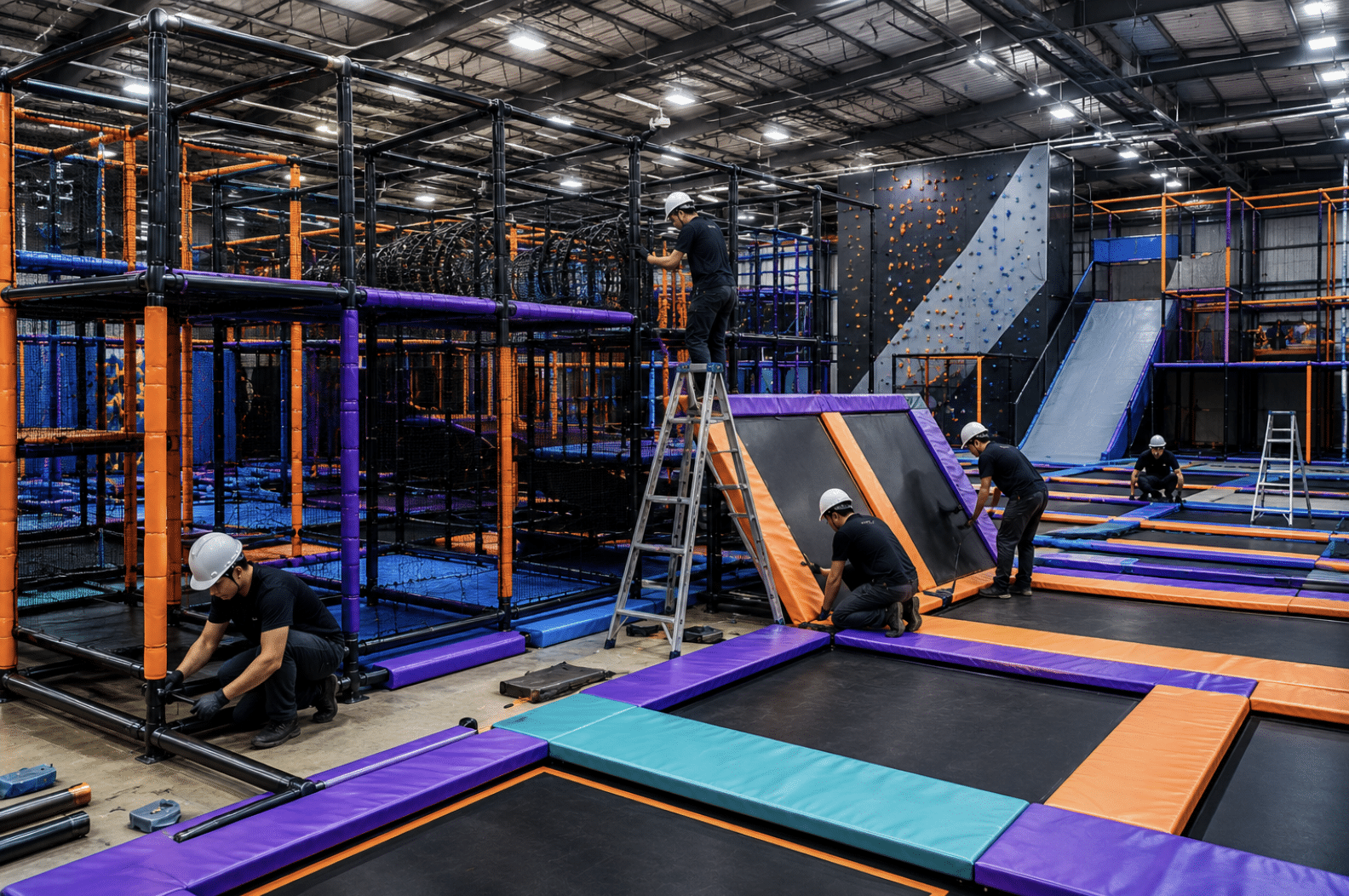
The advantage of trampoline park franchises is scalable. The headquarters can provide brand system, site planning, equipment layout, training manual, booking software, and marketing support, making it easier for franchisees to copy the successful model. Equipment and design partners like NanPlay can further support this by providing standardized playground solutions across multiple locations.
In areas where urbanization, shopping mall redevelopment, and indoor leisure demand are growing, trampoline park franchise opportunities still exist. Especially in some cities in the Middle East, Asia, and Europe, multi-attraction indoor parks still have room for development.
In the future, investors will prefer the turnkey franchise model. Because novice investors usually lack experience in venue design, supplier selection, safety compliance, and operational training, the turnkey model can reduce early-stage mistakes. NanPlay, for example, offers end-to-end turnkey solutions covering design, manufacturing, installation, and after-sales support, which makes it easier for new investors to get started.
ROI depends on location, rent, ticket pricing, membership conversion, party revenue, labor cost, and equipment maintenance. A park with long-term competitiveness cannot rely only on opening hype, but also on repeat visits and diversified revenue.
As more brands enter the market, the competition will become stronger and stronger. If an ordinary trampoline park does not have differentiated attractions, strong service, and local marketing, it is easy to be replaced by newer entertainment centers.
Rent, utilities, insurance, labor, and maintenance costs may rise. In the future, franchisees need to control the cost structure more carefully, instead of just focusing on opening sales.
Safety and insurance will continue to affect the industry. A trampoline park is a high-activity venue. Operators must pay attention to safety rules, equipment inspection, staff training, and documentation.
It is easy for consumers to lose interest in a single attraction. Therefore, in the future, parks need to update games, events, lighting, themes, and challenge areas regularly to maintain a fresh experience.
The first step of future-proofing is to invest in technology. Online booking, CRM, digital waiver, membership system, and data dashboard can improve operating efficiency and help the park better understand customer behavior.
Don’t just rely on a trampoline. Soft play, ninja course, arcade, climbing wall, café, party room, and school program can be added to form a real family entertainment center.
A membership ecosystem is not just a monthly card. It can include member-only events, birthday discounts, priority booking, family packages, and loyalty points, so that customers have a reason to keep coming back.
The core of future competition is retention. Park needs to change families from one-time visitors to loyal customers through a clean environment, friendly staff, a sense of security, stable activity updates, and personalized offers.
It can be profitable, but not all parks make money automatically. Factors that really affect profit include location, rent, labor cost, insurance, attraction mix, party business, membership conversion, and customer retention.
The main trends include multi-attraction parks, family entertainment center trends, technology integration, membership model, immersive experience, safety management, and eco-friendly design.
Technology is changing booking, waiver, capacity control, customer analytics, membership management, and staff scheduling. In the future, a smart park will be easier to improve efficiency than a traditional park.
The main challenges include market competition, rising operational costs, safety regulations, insurance pressure, and attraction innovation needs.
It is difficult to maintain customer interest for a long time with a single trampoline attraction. After adding arcade, soft play, ninja course, food and beverage, party rooms, and events, the park can serve more age groups and increase revenue per visit.
In general, the future of trampoline parks will develop around multi-attraction, technology, membership, safety, and family entertainment center model.
Successful trampoline park franchises in the future will not only rely on equipment, but also on customer experience, smart operations, data-driven marketing, and continuous attraction updates.
For investors, trampoline park franchise opportunities still exist, but they are more suitable for investors who are willing to operate for a long time and attach importance to the brand system, safety compliance, and customer retention.
In the long run, trampoline park industry trends show that the industry is changing from a simple jumping venue to a full-service indoor entertainment business. Franchise brands that can keep up with family entertainment center trends will have a better chance of maintaining competitiveness in the future market.
Thank you very much for your inquiry! Your trust is our greatest motivation. We are committed to offering playgrounds that combine high quality with affordable pricing. Let us bring vitality to your venue!