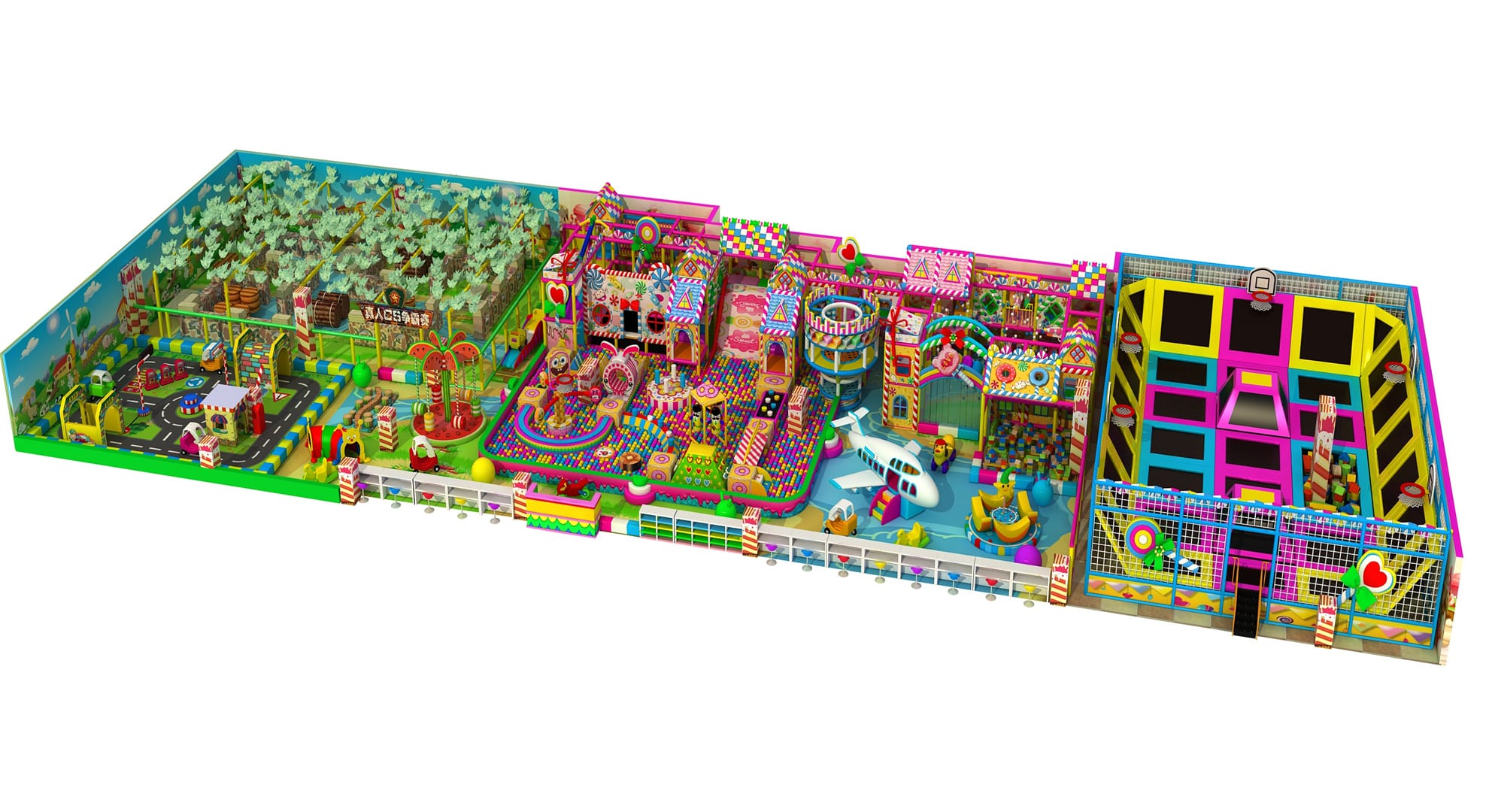
Proper indoor playground installation and routine maintenance are essential for ensuring child safety, extending equipment lifespan, reducing operating costs, and maintaining compliance with commercial safety standards. Operators should follow a structured installation process, perform scheduled inspections, and implement preventive maintenance to maximize equipment performance and business profitability.
Whether the installation is done well is directly related to how long the equipment can be used and whether there will be an accident. Many equipment failures and safety problems are actually caused by the lack of installation. No matter how good the quality of the equipment itself is, it is not easy to use if it is not installed according to the specifications, and it is even dangerous.
Maintenance can’t be skipped. If you don’t do routine inspections at ordinary times, the maintenance fee will be high, you will have to shut down at any time, and the equipment will need to be replaced in less than a few years. On the surface, it will save money on maintenance, but in fact, it will cost more to scrap the equipment in advance.
Regular inspection doesn’t cost much money, but it can help you avoid the cost of thousands or even tens of thousands of yuan for emergency maintenance and equipment replacement. It is much more cost-effective to invest a little money in advance for prevention than to spend a lot of money to fill in the hole afterwards.
This article will talk about the indoor playground installation process and daily maintenance of commercial indoor playgrounds, as well as some practical suggestions to keep the equipment safe and durable.

Correct installation can ensure that all connectors, fasteners, and load-bearing points are tightened and fixed, will not be loose, the structure will not collapse, and people will be safe.
Only equipment installed according to the specifications can meet the safety standards of ASTM F1918 and EN1176. If the insurance company recognises this, it can stand up legally in the event of an accident.
If it is installed correctly, the equipment is evenly loaded and wear-resistant. Each part is running in its proper way, and the whole playground can be used for several years.
Correct installation can cause fewer failures and fewer parts, and the structure is less likely to have problems. No one will be injured or forced to shut down at any time.
After the amusement park is set up, it can run steadily for many years. There will be no unexpected expenses, and the return on investment can be maximised.

Before the equipment arrives, clean up the site, confirm whether the ground is flat, whether the ceiling is high enough, whether the circuit and air conditioner can be used, and whether the fire protection system is installed, all of which should be confirmed in advance.
After the goods arrive, you should first count the quantity to see if it is damaged during transportation, check whether the hardware is complete, and then check the installation drawings to confirm whether they are consistent with the batch of products you ordered.
The assembly order should be correct. First, set up the main steel frame, then install the platform, then the climbing part, slide, safety guardrail, and finally install the decorative panel.
Lay the floor mat according to the specifications given by the manufacturer. EVA, EPDM, rubber, or foam floor mats are all good. The thickness and coverage area should be sufficient, and you can’t cut corners.
After all the installations, a comprehensive inspection should be done to see whether the structure is stable, whether the screws are tightened, whether the safety distance in each place is sufficient, and whether the soft package is in place. After checking, do the load test and functional test to make sure that there is no problem before using it.

| Comparison | Professional Installation | Self-Installation |
| Safety | Guaranteed compliance | High risk of errors |
| Installation Time | 1–4 weeks | 4–8 weeks+ |
| Cost | Higher upfront | Lower upfront |
| Warranty Protection | Full coverage | Often voided |
| Risk Level | Low | High |
Before opening the door every day, go around to see if there is anything dirty on the surface of the equipment, wipe it, and then check for loose parts to remove all the things that may hurt people.
Check every week whether the screws and connections are loose, whether the soft bag is worn, whether the protective net is broken, and whether there are cracks or burrs on the surface of the slide.
Do a comprehensive inspection once a month to see if the structure is stable, whether the floor mat is ageing, and to what extent the moving parts are worn, and record the problems.
Arrange a professional safety inspection every year, do structural tests, renovate or replace severely worn areas, and recheck whether all safety certifications are still valid.

Wipe the surface of the equipment before opening and after closing the door every day. The floor should be vacuumed and swept, and the places that children often touch should be disinfected.
The cleaner should be non-toxic and safe for children. It can not only kill bacteria but also not damage the equipment, and it is not harmful to children.
The cleaning method is different for different materials. Just wipe the plastic part with mild soapy water. The steel frame should undergo anti-rust treatment. Don’t use too much effort to gently scrub the soft package. The PVC surface can be disinfected with disinfectants that do not contain irritating chemicals.
Handrails, slides, ocean ball pools, interactive panels, and other places are touched by children the most and should be disinfected frequently.

Regularly check whether the screws and connections are loose, tighten what should be tightened, and use threaded locking glue in places that are easy to loosen.
If the soft bag is flattened, torn, or thinned, the protective effect will be lost. It should be replaced in time, which is directly related to safety.
Check whether the protective net is worn out, broken, or loose. If so, change it immediately; otherwise, the child may fall down or get stuck.
Small scratches can be restored by sanding with fine sandpaper or a special plastic polish, but if the crack is deep, the parts need to be replaced.
Check whether the safety cushion has become thinner, warped, or layered. If it is seriously worn, it should be replaced; otherwise, it will not be enough to cushion it when it falls.
The steel frame should be kept dry at all times, and the areas that should be painted with anti-rust paint should be painted regularly. If you find a little rust, you should deal with it quickly; otherwise, it will spread slowly.
If the equipment makes a strange sound or shakes, generally the connection is loose. Tighten the fasteners and check whether the shaft sleeve and bearing are worn.

If you do a good job of inspection and timely maintenance in advance, minor problems will not become a big problem. It is very helpful to make a maintenance plan to extend the life of the equipment.
Use the right cleaning products and methods. Don’t use that kind of irritating chemical agent; otherwise, the foam, PVC, or coating will be easily damaged.
Consumable parts such as soft bags, protective nets, springs, etc. should be replaced in advance according to the cycle recommended by the manufacturer. Don’t wait until it breaks down.
Employees should be trained in place. They can find early maintenance problems by themselves and do basic maintenance. They can avoid many problems if they pay close attention.
Strictly control the number of people and don’t exceed the capacity. If too many people enter, the equipment will wear out quickly, which is beyond its limit.

Check all load-bearing columns, connectors, and screws to see if there are any signs of deformation, displacement, or if anything is about to break down. There should be no looseness in the structure.
The guardrails, fences, and protective covers should be checked. The gaps should not be too large; there should be no loose places, and the structure should be intact and not damaged.
The soft bag should be intact, firmly fixed, and thick enough so that the child can play a cushioning role when he falls on it.
The floor mat should be flattened and stable. It should not be warped, layered, or thinned; otherwise, it will not play a buffering role when it falls.
The emergency exit should always be kept unobstructed and should not be blocked by anything. The logo should be clear and visible at a glance.
Fire extinguishers, alarms, and sprinkler systems should be checked to ensure their functions are normal and that they all meet the specifications.
Safety signs, number limits, and age requirements should be posted and placed in a conspicuous place so that tourists can see them.

Every year, one to two percent of the equipment investment is used for daily maintenance, cleaning supplies, and minor repairs. This money must be kept in advance.
You’d better have some key accessories such as screws, soft bag blocks, protective net repair pieces, and replacement springs. If they are broken, they can be replaced immediately. There is no need to wait for the accessories to arrive before repairing, so as to save the equipment from being stopped and losing money.
Every year, we also have to set aside a sum of money for third parties to do safety inspections, structural testing, and certification renewal, which are insurance and compliance requirements and cannot be avoided.
When the equipment is used for five to seven years, it is necessary to consider replacing the foam pool, protective net, and other parts that are severely worn. There should be a plan in advance not to hold Buddha’s feet temporarily.
Regular maintenance actually saves money. The life of the equipment is longer, and there will be no sudden big problems and a lot of money. On the contrary, the total cost of ownership has been reduced.

Manufacturers with their own installation teams can ensure that the equipment is installed correctly and safely on the first day, so you don’t have to find someone else to do it.
The manufacturer will give you detailed installation manuals, structural drawings, and maintenance guides, which can help your team take fewer detours on site and know how to do every step.
Some manufacturers will also teach your employees how to install and how to maintain it in the future, so that if there is a small problem with the equipment in the future, you can deal with it yourself without always relying on people outside.
Reliable manufacturers have sufficient inventory of spare parts, and any parts can be exchanged immediately without waiting. The loss of equipment and waiting for accessories is much greater than that of the parts themselves.
The manufacturer also provides long-term technical support. In ordinary times, if you encounter something you are not sure about in maintenance, you can ask them. It can also help you plan when the equipment needs to be replaced with a new one or overhauled.

A 500-square-metre shopping mall playground was completed in four weeks under the supervision of a professional team. The safety inspection passed, and the normal operation rate of the equipment remained at 99% after opening.
When installing an 800-square-metre FEC, there was a problem with uneven ground. The manufacturer sent people to the site to find a way to solve it. Later, preventive maintenance was done, and the life of the equipment was 30 percent longer.
In a 400-square-metre amusement park in Australia, the manufacturer provides complete installation support, including installation materials, personnel training, and spare parts supply. Daily maintenance is done according to the plan. There has been no problem with the equipment in the past three years.

If the site is not well prepared, it will start to be installed. The back is full of problems. If the installation is wrong, it will have to be reworked, and there are many safety hazards.
If you don’t install it according to the instructions, the structure will not be strong, and safety will be affected. Be sure to follow the manufacturer’s installation guide step by step.
If you don’t check every day and every week, a small problem will become a big problem, and it will be more expensive to repair.
When I see a small problem, I always think about using it first and making up for it. If I don’t completely fix it, the problem will get bigger and bigger, and I will spend more money.
If you use the wrong detergent, the protective layer and materials will be corroded. You should use the kind of cleaning products that are recognised by the manufacturer and safe for children.
It’s best to write down what inspections have been done and what has been repaired; otherwise, you can’t know the condition of the equipment, preventive maintenance can’t be arranged, and compliance can’t be proved.

Indoor playground equipment is typically installed through several steps. This includes site preparation, structural assembly, safety flooring installation, and final safety testing. Professional installation is recommended to ensure compliance with safety standards.
Installation typically takes 1 to 4 weeks depending on the size and complexity of the equipment. Professional installation teams work faster and more safely.
Daily inspections, weekly maintenance checks, monthly structural inspections, and annual professional safety audits are recommended for commercial playgrounds.
A comprehensive checklist includes structural integrity, safety barriers, protective padding, flooring, emergency exits, fire safety equipment, and signage.
It is not recommended. Self-installation risks safety errors, warranty voiding, and non-compliance with ASTM or EN standards.
Use non-toxic, child-safe cleaning products that are effective against germs but gentle on materials like foam, PVC, and plastic surfaces.
With proper installation and regular maintenance, commercial-grade equipment can last 5 to 10 years or more.
Loose fasteners, worn foam padding, damaged netting, scratched plastic components, and flooring wear are the most frequent problems.
Typically, 2 to 4 trained installers are needed for medium-sized playgrounds, depending on the complexity of the equipment.
Yes, turnkey manufacturers like NanPlay provide installation supervision and guidance to ensure correct assembly and safety compliance.
Bolts and connectors should be inspected weekly and tightened as needed to maintain structural integrity.
Keep spare fasteners, padding sections, netting patches, and replacement hardware for common components.
Preventive maintenance reduces emergency repairs, prevents premature equipment replacement, and keeps the playground open and generating revenue.
Proper installation and regular maintenance are the cornerstones of a safe, profitable indoor playground. Professional installation ensures safety compliance, extends equipment lifespan, and protects your investment. A structured maintenance schedule—daily, weekly, monthly, and annual—prevents costly failures and reduces operating costs.
NanPlay provides comprehensive installation support, detailed maintenance documentation, and a ready supply of spare parts. Their turnkey service ensures your playground is installed correctly and maintained effectively for years to come.
Contact NanPlay today for installation guidance, maintenance support, and professional safety inspections. Keep your playground safe, open, and profitable.
Thank you very much for your inquiry! Your trust is our greatest motivation. We are committed to offering playgrounds that combine high quality with affordable pricing. Let us bring vitality to your venue!