A reliable indoor play equipment supplier should offer certified products, factory-direct manufacturing, custom design services, transparent pricing, proven commercial projects, installation support, and long-term after-sales service. Buyers should evaluate suppliers based on manufacturing capability, product quality, certifications, project experience, communication, and total cost of ownership—not price alone.
Whether an indoor play equipment supplier is reliable directly affects equipment quality, safety compliance, project delivery time, and long-term operating costs. Choosing a reliable supplier can help you avoid construction delays, unexpected expenses, and costly operational problems.
If you choose a cheap supplier for Guangtu, the equipment materials may not be good, there may be no safety certification, and the after-sales service can’t keep up. The little money saved in the early stage may be several times more expensive to repair the equipment, stop business, and lose money in the later stage.
Before looking for a supplier’s quotation, first figure out whether it has its own factory, whether it has qualification certification, how long it has been doing business, and what projects it has done before. If you don’t know these, don’t ask about the price. It is only meaningful to compare prices under the same conditions.
This guide gives a list of 12 items to evaluate the suppliers of indoor amusement equipment. The danger signals, how to compare prices, and real project cases will be discussed.

An indoor play equipment supplier may source equipment from different factories and resell it to customers. An Indoor Playground Manufacturer, however, produces equipment in its own factory and has more direct control over materials, quality, customization, production time, and cost. For commercial playground investors, working directly with a manufacturer can also make project communication and quality control more efficient
The price of the manufacturer directly supplied by the factory is better, quality can be managed directly, and communication is fast. The trading company is an intermediary, and the intermediary will increase the price, and communication may be slow.
OEM means that the manufacturer produces according to your design and specifications, making it exactly what you want. ODM means that the manufacturer takes their existing design for you to choose, and then makes some minor changes on that basis.

Reliable suppliers will provide the actual certification documents for ASTM F1918, EN1176, and EN71. If you just listen to them, you must read the original and test reports.
Commercial-grade materials are high-density foam, heavy-duty PVC, and galvanised steel frames, which can be used for several years and can withstand high-strength use every day. Cheap materials are easy to break and need to be repaired frequently, and may not pass the safety inspection.
Good equipment is more expensive when you buy it, but in five to ten years, the cost of maintenance, repair, and replacement is lower, saving 20% in procurement, and the maintenance cost may be 200% more in three years.
Reliable suppliers can finish and deliver goods on time and will not delay your construction period. If the delivery is delayed again and again, the opening will have to be postponed, and you will lose money every day.
The equipment is safe, playable, and looks beautiful. Families are willing to come again and again and say good things to you. If the equipment is of poor quality, customers will not come again, and the reputation will be bad.

Ask him directly whether he is a factory or an intermediary. The real manufacturer dares to take you to see his factory, production line, and workers.
Find those who have worked in the business of commercial amusement equipment for at least five to ten years. The longer the years, the more it shows that the company’s stability and ability have been verified.
If you want photos, videos, and cases of real projects they have done, it’s better to contact former customers directly.
Check whether the product has certifications such as ASTM F1918 (United States), EN1176 (Europe), and EN71. For example, NanPlay has CE, ISO 9001, GS, TÜV, and SGS certificates.
A detailed list of materials, the density of the foam, the thickness of the PVC, and the grade of the steel- a reliable manufacturer will tell you directly.
Can they do professional 3D CAD design? Customised design can ensure that the equipment is in line with your site and brand tone.
Ask how big the factory is, what the production line is, and how quality is controlled. It has more than 20,000 square metres and its own research and development team, which is a strong signal.
A detailed quotation is required, which clearly lists how much the equipment costs, how much it is transported, how much it is installed, and how much it is certified. If the quotation is vague, the price will generally be added later.
Generally, four to eight weeks; ask them if they can accept urgent orders and if there is any delay.
Can they provide installation guidance, send people to the site, or recommend local qualified installers? Professional installation is very important for safety and warranty.
Ask how long the warranty is, what is guaranteed, and how long it will take for the spare parts to arrive. A warranty of one to three years is the standard configuration of the manufacturer.
Before placing an order, test whether the reply is fast or slow and clear or unclear. If the message is slow before the purchase, the after-sales service will be more difficult to count on.

| Verification Item | Why It Matters | How to Verify |
| Business License | Confirms legal operation | Request official registration documents |
| Factory Audit | Verifies production capability | Request video tour or third-party audit report |
| Product Certifications | Proves safety compliance | Request original certificates with serial numbers |
| Material Test Reports | Confirms non-toxic materials | Request independent lab test results |
| Customer References | Validates reliability | Contact past customers directly |
| Project Cases | Shows real experience | Review photos and videos of completed projects |
| Factory Videos | Confirms real manufacturing | Request live video or virtual tour |
This can confirm whether the supplier has its own factory, and the trading company can’t come up with a legal factory audit report.
Ask clearly whether it is ASTM F1918, EN1176, or EN71. You need actual certification documents, and you can’t just listen to words.
Ask about the design capability, the minimum order quantity for customisation, and the production cycle. Manufacturers with their own research and development teams will handle customisation much faster.
It is required to list the cost of equipment, transportation, installation, and certification separately. If the quotation is vague, the price will generally be added later.
Generally, it takes four to eight weeks. Then ask if they can handle the urgent order and how to deal with it if it is delayed.
Ask whether there is a process for inspection and pre-shipment testing, and whether a third party can be arranged to inspect the goods. All products should be fully loaded before shipping.
Whether to provide installation drawings, video guidance, or send an on-site installation team, professional installation is related to safety and warranty.
The one-to-three-year quality warranty is the industry standard. Then ask how long it takes for spare parts and technical support to respond.

Most of the suppliers who can’t provide factory information are trading companies, and they have no direct control over the quality or construction period.
The price is abnormally low, and most of them have problems. Cheap equipment uses poor materials, and the safety inspection can’t be passed, so it has to be repaired all the time.
If you can’t get a valid ASTM or EN certification document, you don’t need to consider it directly. It’s useless to just say that it meets the standard.
Only suppliers who have done residential or small projects can handle commercial installation. The durability and safety requirements of commercial equipment are not at the same level at all.
If the previous message is slow or unclear before the purchase, the after-sales service will only be worse. If there is a problem in communication, it is easy to cause misunderstandings, and there will be a lot of trouble later.
Suppliers who do not provide installation support mean you have to figure out your own way to install it. If it is not installed correctly, there will be safety hazards, and the warranty may also be invalidated.
Suppliers without warranty, accessories, and technical support are not long-term partners. If there is a problem with the equipment, you have to handle it yourself.

The equipment price of Chinese manufacturers is generally 3 to 50% cheaper than that of local suppliers, mainly because the scale effect and supply chain advantages reduce the cost, and the labour and material costs of local suppliers are higher.
Domestic well-known manufacturers like NanPlay have ISO 9001 and CE certification, and the equipment meets international safety standards. However, the quality difference between different manufacturers is also quite large, so the step of verifying qualifications cannot be omitted.
China has its own R&D team for manufacturers to customise more options, and the design ability of local suppliers may be relatively limited.
Chinese manufacturers generally take four to eight weeks to produce, and local suppliers may deliver faster, but the price is also higher.
Chinese suppliers will be responsible for international transportation and customs clearance documents. The transportation time is about two to six weeks, which accounts for about one to two parts of the total cost.
Local suppliers are easy to communicate with and can come to the site to provide support. Domestic manufacturers like NanPlay can also provide remote technical support and installation guidance.
After including freight and tariffs, the total cost of factory-direct supply in China is still lower. Although the freight of local suppliers is cheap, the price of equipment itself is high.

The factory directly supplies the manufacturer to avoid the middleman’s price increase. The money you pay is the money for the equipment itself, and you don’t have to help the distributor share the profit.
Manufacturers control every link from raw materials to factory inspection by themselves. If there is a quality problem, they can deal with it directly without detours.
Directly connected with the factory, there are fewer misunderstandings in communication, quicker decision-making, and no middleman to help you communicate or delay your time.
Factory-direct supply manufacturers have their own research and development and design teams, which can make customised solutions that trading companies cannot do.
Manufacturers like NanPlay take care of everything from design to installation. You only need to connect with one person from beginning to end, which is much more worry-free.

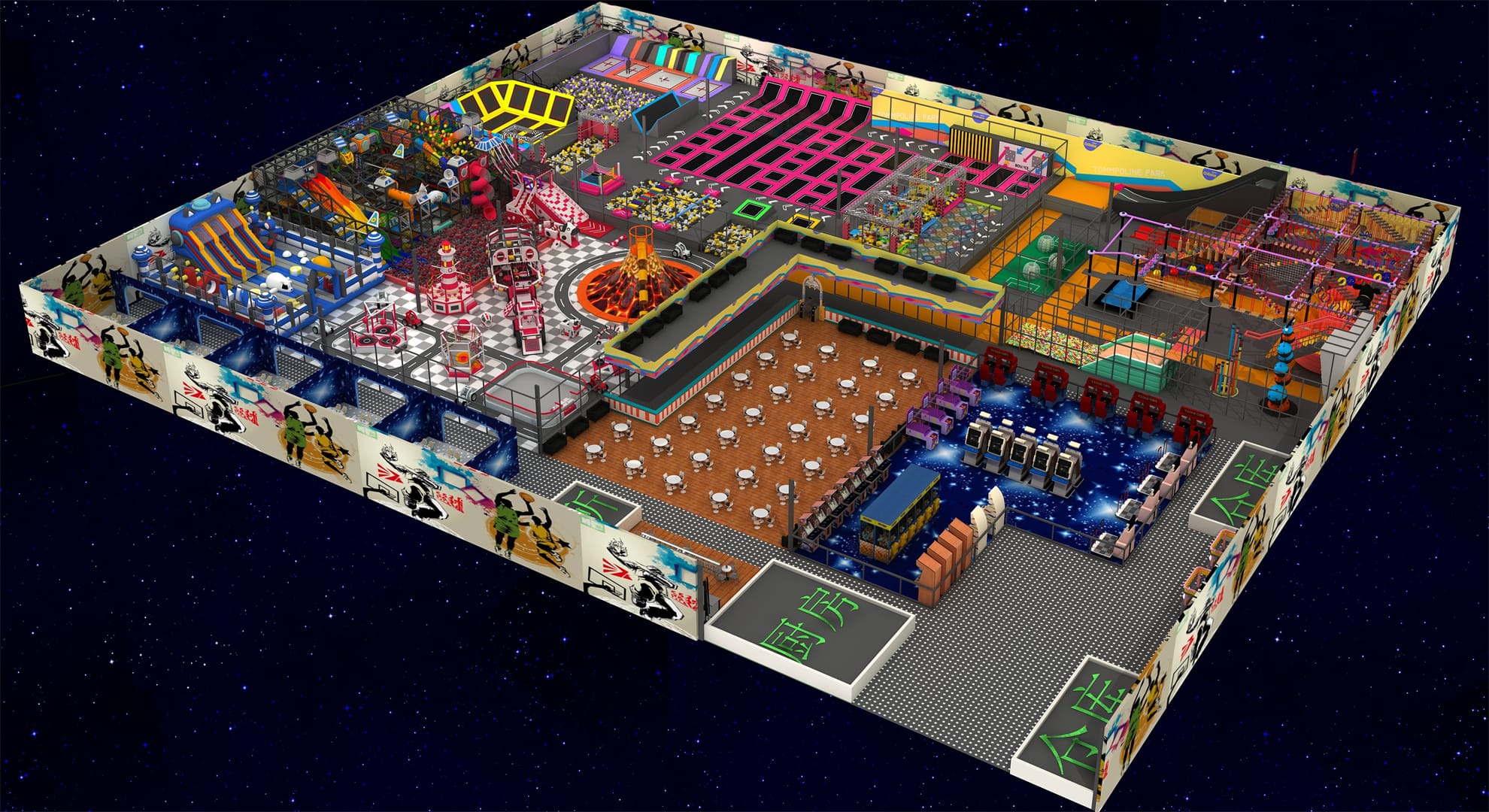
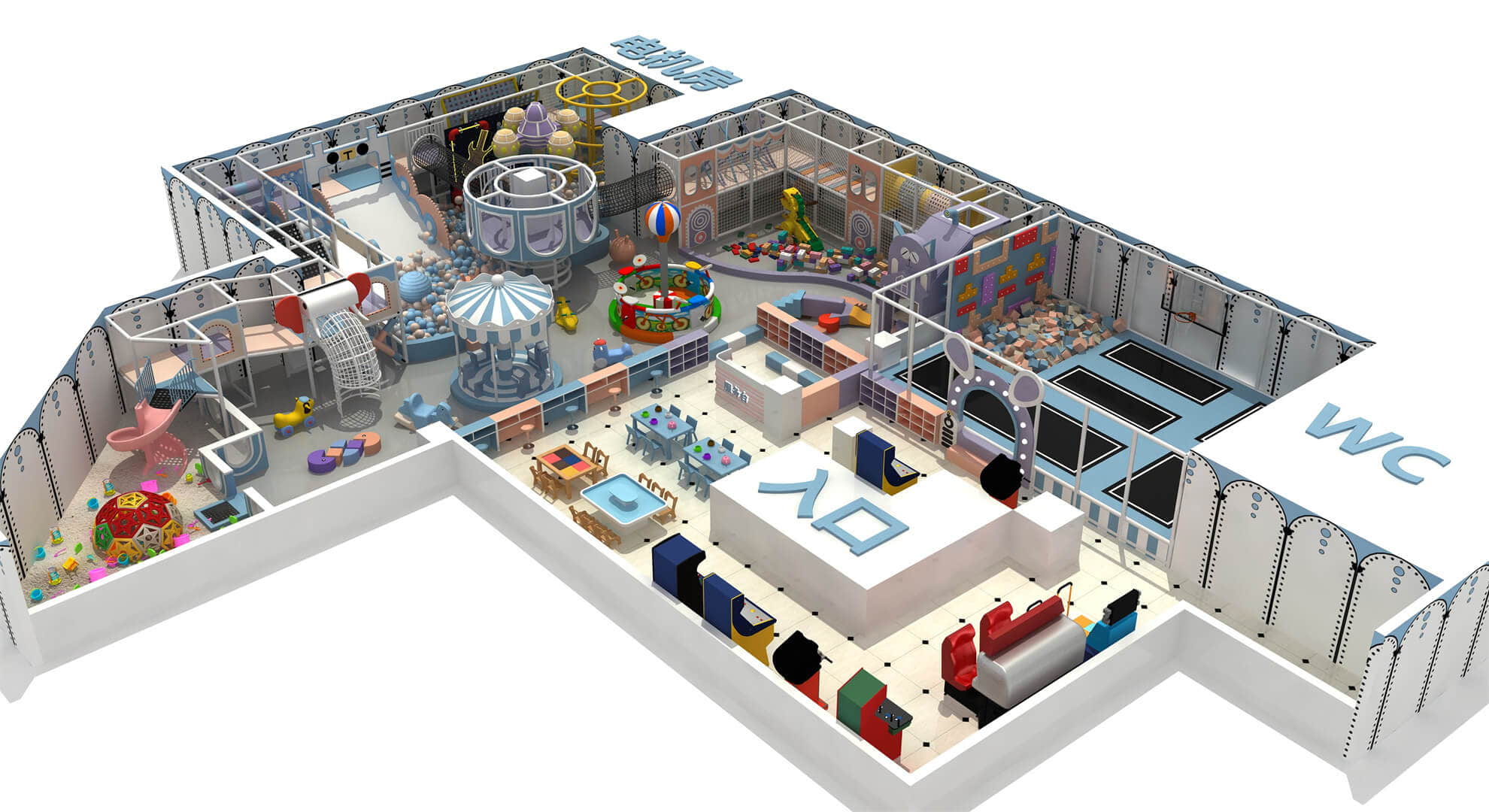
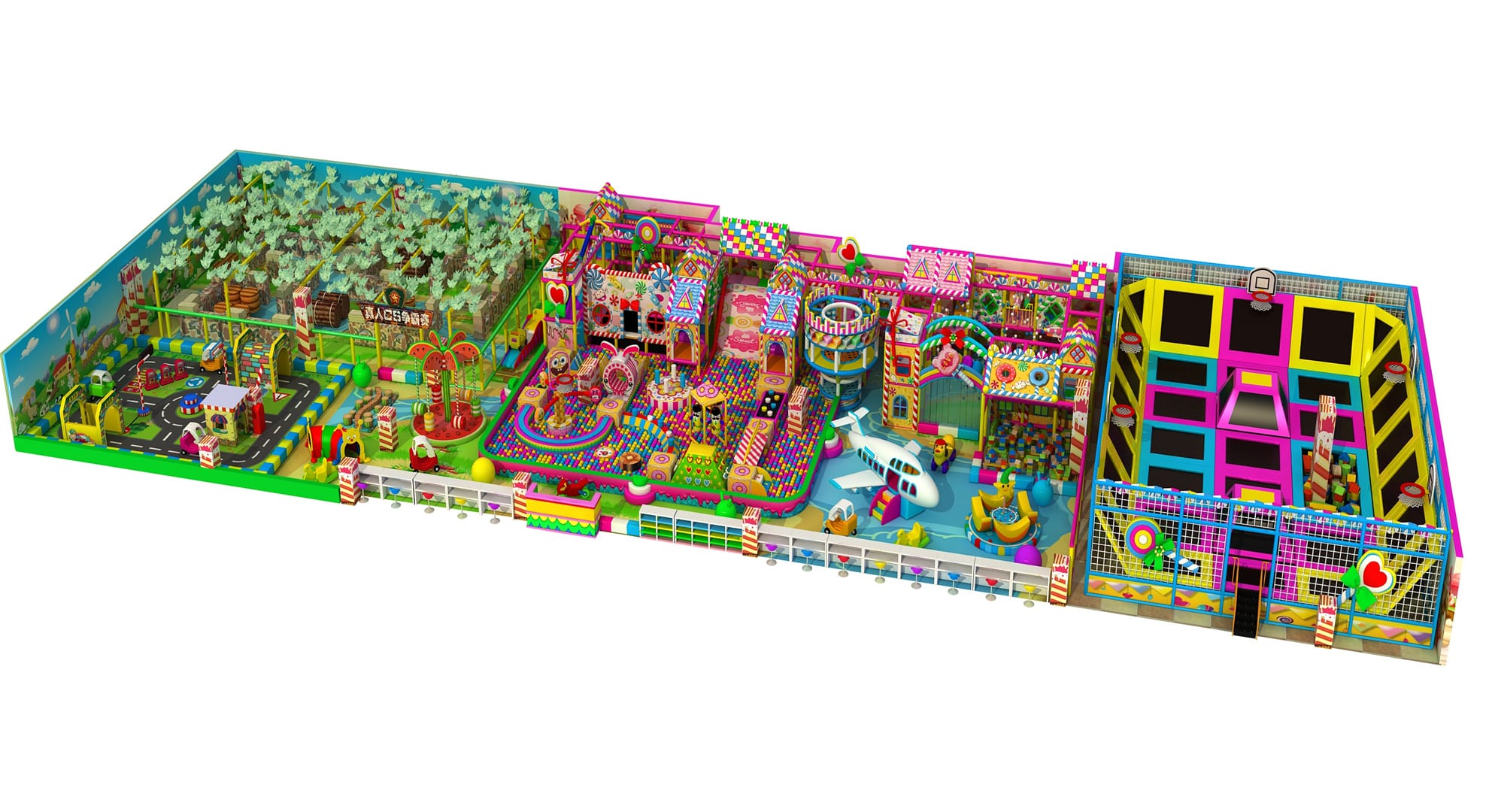
The one-stop supplier will first take a look at your site, figure out the size and structure of the space, determine how to arrange the equipment most reasonably, and how many people can be accommodated, to avoid problems with the layout and rework later.
Then determine how to arrange the equipment most reasonably, and how many people can be accommodated, so as to avoid problems with the layout and rework later. Come up with 2D and 3D design drawings. Before the start of construction, you can see what the playground looks like after it is completed. NanPlay provides customised 3D design services.
The equipment is produced in its own factory; the quality is controlled internally, and safety meets the standard. It is not sent to others to be made, and the quality is stable.
One-stop suppliers in transportation will handle international logistics and customs clearance procedures, so you don’t have to find a freight forwarder to go back and forth.
During installation, detailed drawings and video tutorials will be provided, or someone will be sent to the site for guidance. Whether the installation is correct or not is directly related to safety and warranty.
After-sales warranty, accessories supply, and technical support are all available. The operation of the amusement park has been managed by someone. NanPlay is relatively complete in this area.


The supplier is an intermediary. The goods are taken from the factory and then resold to you. The manufacturer has its own factory and produces by itself, and the quality and price can be decided by itself.
Ask them to provide a factory video, business license, certification documents, and a customer recommendation letter. Video viewing of the factory is the most basic verification method.
ASTM F1918 is required in the U.S. market, EN1176 is required in Europe, EN71 toy safety standards are required, and ISO 9001 quality management certification is also very important.
It’s better. The price directly supplied by the factory is cheaper, the quality can be controlled by yourself, and communication is fast. The trading company will increase the price, and the transmission of information is slow.
Equipment costs, transportation, installation, certification fees, and whether there are other surcharges. If the quotation is clearly written, there will be no sudden additional costs later.
The normal production cycle is four to eight weeks, two to six weeks for transportation, and one to four weeks for installation.
Some will provide installation drawings and video guidance, and some will send people to the site to install. You’d better ask clearly before placing an order.
At least 5 to 10 years of experience in commercial playground equipment. NanPlay has over 15 years of experience.
Yes, manufacturers with in-house R&D teams offer custom 3D design services. Trading companies typically cannot.
Request business licenses, factory audit reports, safety certifications, material test reports, and customer references.
Ensure all quotations include the same scope: equipment, shipping, installation, and certification. Compare total cost, not just equipment price.
Warranty coverage, spare parts availability, technical support, and maintenance guidance. A 1- to 3-year warranty is standard.
Choosing a reliable indoor play equipment supplier is one of the most important decisions you will make for your commercial playground project. A factory-direct manufacturer with proper certifications, proven experience, and comprehensive after-sales support will save you money, time, and headaches. Do not settle for the lowest price—it almost always costs more in the long run. Work with a turnkey supplier who can handle everything from design to installation.
NanPlay is a trusted indoor playground manufacturer with over 15 years of experience, a 20,000 sqm factory, and certifications including CE, ISO 9001, GS, TÜV, and SGS. They offer custom 3D design, manufacturing, installation support, and comprehensive after-sales service. Contact NanPlay today for a free consultation and custom 3D design. See your playground in 3D before you spend a dollar.
Thank you very much for your inquiry! Your trust is our greatest motivation. We are committed to offering playgrounds that combine high quality with affordable pricing. Let us bring vitality to your venue!