When investing in indoor amusement projects, safety is always the top priority that commercial soft play parks need to consider. By using high-quality soft play equipment, doing a good job of site planning, selecting compliant materials, and conducting regular maintenance, the probability of children getting injured can be significantly reduced. This guide is specifically designed for FECs and mall-based amusement park operators, teaching them how to select, install, and maintain safe indoor soft play facilities.
Commercial soft play areas, if the equipment quality is poor and the layout of the venue is not well designed, are very likely to cause safety issues. The common dangerous situations in indoor play areas include the following:
For operators, these risks may result in tourists getting injured, insurance claims, and receiving negative customer reviews. As long as the right equipment is selected, the venue is well planned, and regular maintenance is carried out, these safety issues can be largely avoided.
When choosing safe children’s recreational equipment, one should not only focus on its appearance. Before making a commercial purchase, the purchaser must first consider the safety of the users rather than the theme of the play or its aesthetics.
The amusement equipment is designed according to the physical ability levels of different groups of people. The soft play facilities for young children usually have low frames and are equipped with gentle obstacles, while the soft play facilities for older children can have higher climbing structures. Allowing children of different age groups to use inappropriate equipment will pose serious safety hazards in the amusement park.
Best practice: Divide the indoor amusement park into separate areas specifically for young children (0 to 5 years old) and for older children.
Household soft play equipment is not suitable for frequent use in public places. Indoor play areas must adhere to commercial-grade construction standards. Low-cost foam and outer cover fabrics are prone to tearing and deforming under high foot traffic, and over time, they can pose safety hazards.
Even if the soft play equipment itself is of good quality, if there is no anti-drop cushion layer at the bottom, there is still a safety risk. The drop height determines the thickness of the required cushion pad. Before purchasing, it is necessary to confirm the detailed parameters of the cushion pad with the indoor playground equipment manufacturer.
Key considerations:

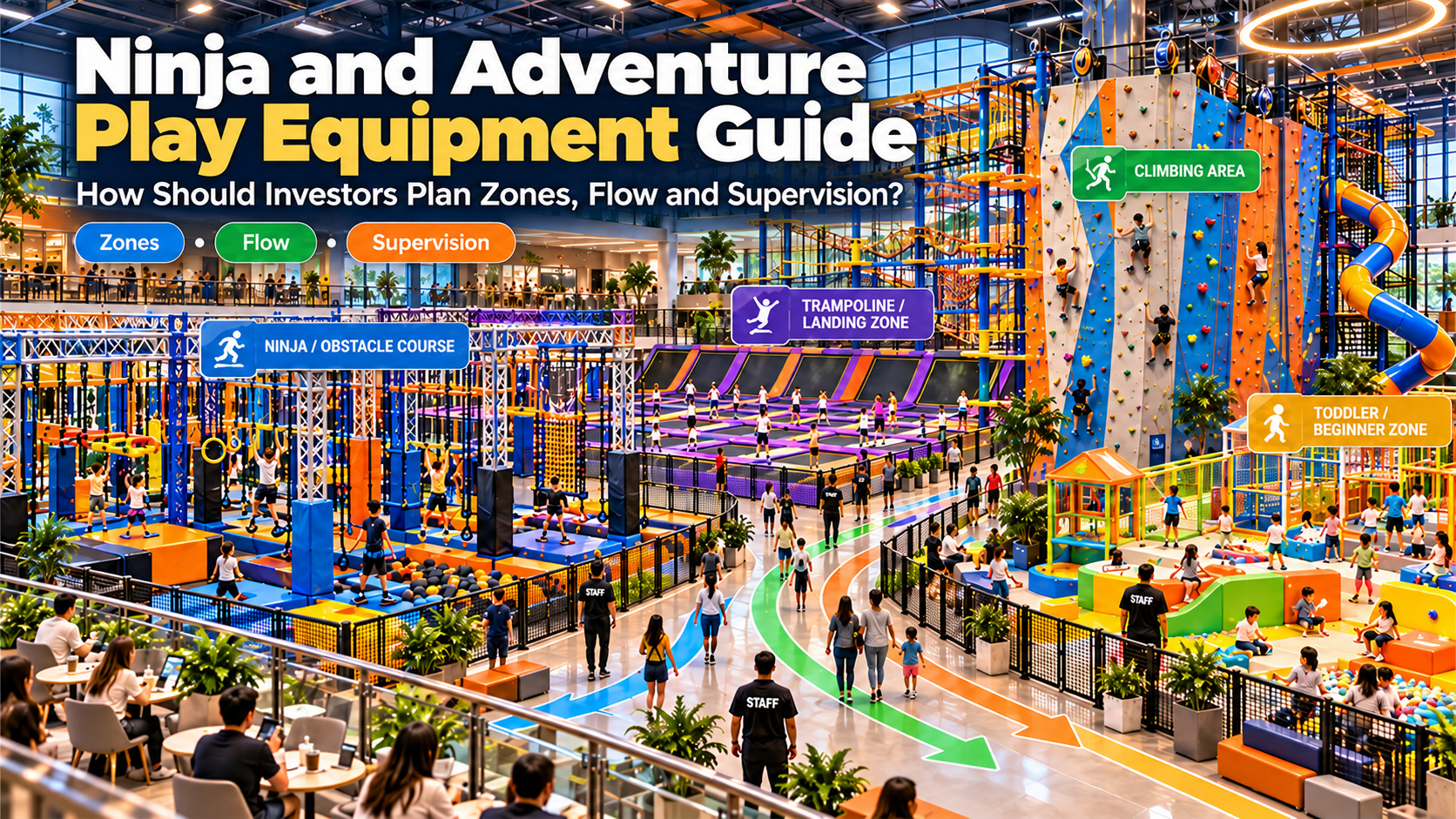
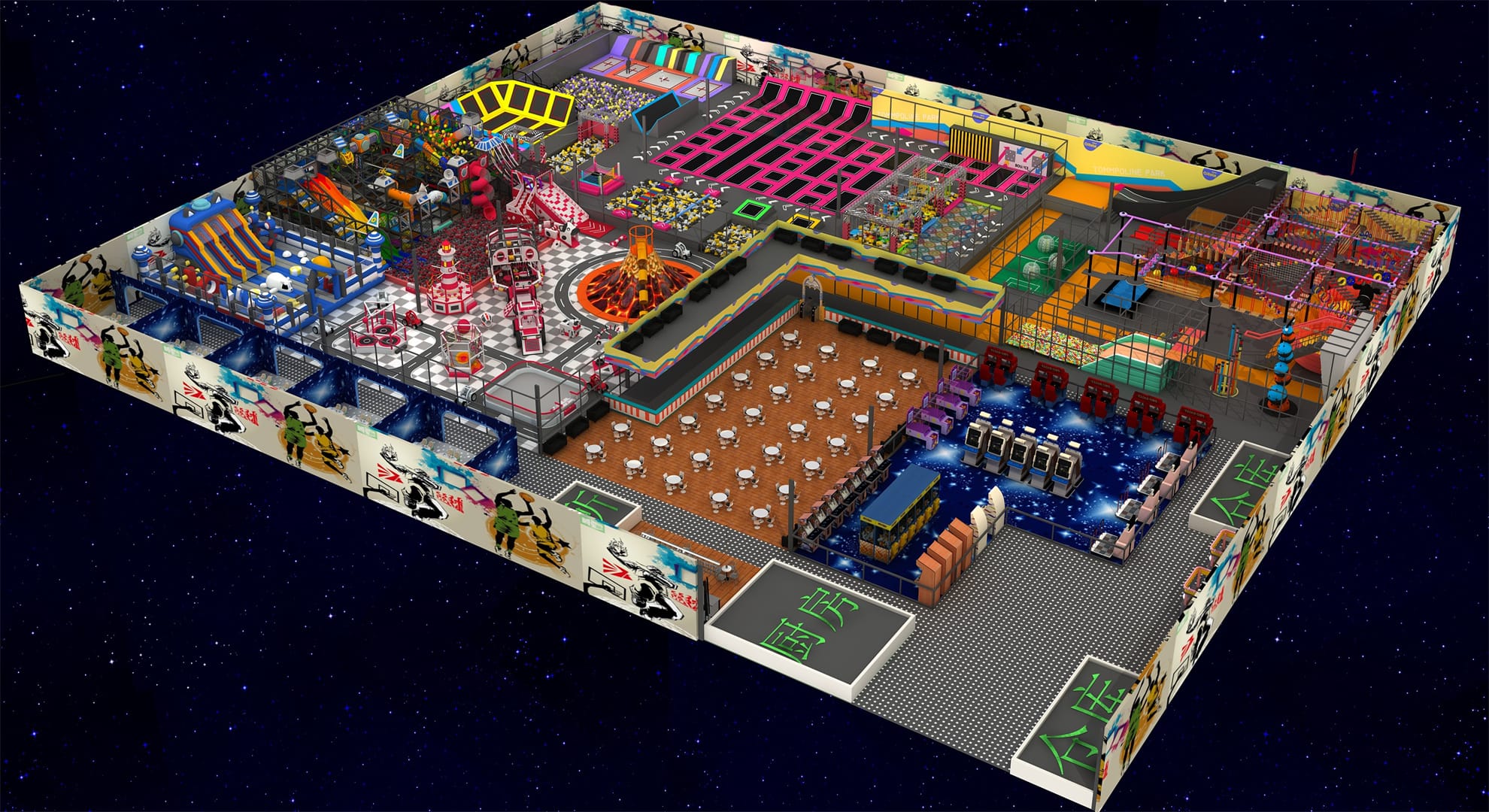
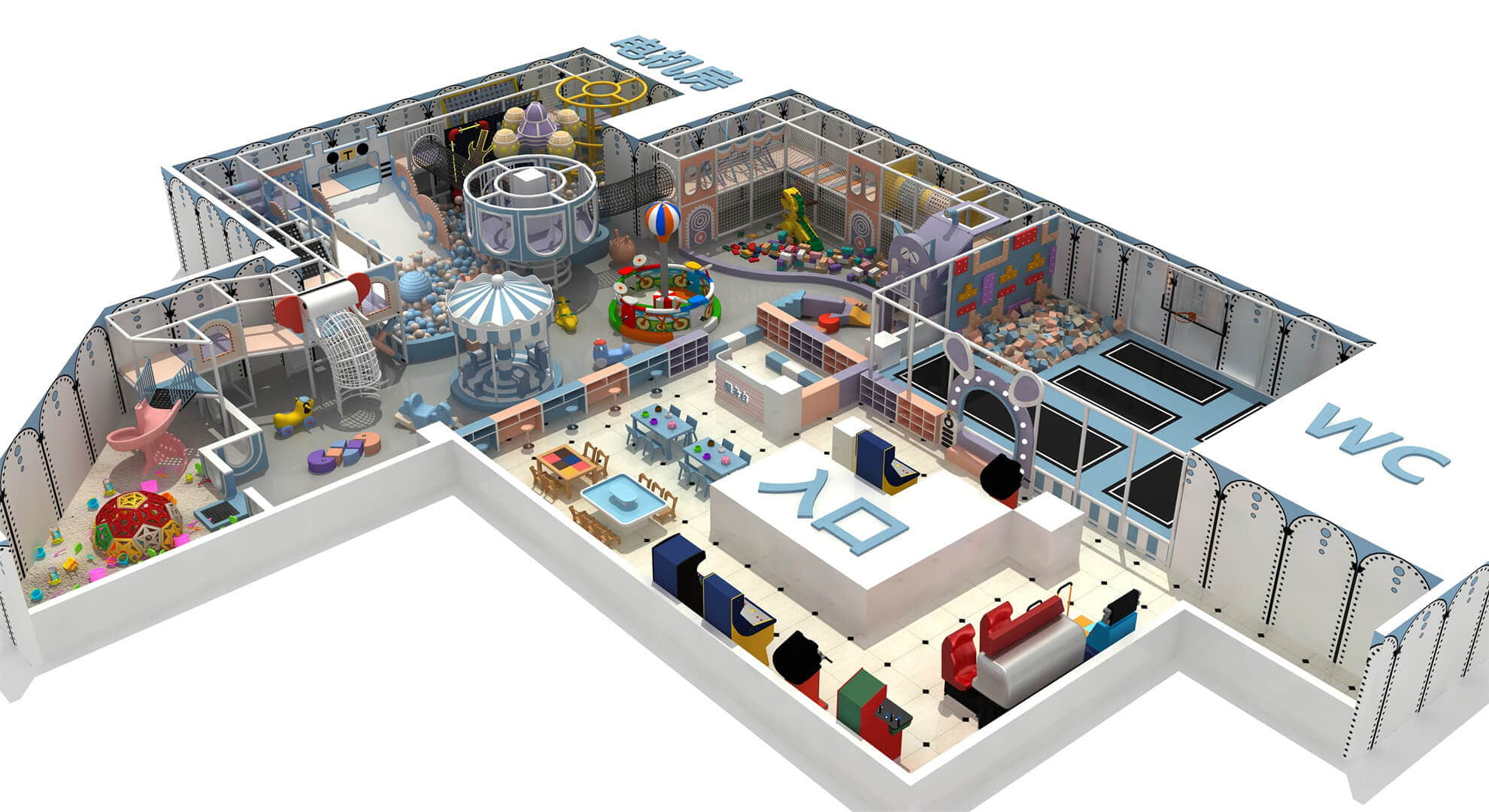
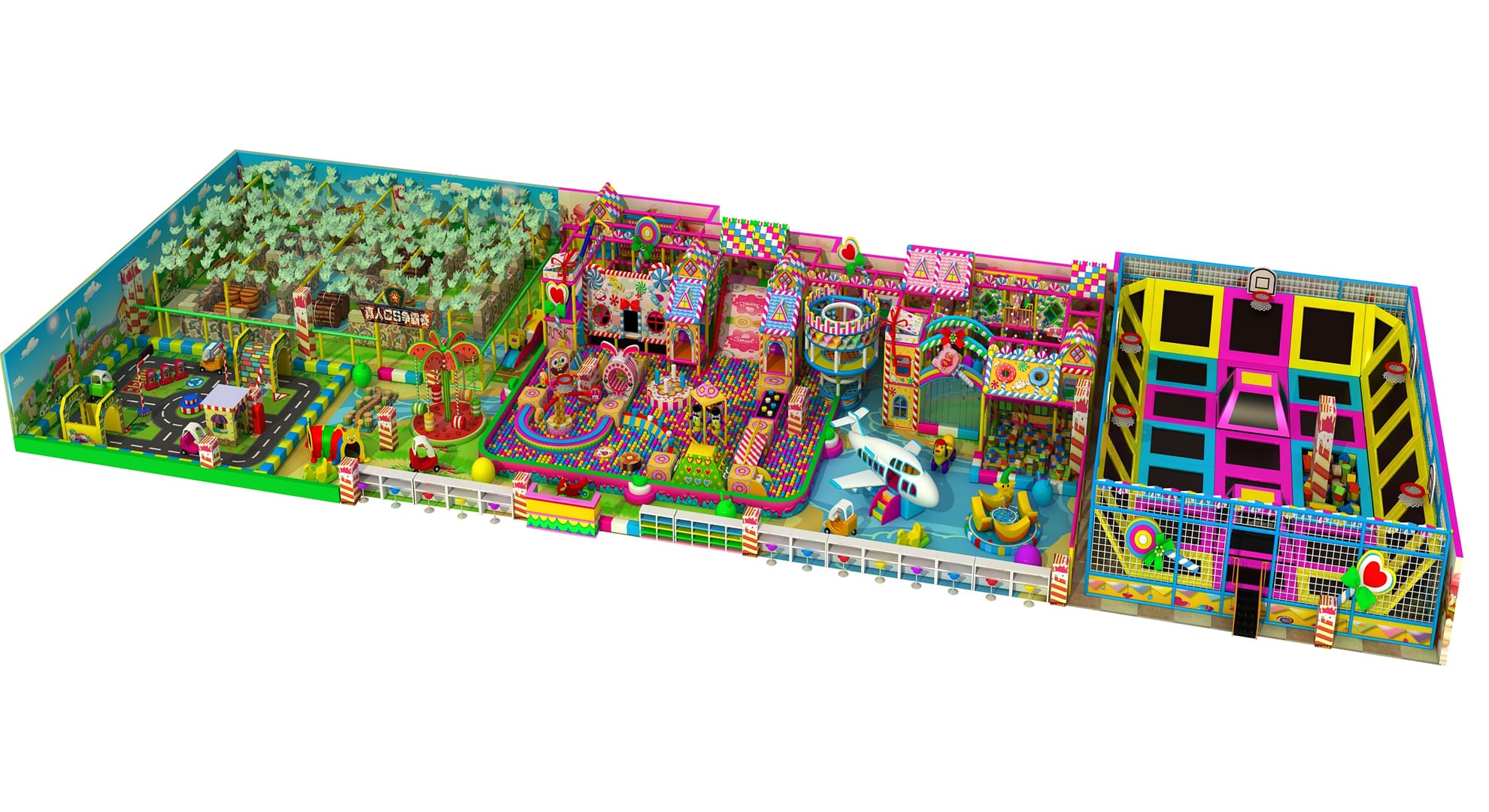
Even if the equipment is of high quality, if the layout of the venue is poorly planned, there will still be safety issues. A reasonable venue layout can control the flow of people, facilitate staff monitoring of the entire area, and also separate different groups of visitors. All of these will directly determine whether the amusement park is safe or not.
Separate the soft play area for young children from the area for older children physically. Older children move around and play with greater intensity, and they are prone to bump into the smaller children. Install isolation barriers and clearly mark the warning signs to define the boundaries of the areas, which can effectively prevent collisions between visitors of different age groups.
When designing an indoor playground, it is essential to ensure that employees and parents can see all the play areas. Avoid setting solid walls that would obstruct the supervisory view. Soft play equipment should not have hidden blind spots where accidents cannot be detected.
The entrances and exits of the soft play area must be spacious, unobstructed, and clearly marked. If the entrances and exits are narrow and blocked, it will cause congestion during peak hours. In this case, implementing one-way traffic can enhance the safety of play in FEC venues.
Ensure there is sufficient passage space around each soft play facility, and do not place all the equipment in one area. Adequate movement space can effectively prevent collisions that may occur when children are running around in the indoor playground.
Material quality defines long-term playground safety for soft play equipment. Inferior materials compress, tear or release harmful substances after months of heavy commercial use.
High-density EVA foam is the standard material for commercial soft play facilities.
Cheap low-density foam is easily compressed, and its buffering protection effect will rapidly deteriorate. Good filling materials, even after thousands of impacts, can still maintain good buffering capabilities.
PVC leather fabric is a commonly used material for commercial soft play equipment. You must choose durable, non-toxic, and easy-to-clean PVC materials. The outer skin should be tightly attached to the equipment and be equipped with hidden zippers to prevent children from pulling it apart. All surface corners must be rounded, and there should be no sharp edges.
The support framework provides the foundation support for the soft play facilities. Commercial-grade indoor play equipment usually adopts a galvanized steel pipe frame with a wall thickness of 2.0 to 2.5 millimeters. All bolt connections must be covered with soft washers to eliminate the risk of pinching. Loose fasteners are a common cause of safety accidents in soft play facilities.
For reference, reputable manufacturers such as NanPlay apply galvanized steel frames, high‑density EVA foam, and food‑grade PE panels for all custom soft play projects, complying with international material requirements for commercial indoor playgrounds.

Before ordering soft play equipment for your indoor playground, verify relevant safety certifications and test reports. Different regions require different playground safety standards.
Common international standards for soft play and indoor playgrounds:
Ask your manufacturer to provide these documents for your project. Also check company‑level certifications such as ISO 9001 quality management and ISO 14001 environmental management.
For reference, reputable manufacturers such as NanPlay hold ISO 9001 & ISO 14001 certifications, and their soft play equipment can support CE, SGS, and TÜV testing for global indoor playground projects.
The safety inspection does not end once the soft play equipment arrives. After all the installations in the indoor playground are completed, a comprehensive acceptance inspection needs to be conducted to verify the following key items.
Push and shake each of the soft play facilities to ensure that the framework does not shake. All the fixed points connecting to the ground of the building must be firmly and securely installed. If the equipment becomes unstable, it will pose a major safety hazard in the amusement park.
Check each package cover for any tears, gaps, or loose zippers. Make sure all the foam fillers are completely sealed. Exposed foam can pose a risk of suffocation and friction for the child.
Inspect the overall protective floor system of the soft play area, and check for any gaps, raised edges, or pressure areas on the fall prevention mats.
Ensure that there is a safe distance between all components of the soft play equipment. There should be no gaps that could trap people between the equipment structure, walls, floors, and obstacles.
Even the highest-quality amusement facilities will gradually age over time. Regular maintenance can ensure the safety of the amusement park and extend the service life of the equipment.
Operators should conduct a simple inspection on each open day: check if the cover is damaged, if the components are loose, if the padding is displaced, and if the floor is damaged. Mark the problematic soft toys so that they can be stopped from being used before an accident occurs.
Soft playgrounds need to be cleaned and disinfected regularly. The PVC coating should be wiped with the appropriate cleaner to avoid using chemicals that could damage the material and pose a threat to children’s health.
Regularly tighten the bolts and various fixing components on the frame, and check if the foam has been compressed. Conducting preventive maintenance can reduce sudden equipment failures in the indoor playground.
Do not continue to use the worn-out soft play equipment. Replace the damaged covers, compressed foam, and repair the damaged floors in time. When replacing parts, please follow the operation instructions provided by the equipment manufacturer.
Manufacturers like NanPlay, which have a good reputation, will provide spare parts supply and maintenance guidance for all delivered soft play and indoor amusement park projects.

Many indoor playground equipment safety problems come from avoidable operator mistakes:
Yes, as long as the commercial soft play equipment is correctly selected, installed, and maintained, it will be safe. The safety of the equipment depends on the use of commercial-grade materials, compliant design, reasonable layout, and whether there are regular inspections. Indoor amusement areas in public places should not use household-grade products.
The park conducts visual safety inspections before opening every day. It is recommended to carry out a comprehensive and detailed inspection every 1 to 3 months. For FEC indoor amusement venues with high traffic, a third-party safety audit should also be conducted annually.
The typical commercial soft play equipment uses high-density EVA foam as the filling material, durable and non-toxic PVC as the surface covering layer, galvanized steel for the support frame, and food-grade PE for the plastic components. All materials must comply with the local amusement park safety standards.
For the European region, the CE, EN71, EN1176, and REACH standards need to be checked. For the North American region, the ASTM F1918 standard can be referred to, which is applicable to soft closed toys. Third-party testing by SGS or TÜV can provide independent verification for your soft toy equipment.
Perform daily visual inspections of the equipment, carry out regular cleaning, tighten the bolts on time, and promptly repair or replace any worn-out soft components. Always follow the official maintenance manual provided by the manufacturer and try to purchase original factory parts.
Safety is the foundation for the profitability of commercial indoor amusement parks. By selecting compliant soft play equipment, optimizing the layout of the venue, and implementing regular inspections and maintenance, we can ensure the safety of the visitors, reduce liability risks, and enhance the customer experience.
If you plan to build or renovate an indoor amusement park, you need to customize soft play facilities. You can choose NanPlay, an experienced one-stop manufacturer with extensive experience.
Contact NanPlay to consult on the project, obtain a free quote, and get custom 2D layouts and 3D solutions. Just provide the venue size, target age group, and project requirements, and our engineering team can offer full-process support from venue assessment and production to after-sales.
Thank you very much for your inquiry! Your trust is our greatest motivation. We are committed to offering playgrounds that combine high quality with affordable pricing. Let us bring vitality to your venue!