Soft play equipment directly affects the usage experience and profitability of indoor amusement venues. Therefore, we need to select the appropriate equipment. Different types of soft play facilities are suitable for different age groups and venue sizes, but the total cost will vary depending on the scale, materials, and degree of customization. This guide provides detailed explanations for commercial purchasers regarding the main equipment types, price ranges, and key purchasing considerations.
If you plan to build or upgrade a commercial indoor amusement park, you must figure out what types of soft play equipment are available and how much they will cost. Indoor soft play parks have always been popular among family-oriented businesses. This guide will explain what commercial soft play equipment is, the main types of equipment, age group suitability, price range, factors affecting costs, and practical purchasing tips. This article is specifically designed to provide ideas for commercial buyers who are planning to launch a commercial amusement project.
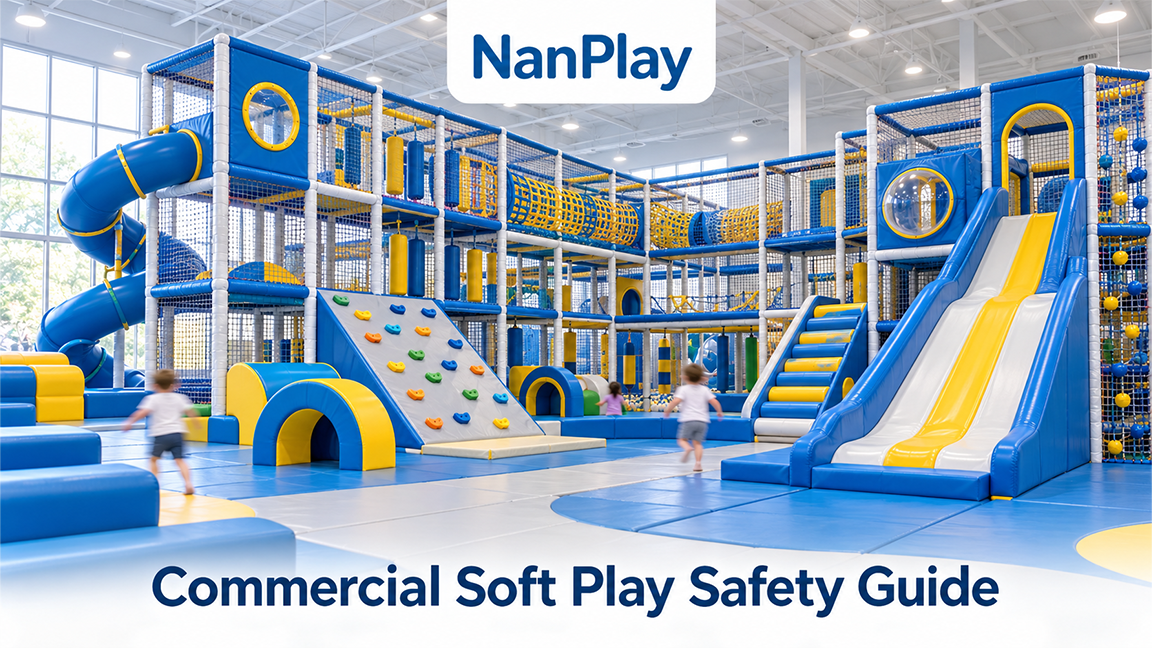
Commercial soft play equipment is a heavy-duty, cushioned amusement facility specially designed for frequent public use in indoor amusement parks. Unlike family-style children’s play equipment, soft play equipment uses foam materials, safety guards, and reinforced frames. Young children can play on it without easily bumping into things and getting injured.
Indoor soft play equipment is a core facility in FECs (children’s playgrounds), shopping center play areas, and kindergartens. It can reduce the risk of visitors falling and getting injured, and supports climbing, jumping, building, and group play.
Key features of commercial soft play equipment:
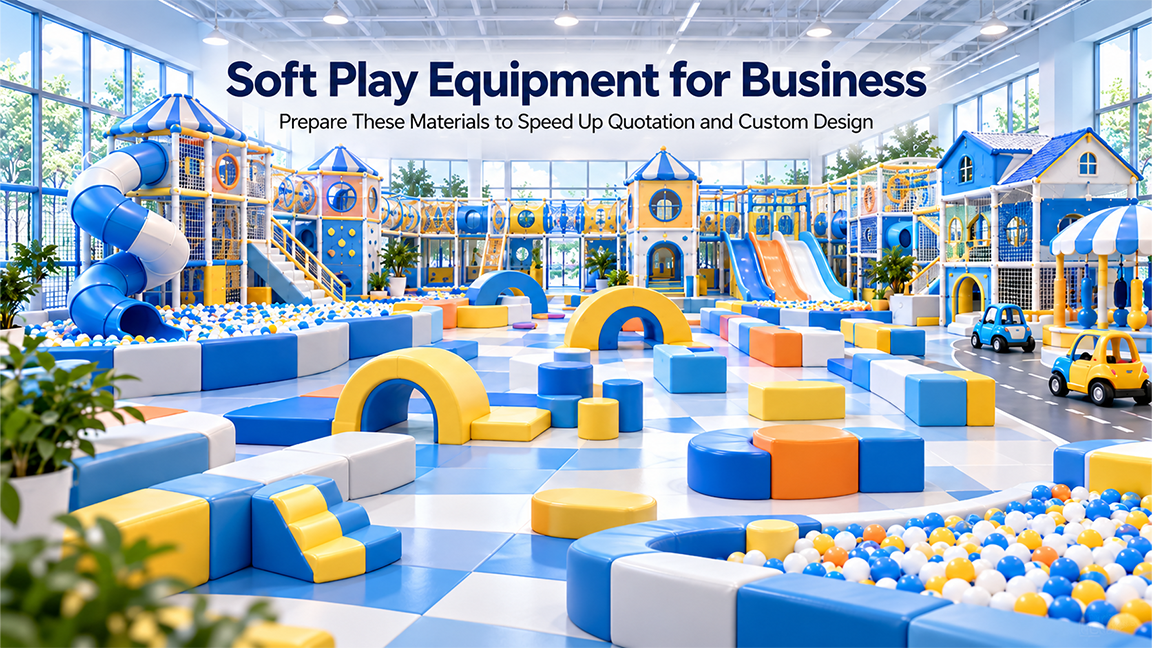
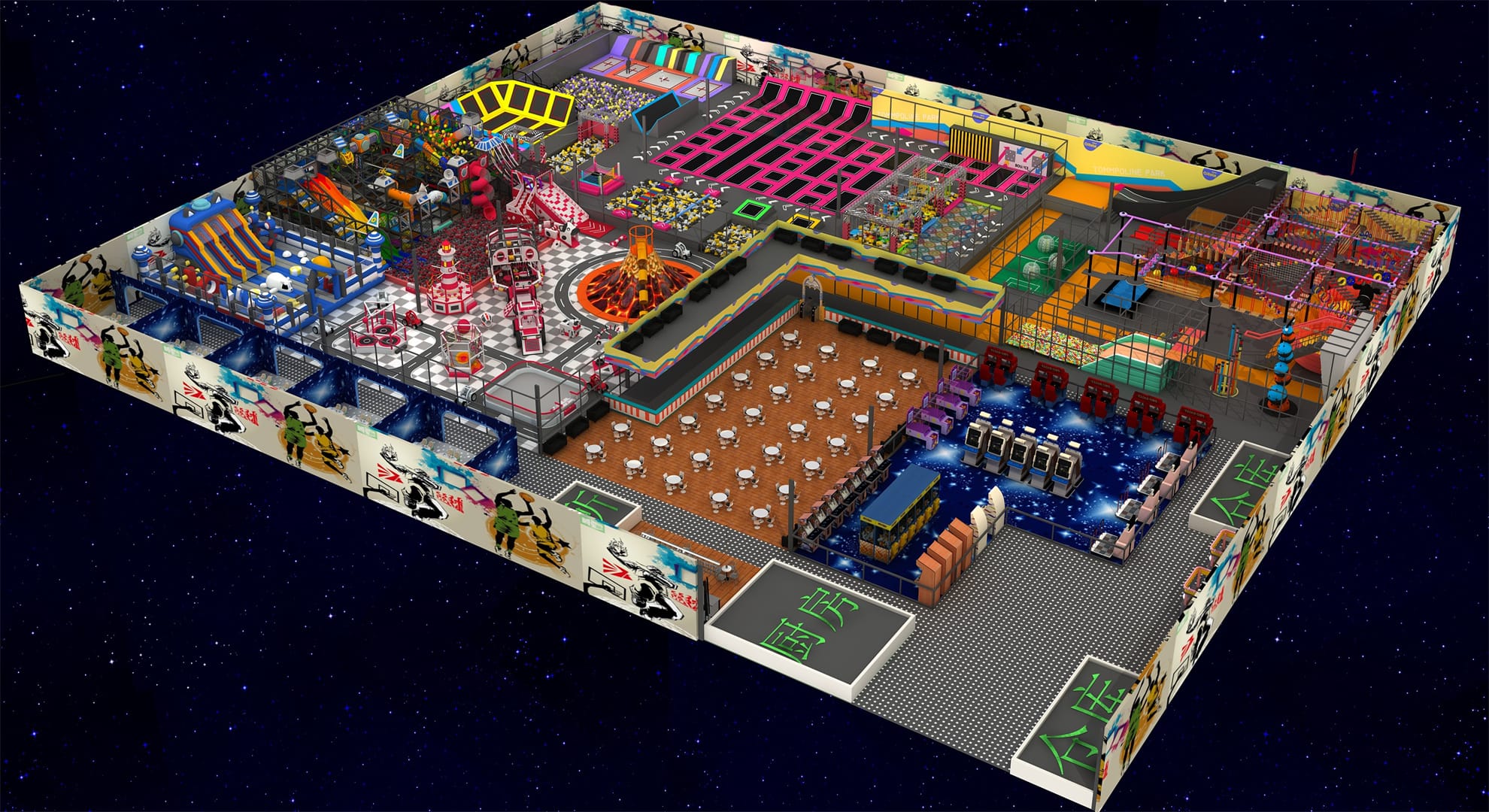
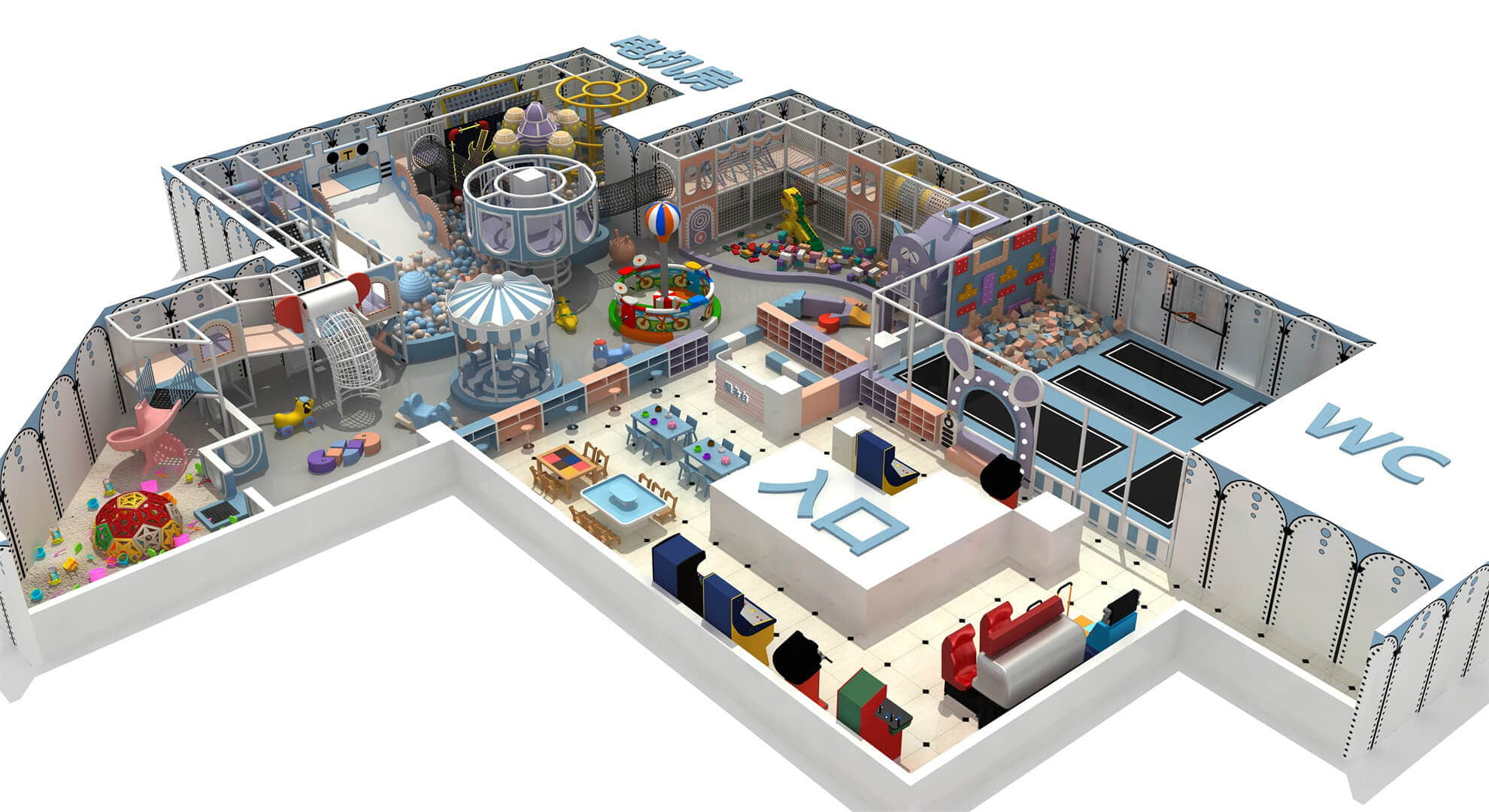
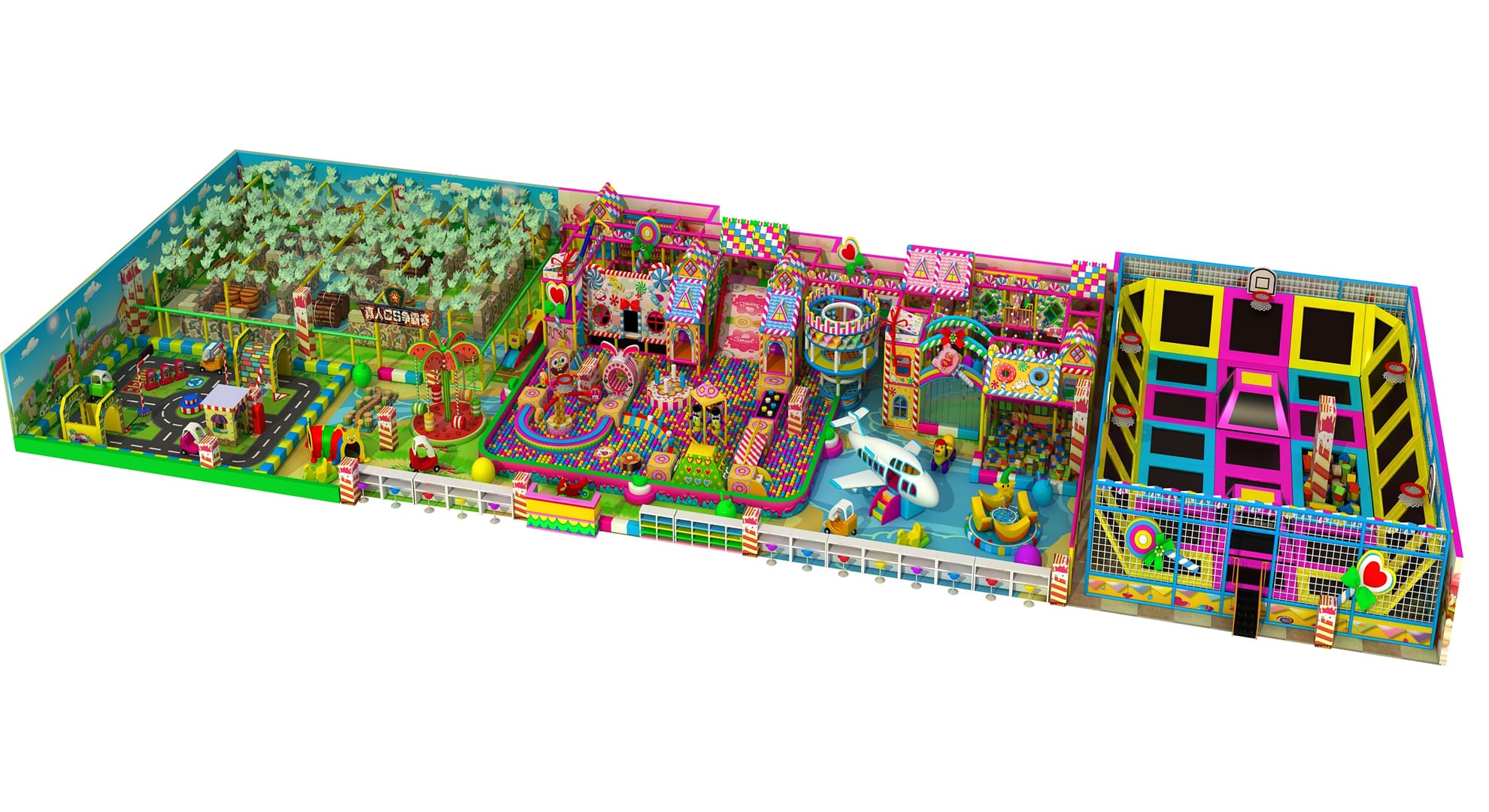
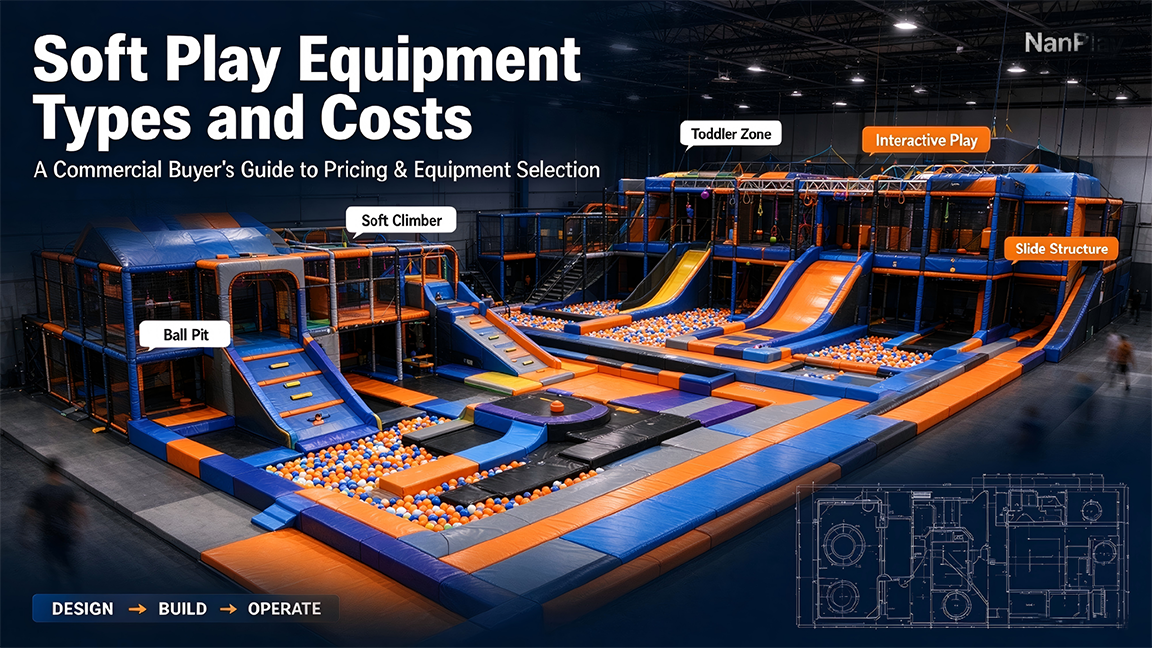
There are various soft play equipment options available for selection. You can combine them to create a soft play area for the indoor playground.
The soft climbing frame is a multi-level climbing facility with soft cushions. There are low versions suitable for young children to play with, and larger versions for school-aged children to use. These devices can help children develop their large muscle movements and are widely used in soft play areas.
A commercial small-sized soft slide is equipped with a soft sliding surface and safety soft steps. It has a built-in cushion at the bottom to reduce the impact force upon landing. It is commonly used in the children’s area or in mixed-age amusement areas where children of different ages can play together.
The ball pool is the most popular facility in indoor soft play areas. Commercial ball pools are equipped with reinforced safety fences and easy-to-clean bottom surfaces. They can be used as standalone units or combined with soft climbing frames and slides.
The soft building blocks and obstacles include large foam blocks, low-balance obstacles, and padded step units. Children can stack, climb over, or pass through these obstacles. These modular components are flexible and versatile and can be easily reassembled and arranged in the soft play area.
Interactive indoor soft play facilities can incorporate lighting, sound triggers, or game elements onto a pad-like structure, effectively enhancing the participation of visitors. They are highly suitable for hosting birthday parties or group activities in indoor amusement parks.

When choosing suitable soft play equipment, it is necessary to take into account the age of the visitors, as the physical capabilities of different age groups vary and so do the safety risks.
For children under the age of 5, low indoor soft play equipment should be chosen: small soft climbing frames, low slides, large soft building blocks and shallow pit ball pools. Avoid using tall structures to prevent the risk of falling. All floors must be covered with soft padding.
Preschool children (aged 5-8) can handle larger soft climbing facilities, medium-sized slides, and more complex soft obstacle courses. For children in this age group, you can add deeper ball pools and interactive soft play facilities.
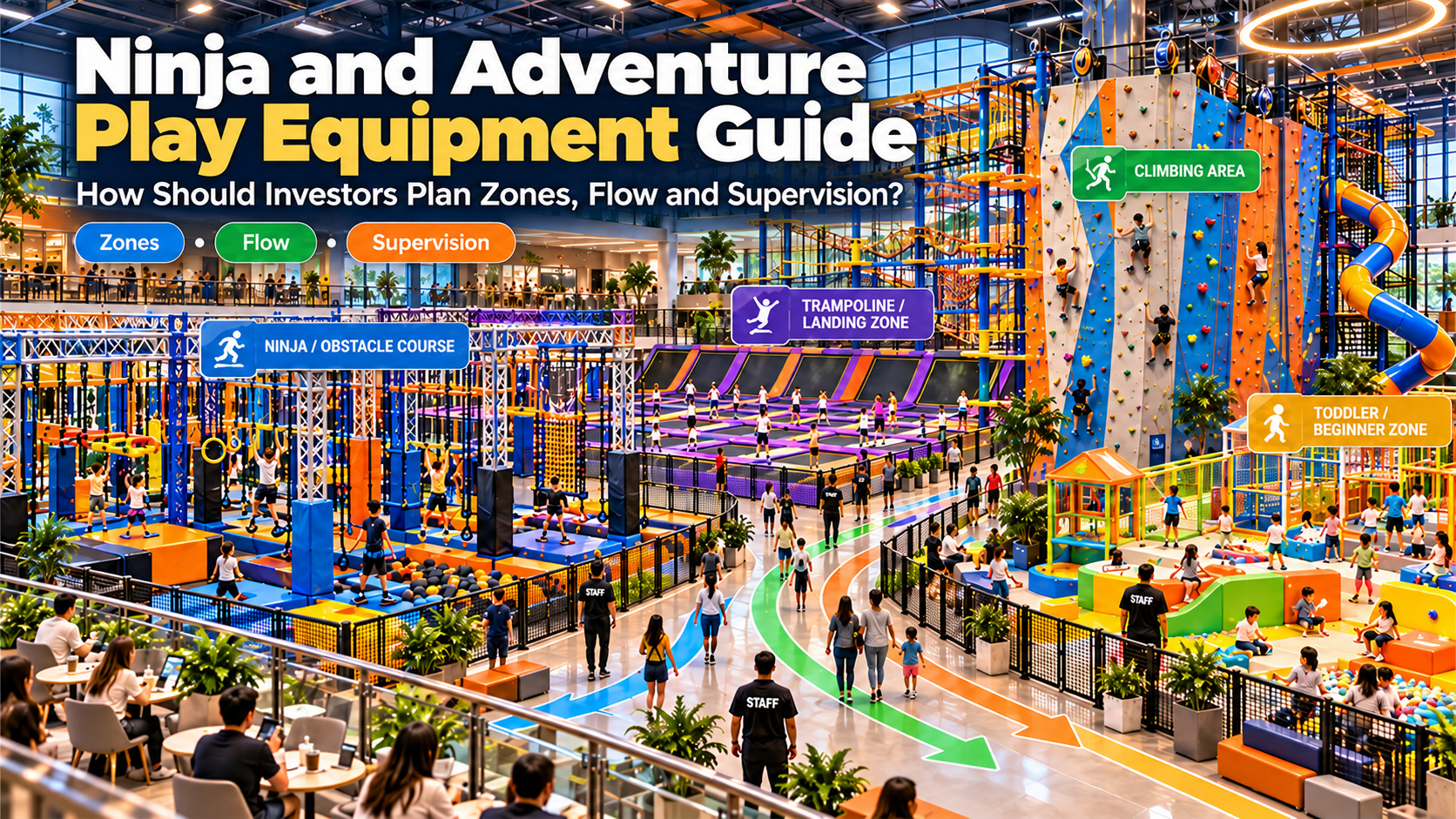
If your indoor playground serves guests of different age groups, it is necessary to divide the space. Separate the soft play area for young children from the equipment area for older children to prevent collisions between different age groups. Setting up barriers and clear signs will help manage the flow of mixed-age people.
The total investment amount for indoor playground equipment can vary significantly depending on the project size, material grade, and customization requirements. Here is the typical commercial price range for indoor soft play facilities:
Customized commercial soft play equipment usually requires 45 to 60 working days, plus the time needed for transportation and on-site installation.
There are several factors that will affect your final expenditure on indoor soft gaming equipment. Before setting a budget for the soft gaming devices, it is advisable to understand these items first.
The equipment will have a larger design and be constructed in multiple layers. The materials used and the production processes will increase as well, which will lead to an overall rise in the cost of the indoor amusement park.
The total number of soft climbing equipment, building blocks, ball pools, and other components directly affects the pricing. The more components there are, the higher the carrying capacity during peak hours, but this also increases the overall investment cost of the project.
High-quality high-density EVA foam, heavy-duty PVC protective covers, and thick-walled galvanized steel frames are more expensive than their lower-grade counterparts. Using higher-quality materials can provide a longer service life for soft play facilities for commercial use.
The fully customized theme design, brand color schemes, and special interactive functions will increase the design and production costs. Standard modular soft play equipment is usually more budget-friendly.
Key factors to consider:

When choosing soft play equipment, one should not merely focus on the price. Instead, one needs to comprehensively consider the following practical aspects to find a solution that suits your indoor amusement park.
Measure the floor area, ceiling height, columns, and exit positions. Some multi-level soft climbing facilities require a certain clear ceiling height. Modular indoor soft play equipment can adapt to irregularly shaped venues.
Estimate the expected number of visitors during the peak hours. Adequate soft play facilities can effectively prevent the area from becoming overcrowded due to long waiting times for tourists.
For commercial spaces, use PVC outer skins that are easy to clean and resistant to dirt. Avoid choosing materials that accumulate dust and are difficult to clean repeatedly. When purchasing, make sure that each piece of the soft components is easy to inspect and clean.
Try to choose indoor soft play facilities with modular design. The modular design enables the addition of new climbing frames, building blocks, or ball pools later on without the need to rebuild the entire indoor play area.
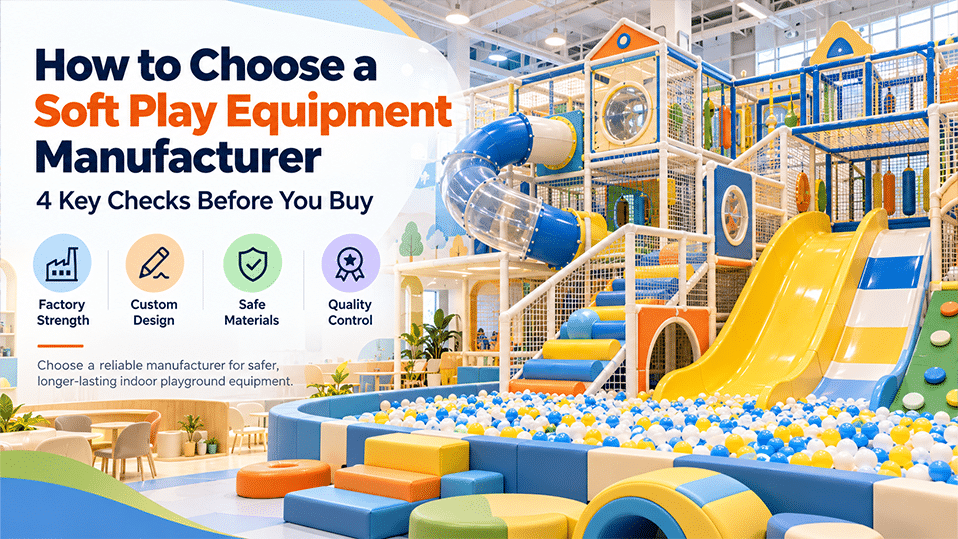
The quality of the materials determines the safety, durability, and lifespan of commercial soft play equipment.
Reputable manufacturers, such as NanPlay, will use galvanized steel frames, high-density EVA foam, and food-grade PE sheets for all custom soft play projects, meeting international commercial playground material standards.
When purchasing, remember to verify safety qualifications: CE, EN71, EN1176, ASTM F1918, REACH. Also, check the third-party testing reports from SGS or TÜV, and confirm whether the manufacturer has ISO 9001 quality management and ISO 14001 environmental management system certifications.

Many first-time purchasers tend to overlook the transportation and installation costs for indoor playgrounds.
Make sure that the supplier lists the equipment cost, shipping cost, and installation cost separately in the quotation. When making the budget, these expenses should not be regarded as optional extras.
The main commercial products include soft climbing frames, small soft slides, ball pools, soft building blocks and obstacles, as well as interactive indoor soft play facilities. These components can be freely combined to construct a complete indoor playground.
The price of a small children-friendly soft play area is approximately $20,000 or more. The price of a medium-sized indoor complete soft play facility ranges from $80,000 to $300,000. The price of a large customized theme FEC-level project exceeds $300,000. For an accurate quote, please request a personalized plan.
Young children need low and cushioned play facilities: small soft climbing frames, large soft building blocks, low slides, and shallow pit-style ball pools. When choosing soft play equipment, priority should be given to those with completely rounded corners and comprehensive fall protection soft pads.
Yes. Professional manufacturers offer OEM and ODM customization services. They can adjust the layout, color theme, equipment combination, and special functions according to your unique indoor playground equipment site and brand requirements.
The main area for young children is usually a small soft play zone, requiring a space of 150-200 square meters. If it is a comprehensive indoor amusement park with multiple play areas for different age groups to enjoy, the space should be at least 300-500 square meters, and the ceiling height must be sufficient to accommodate multi-level amusement structures.
Understanding the types of soft play equipment and their actual costs can help you plan a safe and profitable indoor soft play area. Select equipment based on the age group of visitors, verify the quality of materials, include transportation and installation costs in the budget, and reserve space for future expansion.
If you plan to build or upgrade a commercial soft play project, you can collaborate with experienced one-stop manufacturers like NanPlay. NanPlay has over 14 years of industry experience, with a factory covering 20,000 square meters. It has implemented over 1,000 projects worldwide and can provide full certification. It offers customized soft play equipment for global B2B customers.
Contact NanPlay right now to discuss your project. Get a free quote and obtain a dedicated 2D layout and 3D design plan. Provide the site size, ceiling height, target age group, and budget target. Our engineering team will follow up throughout the process, providing comprehensive support from site assessment, production, delivery to after-sales service.
Thank you very much for your inquiry! Your trust is our greatest motivation. We are committed to offering playgrounds that combine high quality with affordable pricing. Let us bring vitality to your venue!