14 September 2026
1 September 2026
2 September 2026
2 September 2026
3 September 2026
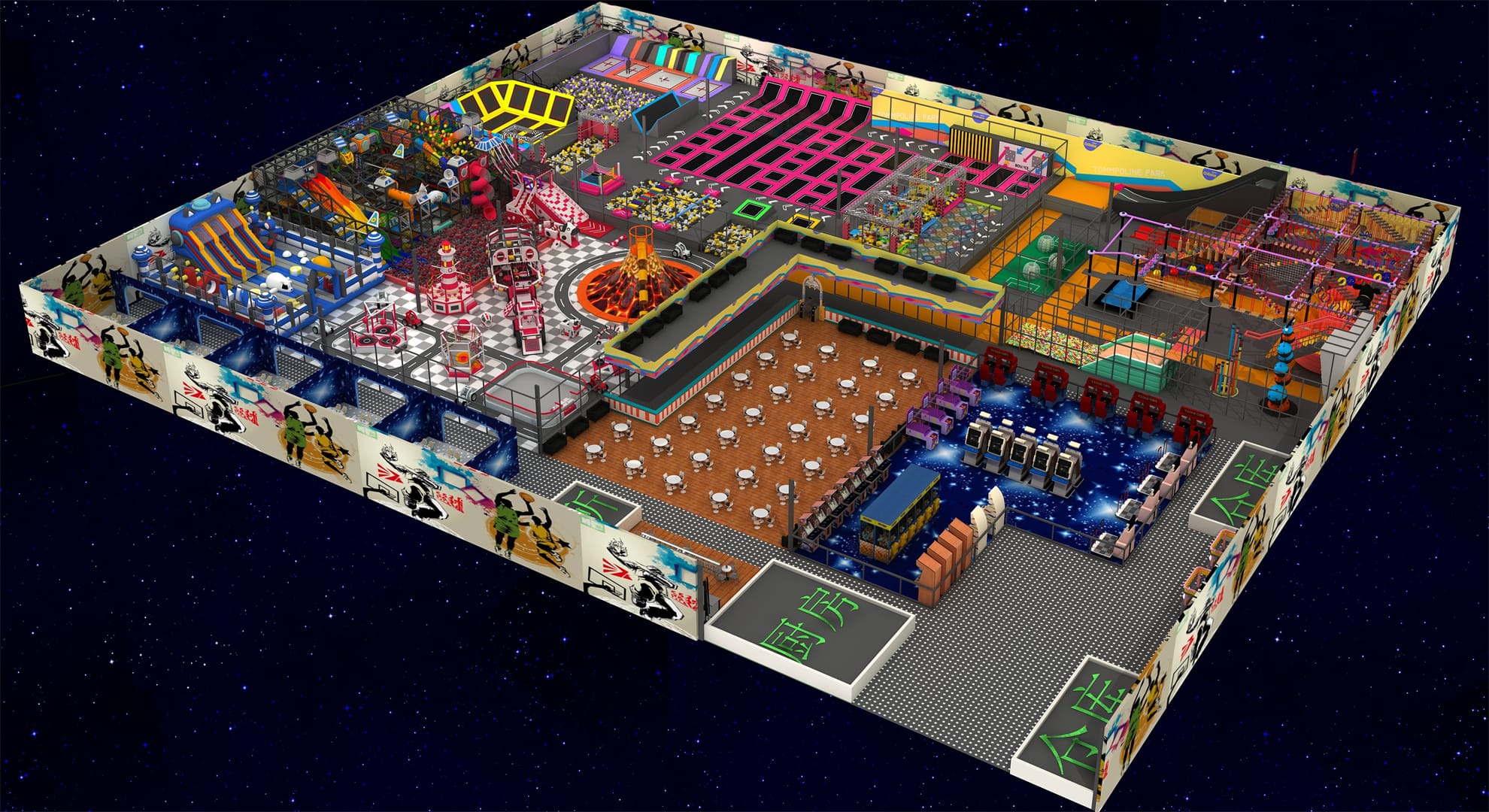
Trampoline park equipment provides a high-energy core drainage program for your family entertainment centre (FEC), which can attract families, teenagers, and even adults. The global trampoline park market valuation in 2025 is about $3.2 billion, and it is expected to reach about $6.8 billion by 2033. By 2025, trampoline parks are expected to occupy about 40% of the global home indoor entertainment centre market. A successful trampoline area usually requires an area of more than 800 to 2,000 square metres with a ceiling height of at least 5.2 metres. In addition to the main jumping area, you can also add dodgeball, basketball, bubble pool, ninja obstacle track, and interactive digital projects to maximise revenue and keep customers.
If you are a B2B buyer who is planning a family entertainment centre, you may have noticed that trampoline parks can be seen everywhere. There is a good reason for this. From 2025 to 2033, the global trampoline park market is expected to grow at a compound annual growth rate of 15.25%. Today’s families pursue active, social, and memorable experiences, and trampoline parks can meet these needs.
Adding trampoline park equipment to your FEC is not just a place for children to jump. It is about creating a high-energy core diversion project to attract customers, maintain their participation, and create multiple sources of income. But choosing the right equipment and integrating it into your layout requires careful planning.
This guide covers what trampoline park equipment FEC should include, how to integrate it into your layout, how to choose commercial-grade equipment, and related costs.
Trampoline parks are the largest single entertainment category in the family entertainment centre market, accounting for about 40% of the market share in 2025. This is not an accident.
High throughput – Trampoline parks can receive a large number of visitors at the same time. The well-designed jumping area can efficiently circulate the passenger flow and maximise your income per square metre.
Broad demographic appeal – Trampoline attracts all people from toddlers to teenagers to adults. Parents can also jump, and they often do so, which makes the trampoline park a real family activity.
Strong revenue streams – In addition to ticket sales, the trampoline park also generates revenue from birthday parties, group activities, membership, catering, and merchandise sales. The EBITDA profit margin of well-managed parks is usually between 25% and 35%.
Repeat visits –The repeat visit rate of trampoline parks is very high. Once families find their favourite park, they will come back again and again.
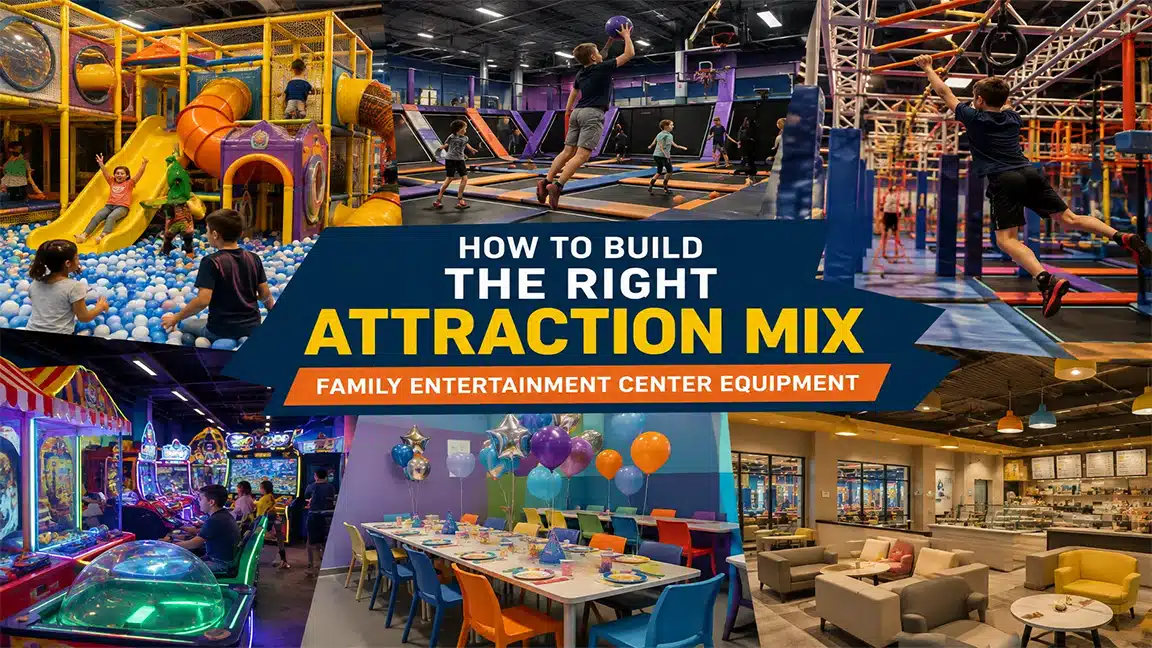
Complementary to other attractions – Trampoline is well matched with soft-packed amusement, ninja obstacle track, climbing wall, and arcade area. As the core of the multi-project FEC, they allow families to stay in the venue for hours.
The main jumping area is the core of your trampoline park. It usually consists of interconnected trampoline surfaces, covering the largest area of your facility. The surface of the commercial trampoline is made of high-tensile-strength material, equipped with a durable steel frame and safety protection net. The main jumping area should be designed to jump freely, and there should be enough space to safely accommodate multiple users.
Dodge courts and basketball dunk lanes are among the most popular additional items. They can create organised competitive activities so that tourists can stay involved for a longer time. In 2025, interactive dodgeball systems with luminous targets are becoming more and more common. Dunk lanes allow jumpers to practice their best moves, and these images are very suitable for taking pictures and posting on social media.
The air cushion area and foam pool can increase the excitement, allowing jumpers to practice flipping and skilful movements while landing in a soft place. Challenge areas, such as “elimination” areas with combat beams and rotating machines, can create interesting competitive games. The air cushion system is easier to maintain than the traditional foam tank, and the impact absorption effect is also better.
The Ninja Warrior track is naturally compatible with the trampoline, which can attract older children and teenagers and meet their needs for physical challenges. Interactive elements are a big trend in 2025. Augmented reality trampolines, sports tracking games, and gamified experiences can attract tourists who like technology. Interactive dodgeball and intelligent entertainment systems add digital gameplay to sports activities.
The trampoline park needs a large space. The industry recommends more than 800 to 2,000 square metres, with a ceiling height of at least 5.2 metres. The main jumping area needs an open ground space, and there can’t be a column in the middle. If the ceiling height is less than 5.2 metres, it may be necessary to limit certain activities or consider a smaller trampoline area.
Separate the trampoline area from quiet areas such as children’s soft play. The active area is noisy and has high energy. If you put it next to the quiet area, everyone will have a bad experience. The subdivision can be arranged as follows:
| Zone | Age Group | Activity Level | Purpose |
| Main jump court | Mixed ages | High | Free jumping and social play |
| Dodgeball / Basketball | 6+ | High | Structured competitive games |
| Foam pit / Airbag | 8+ | High | Trick practice and thrill |
| Toddler trampoline | 2–5 | Medium | Safe, low-impact jumping |
Employees should be able to see all areas of the trampoline area without hindrance, and leave enough passage space around the jumping area to facilitate entry and exit and emergency passage. Trampoline parks usually need more employees than soft-packed amusement areas, and the staffing should be planned in advance.
Employees should be able to see all areas of the trampoline area without hindrance, and leave enough passage space around the jumping area to facilitate entry and exit and emergency passage. Trampoline parks usually need more employees than soft-packed amusement areas, and the staffing should be planned in advance.
Safety cannot be compromised. The equipment should meet the ASTM F1918 and ASTM F2970 standards. This standard pipe equipment should be durable, with fall protection, structural integrity, and anti-clamp protection. All exposed steel edges and springs should be wrapped in shock-absorbing soft bags. The safety protection net should be tight and checked regularly.
Maintenance and Replacement Parts
The trampoline equipment needs continuous maintenance. The trampoline surface, springs, and soft bags will wear out after a long time. They need to be replaced regularly. Find a supplier who can provide spare parts and maintenance guidance to cooperate. Before buying, ask how often the cushions, springs, and soft bags should be replaced.
The initial investment of opening a trampoline park is about 350,000 to more than 1 million US dollars. It depends on the scale, equipment quality, and site selection. A facility of 20,000 to 30,000 square feet may cost more than 450,000 to 900,000 US dollars in equipment alone.
Here is a general breakdown:
| Equipment Category | Estimated Cost Range |
| Main trampoline court (including beds, frames, padding) | $150,000 – $400,000 |
| Dodgeball courts and basketball zones | $30,000 – $80,000 |
| Foam pits and airbag systems | $40,000 – $120,000 |
| Ninja obstacle courses | $30,000 – $100,000 |
| Interactive digital systems | $20,000 – $60,000 |
| Safety netting and padding systems | $30,000 – $80,000 |
| Installation and shipping | $50,000 – $150,000 |
The price of a commercial trampoline park is between 5,000 and 50,000 US dollars. Depending on the size and function, low-quality, non-compliant equipment may only cost 150,000 US dollars, but good-quality equipment that meets ASTM or TÜV standards for medium-sized parks generally costs 200,000 to 350,000 US dollars. A complete commercial trampoline The decoration of the park, will cost about 200,000 to more than 1.5 million US dollars.
The cheapest thing is often not the best choice. Low-quality materials have high maintenance costs, many safety problems, and a short service life. It is wiser to invest in commercial-grade and certified equipment from the beginning.

| Attraction | Main Users | Activity Level | Main Role |
| Trampoline Park | Mixed ages (5–40+) | High | Active, high-energy anchor attraction |
| Soft Play | Young children (1–6) | Medium | Safe, sensory family play |
| Ninja Course | Older kids / Teens (8+) | High | Skill-based challenge |
| Climbing Walls | Kids / Teens (6+) | High | Physical skill development |
Trampoline parks offer the highest throughput and the widest age appeal in all single FEC rides. It is especially suitable as a core diversion project to attract customers into the venue. Soft-packed amusement is best positioned as a supplementary area for children. Ninja obstacle tracks and climbing walls increase diversity and attract older groups.
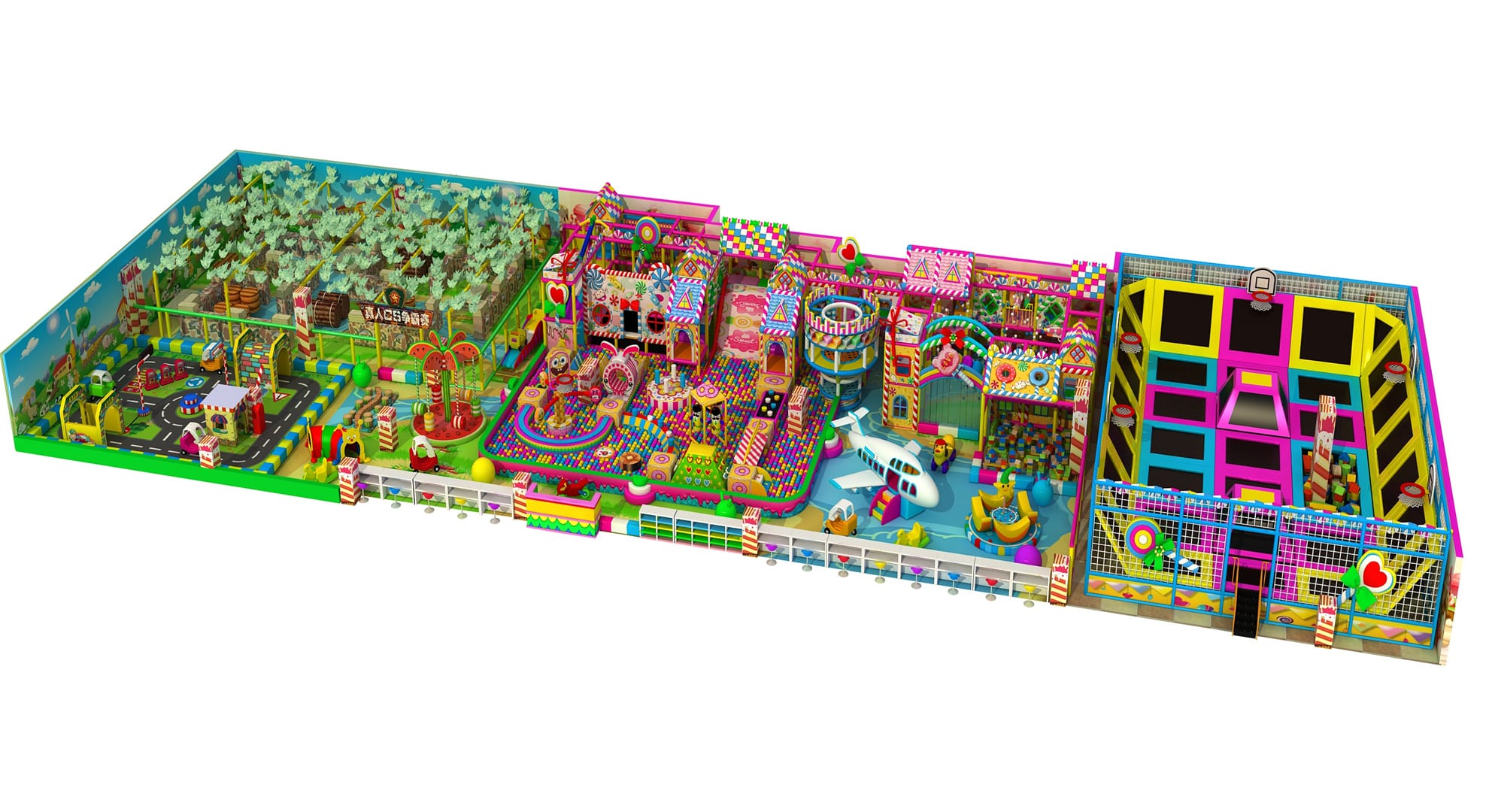
For most FECs, the hybrid mode – combining trampoline with soft package entertainment, ninja obstacle track, and interactive area – can bring the best results. Customers get diversity, and you get multiple sources of income.
The FEC trampoline area requires a main jumping area, a dodge court, a basketball dunk lane, a bubble pool or air cushion, a safety net, and a soft bag system, as well as an optional ninja obstacle track and an interactive digital system.
The industry recommendation is more than 800 to 2,000 square metres, with a ceiling height of at least 5.2 metres. The smaller trampoline area can operate in a space of 500 to 800 square metres with a lower floor height, but you need to limit certain activities.
The equipment cost of a medium-sized park is more than 200,000 to 350,000 US dollars. The total investment, including installation, mats, and transportation, is usually more than $350,000 to $1 million.
Many FECs will add trampoline areas during renovation or expansion. Cooperate with one-stop suppliers who provide customised design services to integrate the trampoline with your existing layout.
It’s totally okay. Combining a trampoline with soft-play fun can create a facility that attracts all ages – children in the soft-play area, and older children and teenagers in the trampoline area. This can maximise your customer base and extend the stay time.

Trampoline park equipment is one of the most profitable projects you can add to the family entertainment centre. With the market growing at a compound annual growth rate of 15.25% and trampoline parks occupying a 40% share of the FEC market, the demand is obvious.
When planning your trampoline area, start from the main jumping area. Add dodgeball and basketball areas to provide competitive fun. Add bubble pools or air cushions for tourists seeking excitement. Consider the ninja obstacle track and interactive digital system to attract older children and teenagers. Verify that your equipment meets the safety standards of ASTM F1918 and ASTM F2970. Choose commercial-grade materials – galvanised steel frame, high tensile strength bed, and shock-absorbing soft package. And always reserve the budget for continuous maintenance and spare parts.
The right equipment and reasonable layout will make your FEC a family’s favourite destination. NanPlay provides a comprehensive range of trampoline park equipment – from the main jumping area and dodgeball area to the ninja obstacle track and interactive digital system. With commercial-grade materials, ASTM security compliance, and complete one-stop project support, NanPlay helps you create a trampoline park that attracts passengers and drives revenue.
Contact NanPlay immediately to discuss your trampoline park equipment needs and tailor the FEC layout for you.
Thank you very much for your inquiry! Your trust is our greatest motivation. We are committed to offering playgrounds that combine high quality with affordable pricing. Let us bring vitality to your venue!