21 September 2026
15 September 2026
14 September 2026

14 September 2026
14 September 2026
Young children are in a critical stage of physical and mental development. They mainly explore the world through play, develop motor skills, and cultivate creativity. Choosing suitable children’s play equipment is not only to provide entertainment – it is also a commitment to their safety, growth and overall well-being. Whether it is a commercial place such as a kidzone indoor playground or a private space, the choice of toddler indoor playground equipment needs to be carefully considered from many aspects.
This guide combines NanPlay’s professional experience to help you master the method of choosing children’s play equipment, and find a balance between safety, fun, and developmental value.
When selecting equipment for a children’s indoor playground, several key factors must be prioritized to meet the unique needs of young children (typically 1-3 years old).
The first is safety. Children’s motor skills are not yet mature, and their risk awareness is limited, so all equipment must be free of sharp edges, removable small parts, and gaps that could trap fingers or limbs. NanPlay’s children’s play equipment strictly follows global safety standards, with rounded corners, high-density foam filling, and non-toxic materials, eliminating potential dangers from the source.
The second is the development of relevance. The equipment should be in line with the development of young children, such as crawling, walking, balance, and sensory exploration. For example, low climbing structures help develop gross motor skills, while sensory panels promote cognitive and tactile development.
The third is durability and ease of maintenance. The kidzone indoor playground and other commercial places have a large number of people, so the equipment must be able to withstand frequent use without affecting safety or appearance.
The fourth is fun. Young children have short attention spans, so the equipment should have bright colors, interesting textures, and interactive elements to keep their attention and curiosity.
First of all, clarify the specific age range of the target children and the space to be used. For the construction of an indoor children’s amusement park, measuring the available size can effectively ensure that children will not be too crowded when using the equipment after installation. If it is too crowded, it will increase the risk of collision between children, so each child should be allocated at least 2-3 square meters of space.
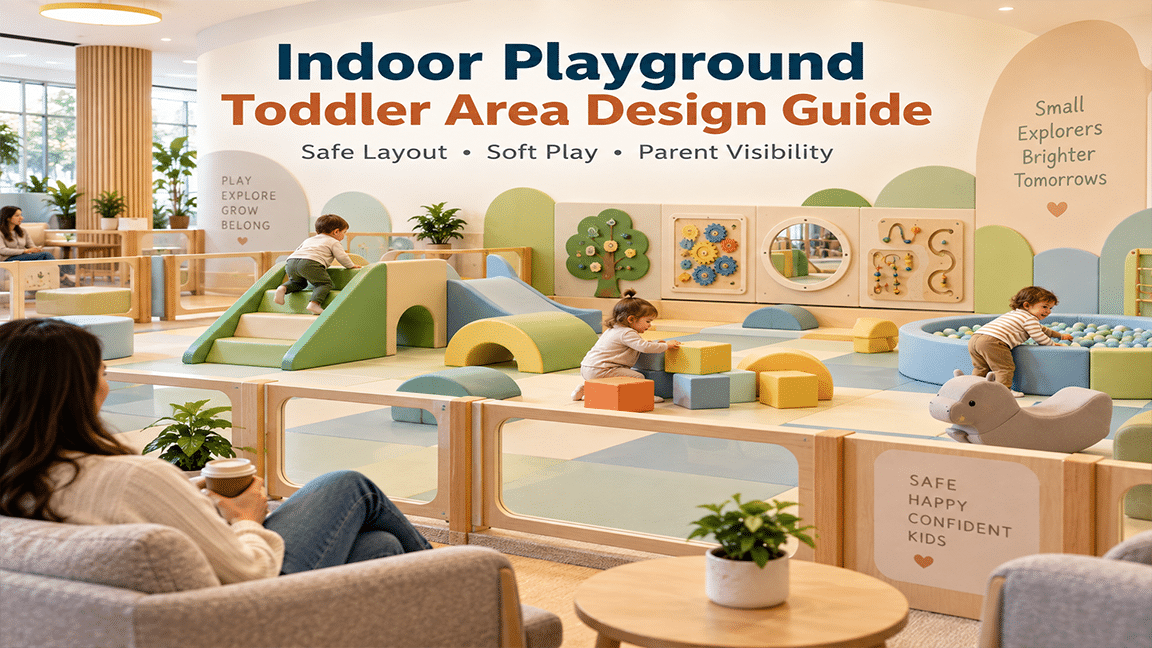
According to the age group and space, the core equipment should be selected to cover the development of different sports skills, sensory stimulation, and interactive play. If you want to build a functional indoor toddler playground, the following key components should be equipped:
Soft play area
As the core of any children’s play space, soft play equipment for toddlers is indispensable.
Sensory and interactive panels
Sensory panels (such as tactile boards, sound buttons, mirror panels) can stimulate children’s sensory and cognitive development. NanPlay’s interactive sensory panel is designed with child safety materials, is easy to operate, and allows children to independently explore cause-and-effect relationships. They can be integrated into walls or soft play structures to save space.
Ball pit and play area
A shallow pool with soft, non-toxic balls is a favorite for young children. It can promote hand-eye coordination, while allowing young children to develop social interaction skills in joint play.
Gentle slides and low ramps
Slides and ramps help young children develop their balance and gross motor skills, but they must be low to the ground (less than 60 cm for young children) and have a gentle slope.
Low-lying climbing and balance elements
Low-lying climbing and balance elements are very suitable for young children learning to climb and balance.
Parental rest and supervision area
A commercial indoor toddler playground must have a dedicated parent rest area. The rest area should be located in a position where the play area can be clearly seen, equipped with comfortable seats and nearby storage space.
All children’s play equipment should comply with international safety standards, such as EN1176 and ASTM. The equipment should also be made of non-toxic, fire-retardant, and easy-to-clean materials to ensure safety for commercial and public use.

When designing toddler indoor playground equipment, the theme not only affects the visual appeal but also directly impacts children’s engagement, sense of security, and time spent in the play area. Here are some common and successful design approaches used in NanPlay’s toddler areas:
Nature or Animal Themes
Inspired by jungles, oceans, or farms, these themes typically use soft materials and vibrant colors to effectively stimulate children’s exploration and imagination, allowing them to connect with nature through play.
Modern Living Themes
Modern interactive areas often combine contemporary design elements with clean lines and soft color schemes, making them more suitable for shopping malls and family centers. These themes usually include interactive panels and role-playing areas, allowing children to explore simulated life scenarios and enhancing immersion.
Natural Style Design
Natural styles emphasize environmental friendliness, safety, and comfort, typically using eco-friendly wood components and soft, low-saturation green tones to provide a tranquil and comfortable environment for children.
Minimalist Theme Solutions
Minimalist themes feature a relatively simple and compact layout, making them more suitable for smaller spaces. NanPlay‘s modular design meets diverse play needs while maintaining safety and fun.
When selecting soft play equipment for toddlers, a clear and practical checklist can effectively prevent overlooking key configurations, ensuring overall security and user experience.
Basic Safety Features:
Soft Flooring (EVA/PVC Foam): Effectively cushions impacts from falls, suitable for toddlers in the crawling and walking stages;
Non-slip Surface Treatment: Reduces the risk of slipping in high-frequency areas such as entrances and slide exits;
Rounded Corners and Fully Paved Design: Pads cover hard edges and sharp corners, enhancing overall safety for children.
Age-Appropriate and Functional Features:
Age-Adapted Safety Design: Height and slope are tailored to the height and strength of children aged 1–4 years;
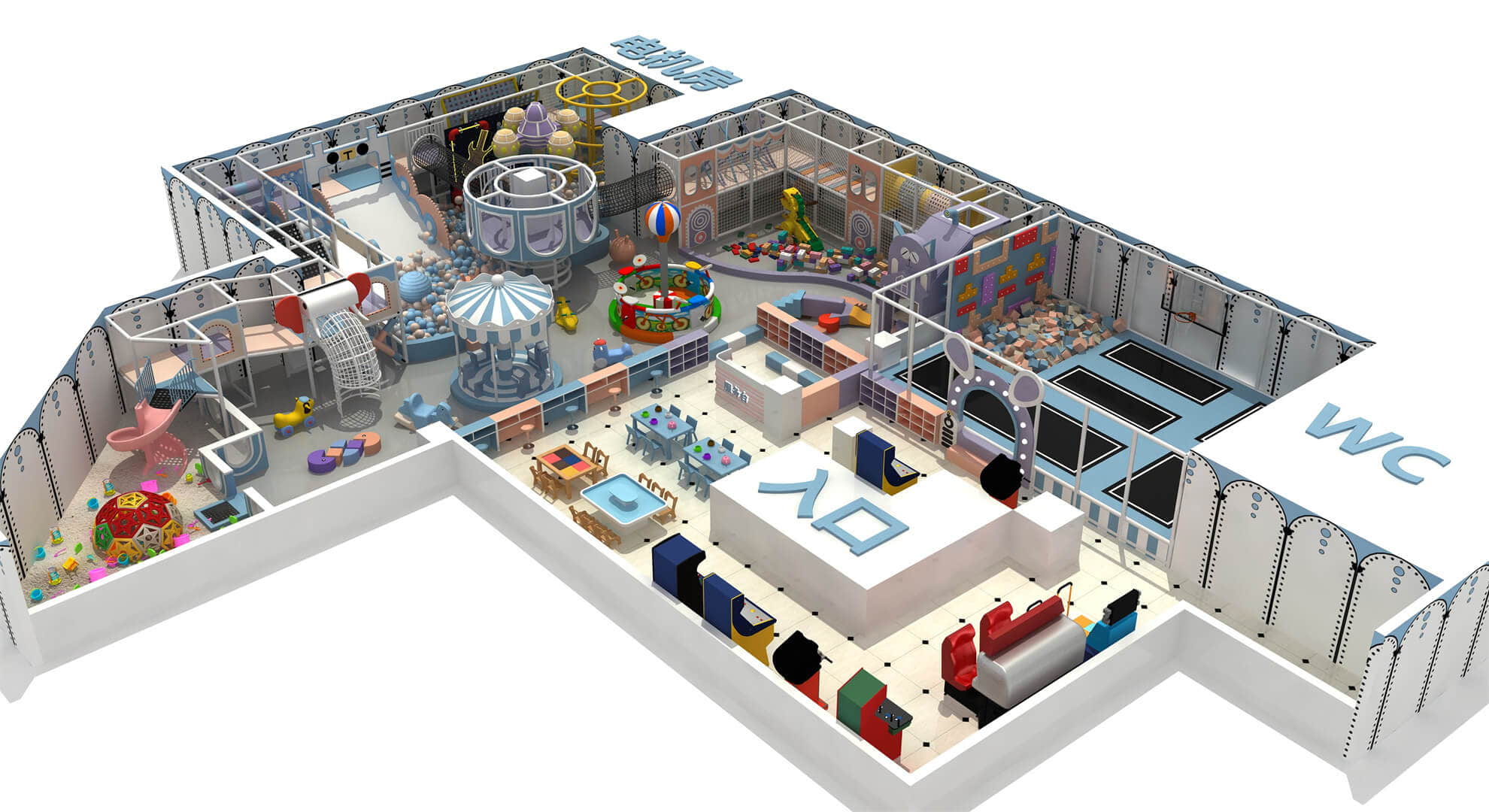
Clear Functional Zoning: Includes soft play areas, ball pits, and sensory interaction areas, meeting diverse play needs while effectively reducing chaos;
Low-Height Slides and Ramps: Help toddlers safely practice climbing, balancing, and coordination.
Core Play and Interactive Elements:
Commercial and Operational Support:
This checklist allows operators to more systematically evaluate equipment configurations, ensuring that the selected indoor toddler playground is safe, practical, and has long-term commercial value.

Choosing the right indoor play equipment for toddlers can create a safe, exciting, and fun play environment. By focusing on safety, age-appropriate design, and modular, interactive features, operators and parents can provide a happy space for children to grow.
Q1: Why should children’s play areas be separated from older children’s areas?
A1: Separation reduces the risk of collisions and provides a safer, quieter environment for children.
Q2: Which play equipment is best suited for young children?
A2: Low slides, soft climbing structures, ball pits, and sensory panels are best suited for toddlers.
Q3: Is children’s play equipment customizable?
A3: Yes. Most commercial-grade equipment can be customized to fit the venue, theme, and color scheme.
Q4: Is children’s play equipment suitable for commercial use?
A4: NanPlay devices are designed for high-frequency use environments such as shopping malls, indoor playgrounds, and childcare centers.
Thank you very much for your inquiry! Your trust is our greatest motivation. We are committed to offering playgrounds that combine high quality with affordable pricing. Let us bring vitality to your venue!