21 September 2026
15 September 2026
14 September 2026

14 September 2026
14 September 2026
When planning to develop an entertainment project, many investors will face a problem: to choose an indoor playground or a trampoline park?
Both models can attract a large number of customers and bring you stable income, but they have different requirements, product audiences, and business goals that need to be met for development. This article will analyze indoor playgrounds and trampoline parks in detail, compare their core differences, and provide you with the most suitable choice guide.
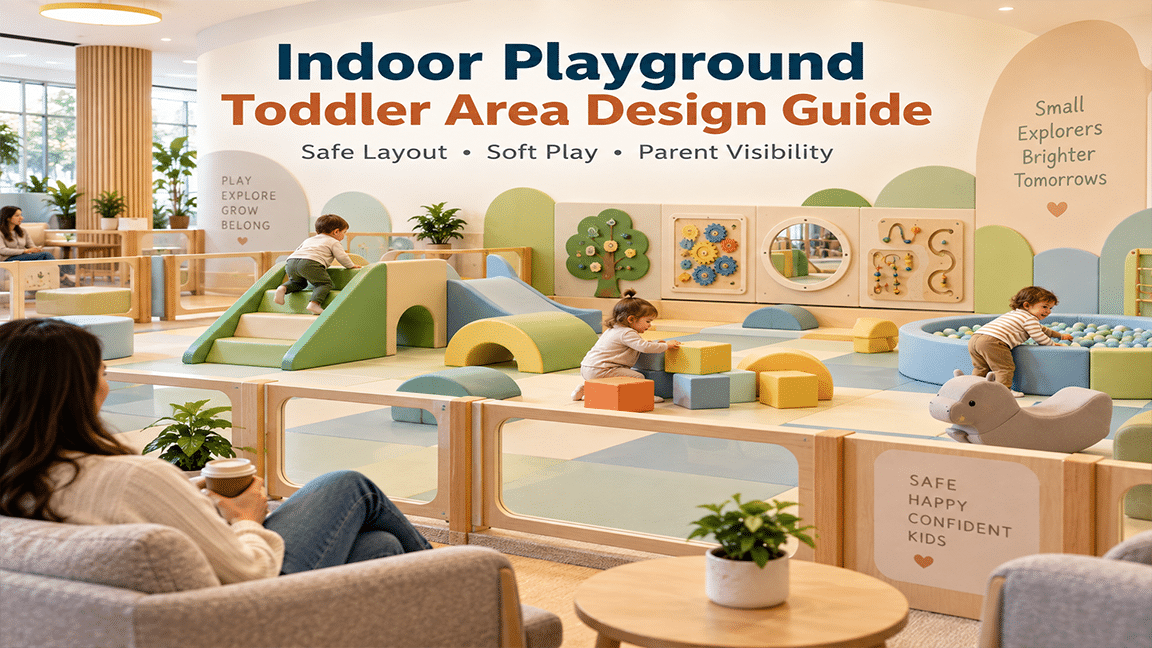
The indoor playground is a carefully designed play space that focuses on children’s safety, exploration, and growth, and promotes children’s overall development through colorful interactive activities. It typically includes various facilities such as soft play equipment, slides, ball pits, and creative themed areas.

Multi-functional play area: This area ranges from an indoor soft play area designed specifically for young children to a large adventure area, each area catering to the different play styles of each child.
Safety structure: All components we use are made of non-toxic flame-retardant EVA foam, food-grade plastic, and reinforced steel frame, in compliance with international standards. In terms of design, we use rounded corners and clear age divisions to effectively eliminate safety hazards for children.
Interactive creative elements: NanPlay indoor playground also integrates sensory game facilities and role-playing areas, which can stimulate children’s creativity in addition to sports activities.
NanPlay indoor amusement park is mainly aimed at children aged 1-12, and has designed exclusive areas for children of different ages. Its impact on children’s development is reflected in many aspects:
Physical development: Children can improve their motor skills, balance, and coordination by climbing, sliding, and running in the playground.
Cognitive development: Independent exploration in the playground can effectively enhance children’s learning ability to solve problems, spatial perception, and cause-and-effect relationships, and stimulate their thinking development.
Social and Emotional Skills: Sharing play equipment encourages children to learn to take turns, cooperate, and communicate, which helps children build self-confidence and adaptability.
NanPlay provides a variety of themed indoor playgrounds that not only perfectly match your brand image, but also highly compatible with market preferences:
Popular themes: Ocean, Jungle, Candy Land, Pirate Ship, Modern Life, and Nature themes.
Venue requirements: Flexible space, can adapt to venues of 80-10,000 square meters.
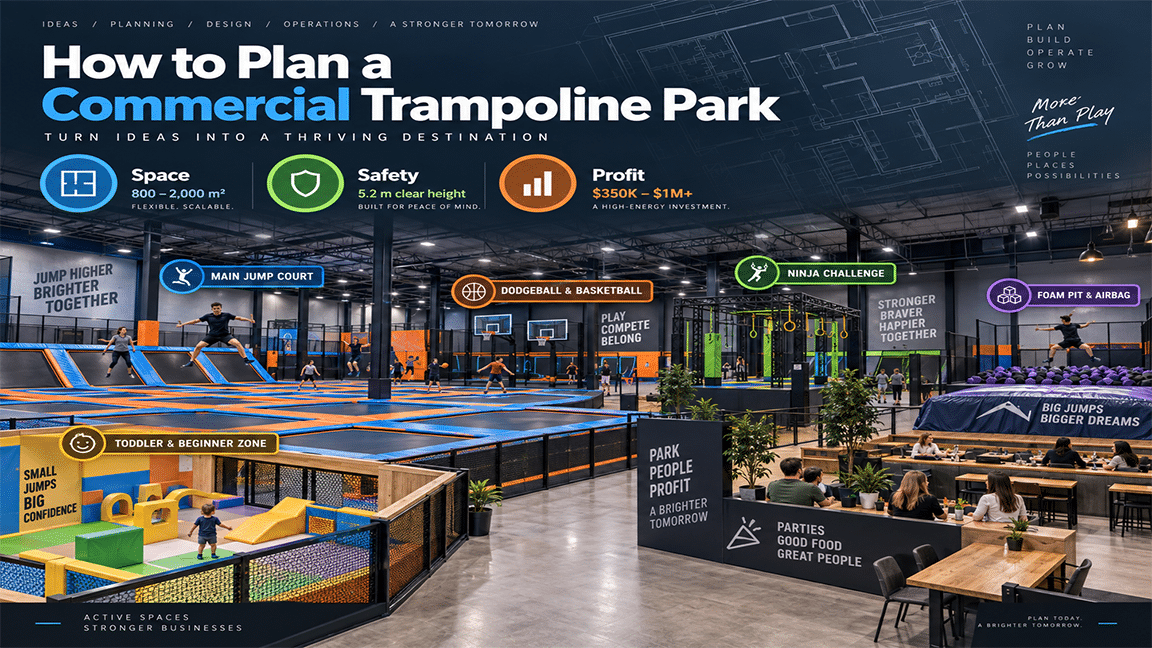
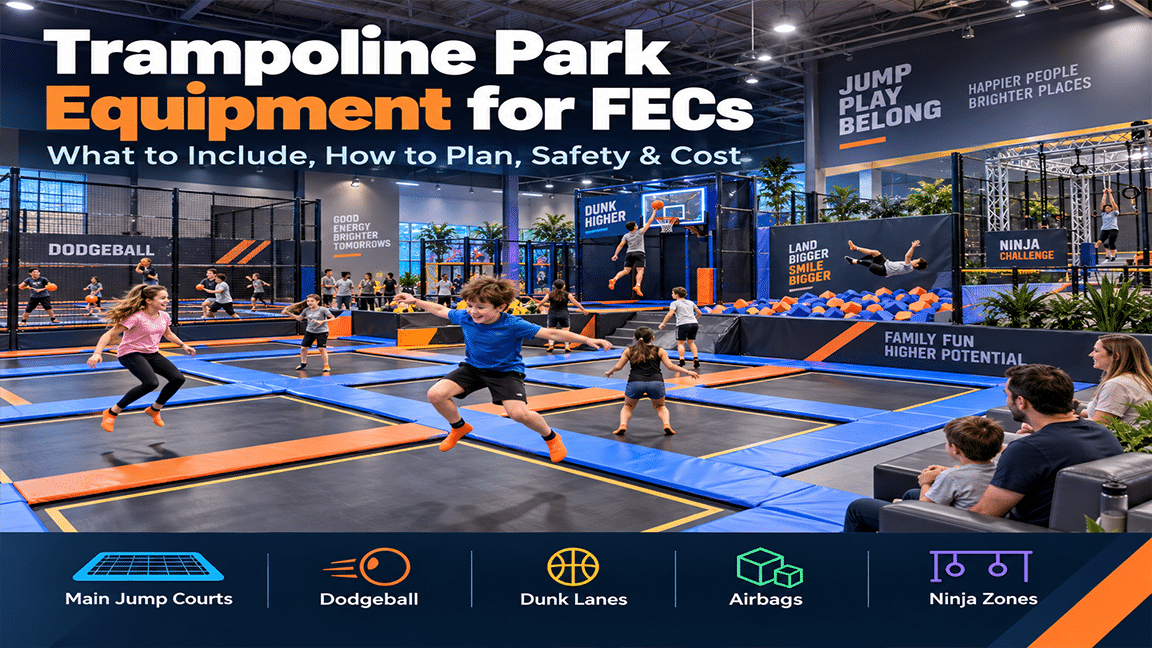
A trampoline park is a professional indoor entertainment venue that mainly features interconnected trampolines, combining casual jumping with structured challenges to provide a venue for high-intensity sports activities for children and teenagers.
NanPlay trampoline park aims to provide customers with an exciting but safe experience, and its core highlights include:
Independent Trampoline Areas: Free jumping area, sponge pool area, dodge ball area and children’s trampoline area.
Interactive additional facilities: The integration of ninja warrior obstacle course, balance rope and air cushion enrich the types of activities and are more suitable for older children and teenagers.
Safety first design: Each trampoline is equipped with a padded frame, shock-absorbing net, and non-slip trampoline surface. The equipment meets ASTM F38 / F391 safety standards. All areas are supervised by well-trained staff to ensure the safety of children.
Compared to indoor playgrounds, trampoline parks are suitable for a wider age range of children, primarily targeting teenagers aged 3-18, and has a children’s area and an advanced area. Its impact on children’s development is mainly reflected in physical exercise and the cultivation of self-confidence:
Improving physical fitness: Jumping exercises can enhance children’s cardiovascular function, leg strength, and core stability, and improve coordination and balance through controlled movements.
Boost self-confidence: Mastering flips, completing obstacle courses, or winning dodgeball games can give children a sense of accomplishment, boosting their self-confidence and courage.

Although indoor playgrounds and trampoline parks can provide fun experiences, there are significant differences in game focus, safety standards, and commercial adaptability. Here is a detailed comparison:
Indoor playground: Moderate activity intensity and more diversified content. Children can freely switch between climbing, role-playing, sensory exploration, and rest, suitable for children with different personalities. In particular, the indoor soft play area combines quiet creative games and active sports activities, so that every child can experience fun in the area that best suits them.
Trampoline park: Focuses on jumping, emphasizes high-intensity activities, and provides more stimulating experiences, including structured challenges.
Indoor playground: Integrate safety protection into the design of the soft structure. By using rounded corners, shock-absorbing foam, and other protective measures, the risk of injury to children is minimized. NanPlay’s indoor soft play area is equipped with thick cushions for young children, and clear boundaries are designed for each zone to avoid collisions between children of different ages.
Trampoline park: The safety of trampoline activities depends more on professional equipment and strict management. NanPlay’s trampoline uses independent springs to prevent uneven force when jumping, which makes it easy to fall. The foam pool uses high-density foam to effectively cushion the impact when children fall.
Indoor playground: Focuses on the all-round development of children (physical, cognitive, social, emotional), balances sports activities with creative and sensory experiences, especially in line with children’s early development needs.
Trampoline park: Focuses more on children’s physical development (physical fitness, coordination, strength) and self-confidence training, and is more attractive to older children and teenagers seeking physical challenges.
Indoor amusement park: Business adaptability is strong. It is suitable for shopping malls, day care centers, family restaurants and community centers, and covers a wide range of customer ages, with stable foot traffic on weekdays and weekends.
Trampoline park: Suitable as an independent entertainment venue or flagship store in a large shopping center, more attractive to older children and teenagers.
Whether to choose an indoor playground or a trampoline park depends on business goals, target audience, and resource conditions. Here is a step-by-step guide:
If the target audience is families with children aged 1-8 who value safety, development value, and diverse experiences, then an indoor playground is the best choice – its core advantage is its unique appeal to young children.
If the target customers are mostly teenagers aged 6-18, and the audience tends to prefer energetic and social experiences, then choosing a trampoline park will be more competitive.
Indoor playground: The entry barrier is low, you can start with only 80 square meters, the budget is also low, and NanPlay’s modular design supports phased expansion, especially suitable for small business owners.
Trampoline park: It requires a larger space (at least 200 square meters) and a higher budget, and its cost covers the trampoline surface, safety net, obstacle facilities, and professional site handling, so it is more suitable for investors with sufficient funds.
Competitor analysis: Conduct thorough research on the development of amusement parks in the target region, choose suitable targets, and can effectively fill the market gap, making it easier to obtain high profits.
Community needs: The needs of target customers are different according to the location, for example: suburban families are more dependent on indoor playgrounds, and their needs are stable; And the repeat consumption rate of urban trampoline parks is higher.

Whether you choose an indoor playground or a trampoline park, NanPlay can provide a full-process solution from concept to operation, helping your project to land smoothly and achieve profitability.
NanPlay’s professional engineering team can provide customized designs based on your venue, budget, and brand image:
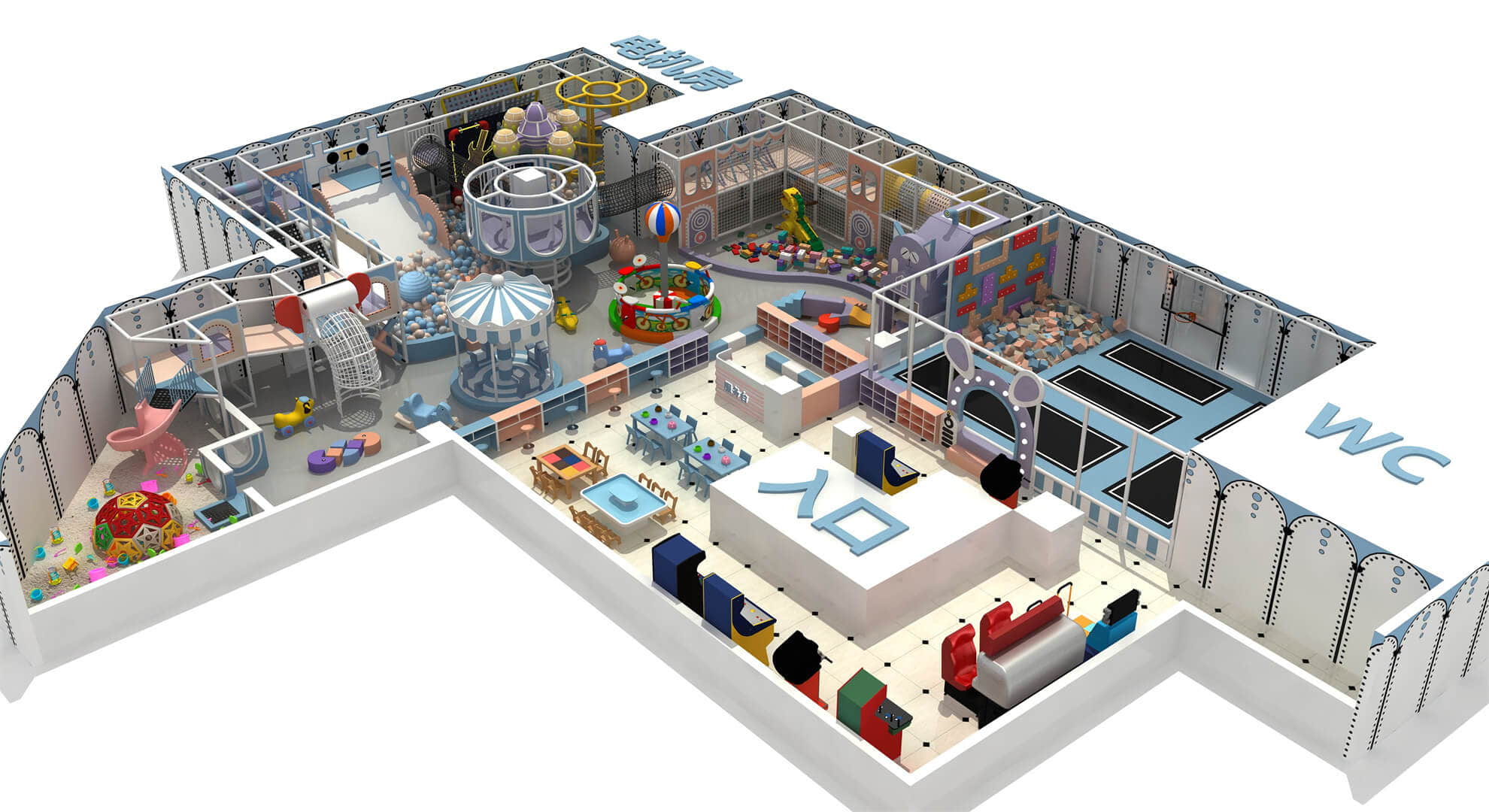
Indoor playground: We can provide you with the most suitable plan with customized theme, age division and profit function.
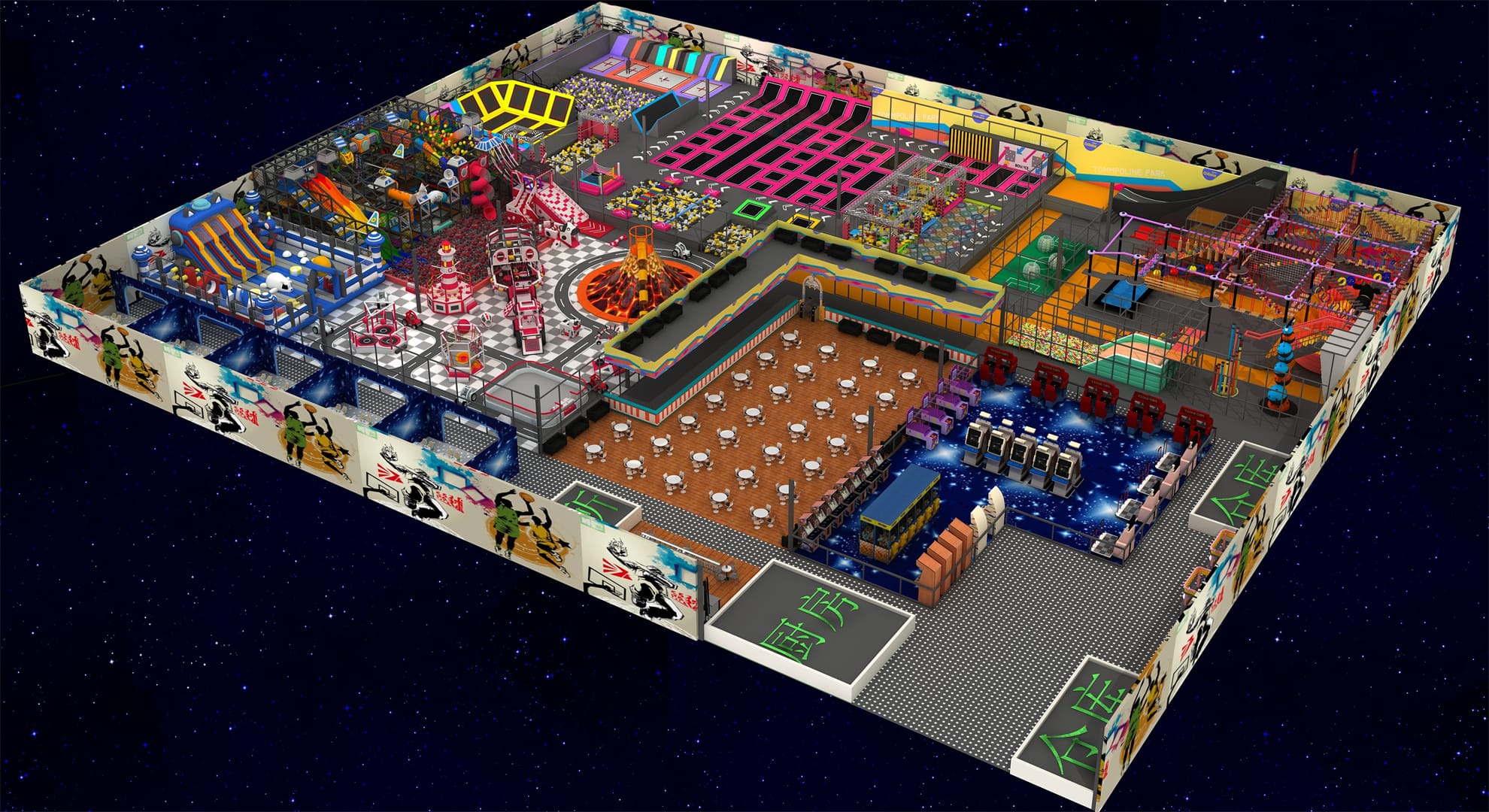
Trampoline Park: We can provide you with flexible layout planning, brand mat design, and capacity optimization solutions.
NanPlay’s indoor playground and trampoline park comply with global safety standards (EN71, ASTM, TÜV, ISO9001, CE).All materials are of commercial grade quality, wear-resistant, non-toxic, environmentally friendly, and easy to clean.
NanPlay accompanies you from concept design to operation:
Design stage: With 3 working days, we can provide you with a customized 3D rendering and layout plan.
Production stage: The production cycle is 20-45 days. We guarantee that we will strictly control the quality throughout the process and maintain online communication with you.
Installation phase: We will arrange a professional team to carry out on-site installation all over the world, including subsequent equipment commissioning and personnel training.
After-sales stage: The equipment has a 5-year warranty, and we provide a full range of after-sales services, including maintenance guides and spare parts supply.
Q1: Which is more profitable, an indoor playground or a trampoline park?
Profitability depends on the market and investment scale. The operating cost of an indoor amusement park is lower, and the number of visitors is stable on weekdays; The average order value of trampoline parks is higher, and profits are more significant on weekends or at night.
Q2: Can South Play design a mixed space that combines elements of an indoor playground and a trampoline park?
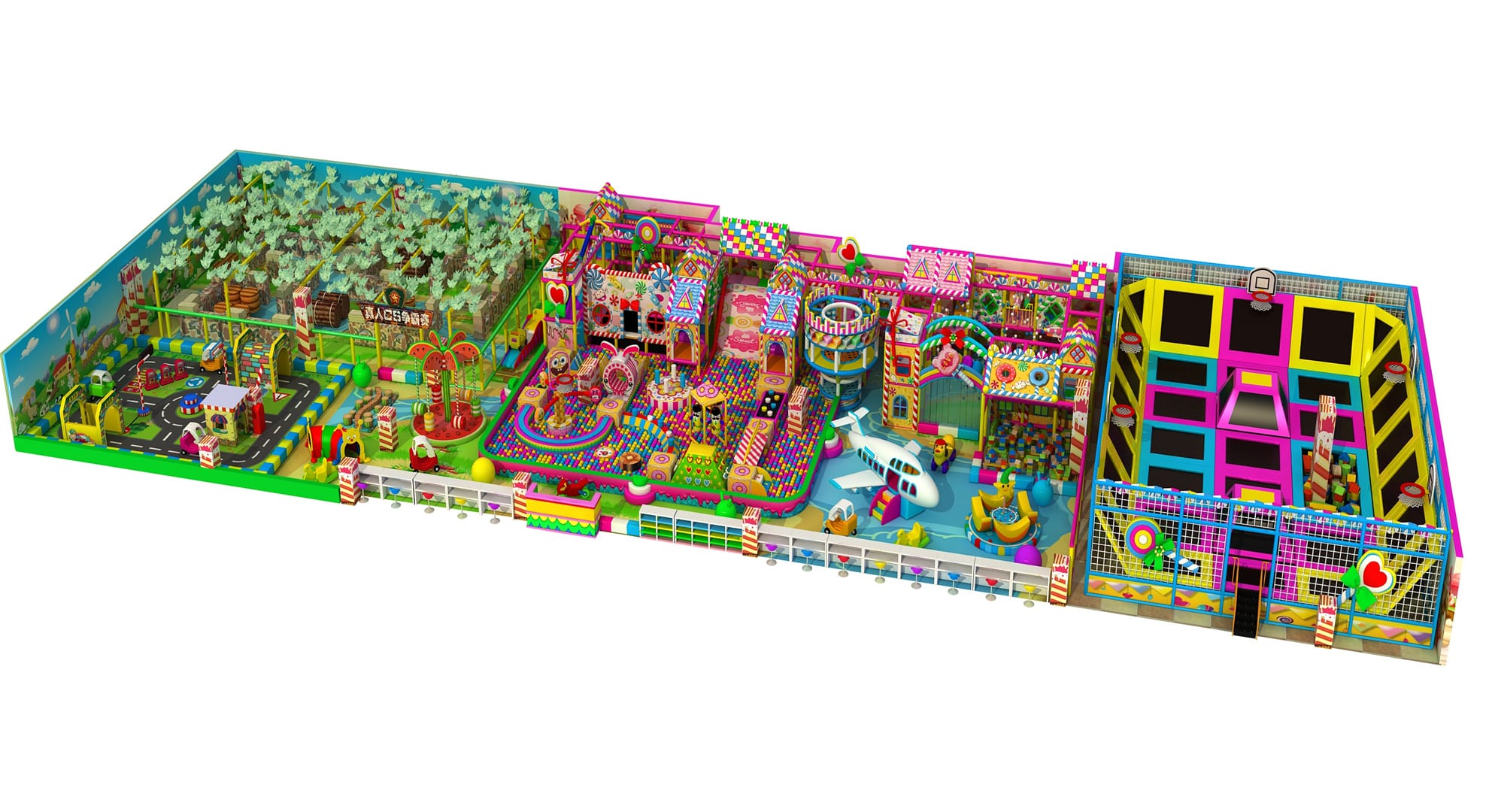
Of course! NanPlay can provide you with a customized hybrid solution if needed.
Q3: What are the differences in maintenance requirements between the two?
Indoor playground: Low maintenance cost, only need to clean the soft structure every week and check the loose parts every month.
Trampoline Park: The trampoline surface needs to be checked regularly (once a month) and the foam pit needs to be checked (once a week).
Q4: Is the trampoline park safe for young children?
Safety! NanPlay trampoline park has a special area designed for young children, equipped with low-elastic mattresses and padded edges, and restricts children from entering the advanced area, and strictly requires adult accompaniment.
Both indoor playgrounds and trampoline parks have huge market profit potential, but their focus is different: indoor playgrounds focus on comprehensiveness and versatility, while trampoline parks focus on vibrant and social experiences, which are more popular among older children and teenagers.
As a partner with rich experience in both indoor and outdoor fields, NanPlay can provide you with customized, safe, compliant, and cost-effective solutions.
Thank you very much for your inquiry! Your trust is our greatest motivation. We are committed to offering playgrounds that combine high quality with affordable pricing. Let us bring vitality to your venue!