21 September 2026
15 September 2026
14 September 2026

14 September 2026
14 September 2026
Safety of the indoor playground is a core element of operation. The operators are charged with all the responsibilities. They should be responsible for the clients. If they are not able to guarantee indoor play amusement, the indoor park may break down one day.
As revenue, injuries will definitely cause a large amount of compensation losses, even shutdowns. For the reputation and liability, streams come from the mouth; parents may trust you due to your well safety systems. Then, they will expand your influence, attracting more people to join in.
The checklist covers inspections regularly, risk management, safety rules, and so on. Making these clear, you can better meet FEC Safety Compliance requirements.
You have to check regularly for loose bolts, torn padding, and uneven flooring, reducing preventable injuries.
You have to show your valid insurance, business permits, and annual regulatory documents. To make customers more relieved, these make you more reliable.
Parents tend to prioritize safety, making sure kids are safe. If you are able to make them trust you, you may win a great reputation, attracting more clients.
To avoid accidents, you have to make your indoor playground facilities safe, instead of compensating for losses frequently. Maybe you can set a reliable safety system to make it stable.

Like sharp edges and broken movable components, your staff should pay more attention to these.
To avoid slip and impact injuries, you should also check padding adhesion, mat gaps, surface water, and hard debris.
You should make sure that kids entering your playground are safe.
Before opening, your staff needs to confirm that all emergency exits are unblocked, emergency lights are functional, and evacuation passages are clear.
You have to make sure that every zone has specific staff. For the sake of safety, you also need to divide kids into different areas based on age.
Take a pause in ticket sales in order to prevent crowding and hazards.
Your staff has to detect fallen padding, frayed netting, and spilled liquids instantly.
Abandon them, climbing dangerously, and do some risky action.
Actually, you should make regular checks on wear and damage, making your indoor play equipment safer.
To curb bacterial growth, you need to sanitize high-touch surfaces, dispose of waste, and so on.
Recording sites and time, you can be clear about the incidents for tracing back and explaining to your customers.
When you don’t use it anymore, you just shut it down and save energy.
Inspecting equipment stability, tilt, and durability, you have to ensure safety.
When connecting bolts tightly, you have to replace unstable (like rusted or out of shape)parts.
Check netting fraying and padding peeling, repair loose foam and damaged mesh, avoiding entanglement and scratch injuries.
Test slide surface wear, climbing grip firmness, and obstacle linkage stability in order to guarantee safe daily usage.
Clean equipment gaps, undersides, and ball pit interiors with non-toxic disinfectant.
For the sake of overall load-bearing safety, you have to asses evaluates trampoline racks, climbing walls, and integrated structures.
If floors are too vulnerable, they may find it hard to meet the demand of absorption tests.
Before the weekend peak, you need to inspect the fire alarms, first-aid kits, and emergency broadcast.
Test facilities, making sure all of these are able to operate safely. Record it and replace some old equipment.
Teach and test staff safety knowledge, making sure everyone can handle emergencies.
Regularly check trampolines and jump zones, and ensure that every part of these is able to operate well without damage.
You have to check anti-slip performance and guardrail height, avoiding risks of injuries.
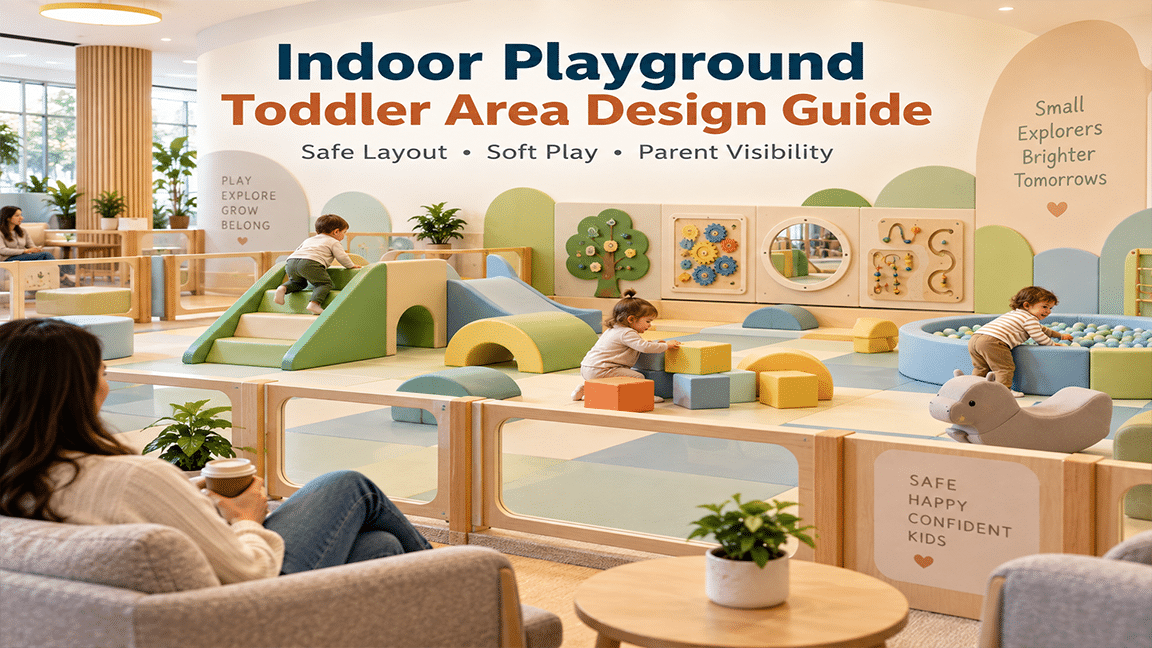
Isolate toddler zones fully; you can adopt rounded-edge gear and exclusive anti-fall flooring. Meanwhile, you have to prohibit older kids’ entry to avoid crushing injuries.
It is important that you inspect pit bottom structures and disinfect balls weekly.
Check circuit insulation and edge wrapping. Also, power down the faulty digital gear to prevent electric shock and skin damage.

Follow industry ratios: one staff per 15 general children, one staff per 8 kids in high-risk jump and climbing zones. These all for full visual coverage.
All staff should have certification in safety and pass CPR and relevant tests in case of emergencies.
Make specific procedures to cope with emergencies. What’s more, you have to equip portable first-aid kits.
Clear three degrees: filed immediately when minor incidents happen; you have to report to management if moderate cases happen; the most serious accidents happen, you need to report to local regulators.
Remind parents of some safe rules. Providing them with some safe guidance, you can reduce the risks of incidents in your indoor play facility.
For North America, the requirements are about equipment load, edge design, and flooring performance for commercial playgrounds.
About EN1176, it is about the safety of your indoor play equipment. While EN1177 is about anti-collision floor specification.
ISO ensures management by assessing risks of operation.
Clearing off evacuation routes, you have to put an extinguisher in every area.
For the sake of children’s safety, you have to adopt foam and non-toxic materials.
Common injuries are falls, collisions, and pinches. To avoid these, you can put pads and enhance supervision.
Due to high streams of population, it may cause collisions and increase potential risks. To prevent it, you can set a limited population and one-way routes.
Check regularly on bolts and equipment in case of dropping off.
Circulate air in your indoor playground areas. It makes your environment safer and reduces the risk of infection.
When purchasing playground liability insurance, you should retain complete inspection logs to reduce operator liability when accidental incidents occur.
Before breakdown occurs, you need to classify facility wear levels to set regular upkeep plans.
When repairing minor surface damage, you have to replace core but fatigued components.
According to standards, you ought to replace expired gear after you find out some problems.
You are supposed to clear your facilities regularly and make a deeper inspection by using specific disinfectant.
Digitize inspection, maintenance, and incident files due to permanent audit and insurance inquiry records.
These emergency exits are always unlocked and marked with luminous signage all the time.
You are required to make regular fire drills. At the same time, inspecting fire facilities is necessary.
It should be put somewhere noticeable and charged by specific staff.
Out of consideration for kids’ safety, you ought to set age-group evacuation routes.
You are supposed to follow graded steps: onsite treatment, guardian notification, evidence retention, and official reporting per incident severity.
Based on ages, you can divide them into different parts, like high-risk and low-risk play scenes.
You can lay graded impact flooring aligned with EN1177 standards for climbing, trampoline, and toddler dedicated zones.
In consideration of supervision, you ought to adopt transparent partitions so that your staff can supervise them better.
To avoid overcrowding, you need to set one-way routes to guide customers.
Let your requirements be clear. Like age limit, warning, and rules, these will remind clients to keep safe.
Your staff is required to make three times a day and submit detailed information clearly.
After careful inspection, you are obliged to maintain and clean it in case of a hazard.
Manage formal audits. Then, you are able to test emergency systems and update relevant information for training.
Your indoor play zone is required to renew its annual operational qualification and gain official certification.
Analyze monthly incident data. After that, you have to make an overall checklist and update safety rules in a timely manner.
The monitor, based on AI, can supervise children’s behaviour well. It also can send alerts to your staff.
Here is a sensor built inside, detecting potential risks earlier than we do.
The flow sensors are prone to managing crowd density.
To convenience review, we suggest digital logs for better data safety.
Keeping kids’ health, a smart system can send alerts about some disinfection being out of date.
If your ignored some tiny mistakes, you would cause potential problems in the future.
You have to make several training sessions for your staff to better master the ability.
Taking it in your account that the accidents may be caused by overcrowding, especially during peak time.
You ought to make a careful plan to maintain your facilities, or it will lead to higher costs.
Every object or material you use should be certified with ASTM, EN, and local fire regulations.
It means that a planned list of detailed costs. You may have a clear idea of expenses and control them well.
Safety makes your clients more reliable and expands your influence. This can develop trust and help you make more profits.
You may obtain some policies from the government due to complete safety records.
Absolutely, clients tend to choose safer facilities. If you did it, you may develop trust and a sticky relationship with them, which benefits you to make profound profits.
It is supposed to cover tiered inspections, zone safety rules, staffing protocols, emergency checks, maintenance logs, and compliance audit indicators.
High-touch gear daily; connecting parts weekly; full structure monthly; third-party compliance inspection annually.
Standards are mainly about ASTM, EN1176/EN1177, ISO safety management, plus local fire and material safety codes.
You can enhance supervision and divide kids into several zones based on age.
Because safety relates to customer loyalty and makes them trust. Thus, they may come again next time.
The safety of indoor play equipment lies in the overall aspects. You should make careful observation to kids and provide safe facilities.
Because you may cost a lot without safety. Incidents will cause many problems; you may even shut down. Thus, you can have sustainable development with safety.
To make your playground legal, you should keep a full checklist and relevant records. Meanwhile, you ought to update the latest standards and provide more practices for your staff. Let them become more familiar with it.
Thank you very much for your inquiry! Your trust is our greatest motivation. We are committed to offering playgrounds that combine high quality with affordable pricing. Let us bring vitality to your venue!