25 November 2026
25 November 2026
24 November 2026

20 November 2026

20 November 2026
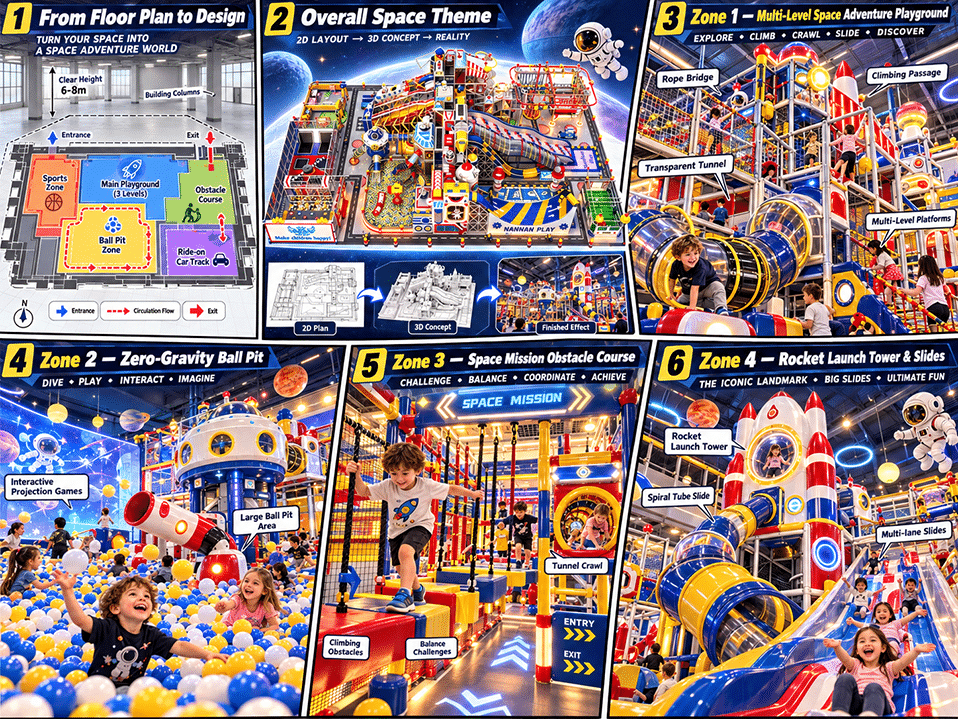
Choosing commercial indoor playground equipment should start with the venue, target age groups, business model and operating requirements—not with a product catalog. Buyers should first confirm the usable floor area, clear height, columns, entrances, emergency exits and target customers. Then compare equipment by attraction type, materials, age suitability, maintenance requirements and supplier support. A suitable supplier should be able to connect 2D/3D design, manufacturing, quality control, shipping, installation and after-sales service into one clearly defined project scope.
Before comparing equipment, define what the venue is supposed to achieve.
A shopping mall playground, family entertainment center, daycare play area and trampoline-led activity center can use very different equipment even when their floor areas are similar.
Start with the following information:
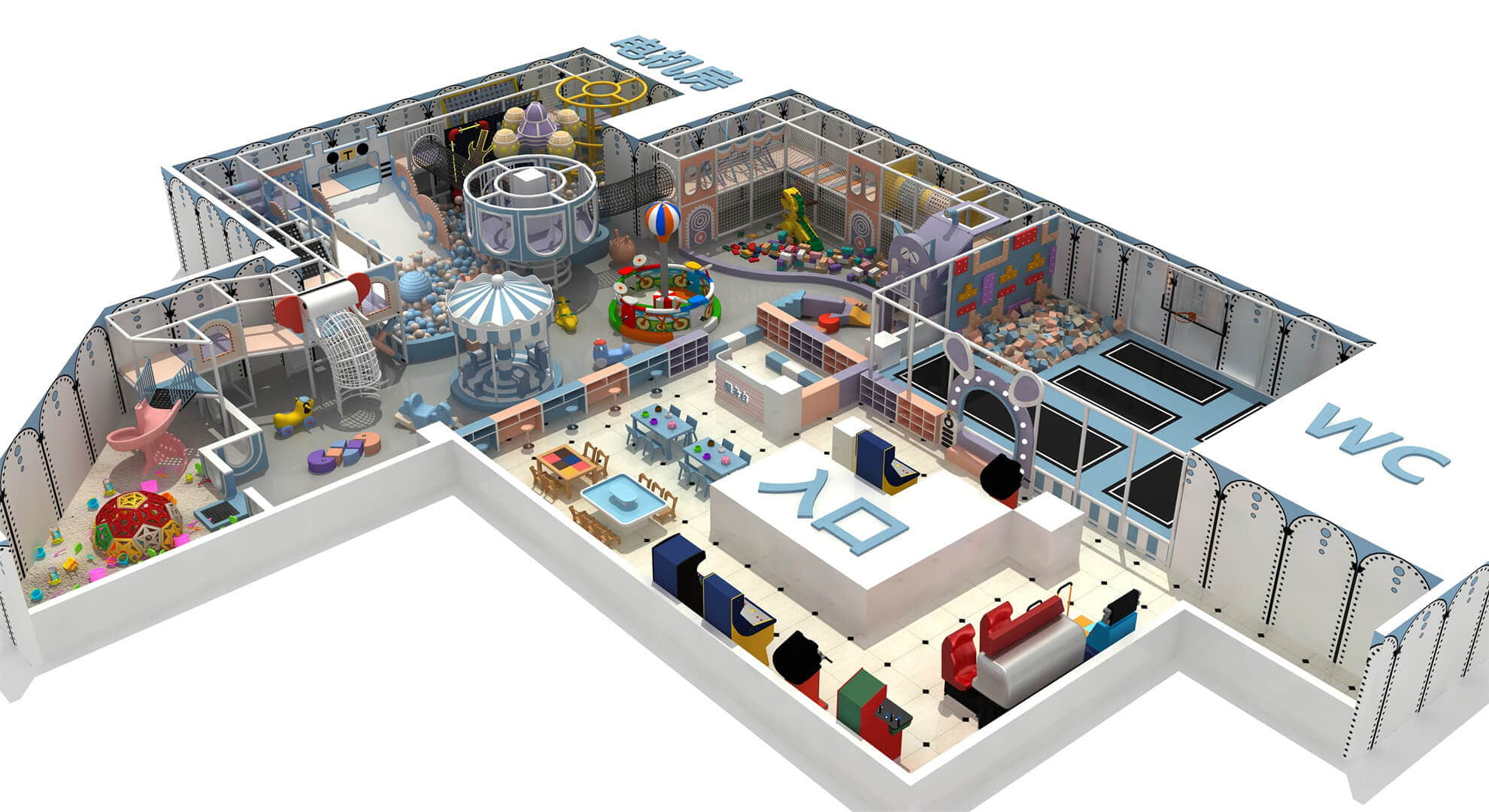
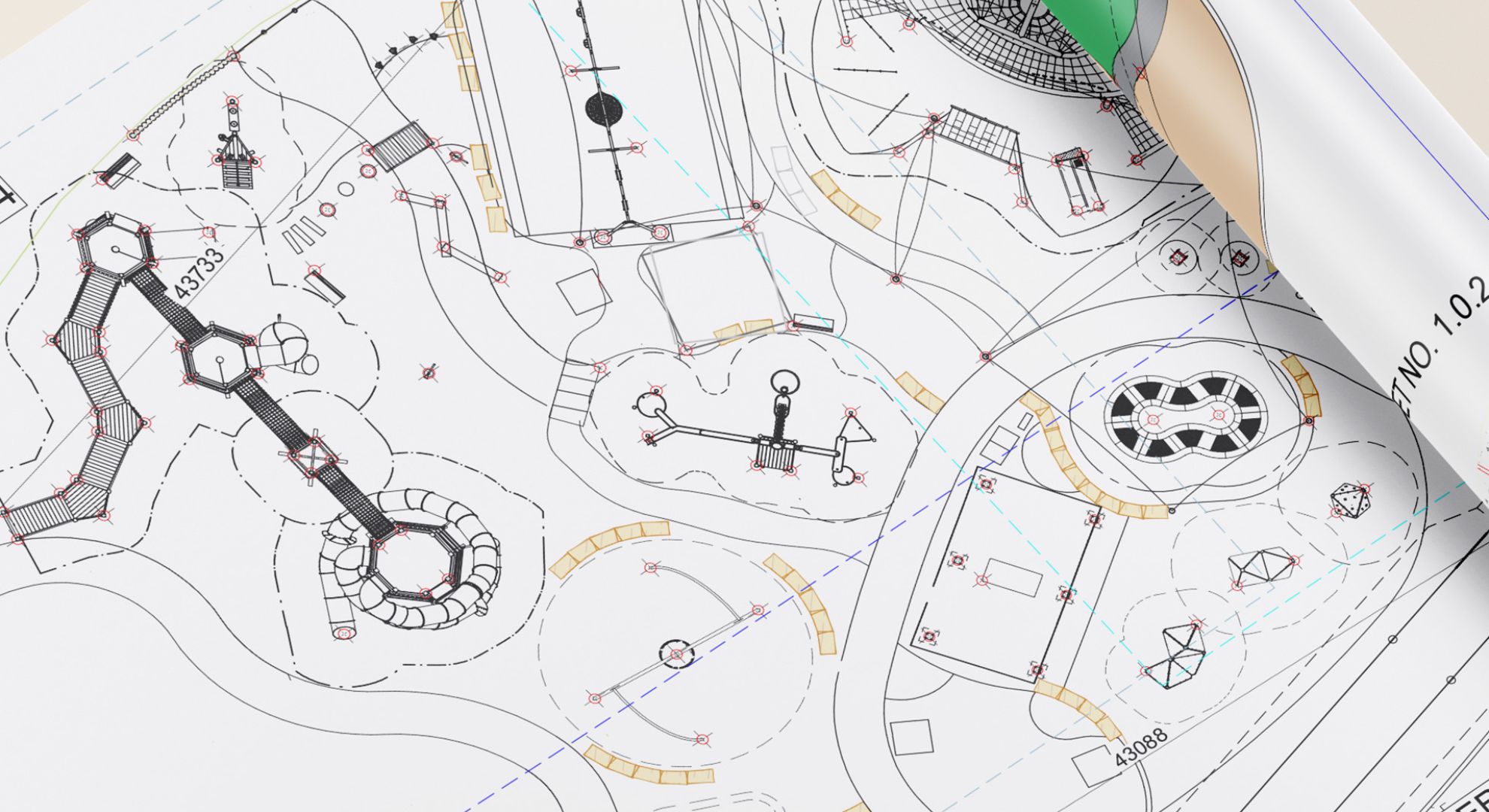
A dimensioned floor plan is particularly important.
Total square meters alone cannot show whether the equipment fits around columns, low beams, ventilation systems or restricted access areas.
The better the site information, the easier it is for the supplier to propose a realistic equipment layout.
The right attraction mix depends on target customers and the available building.
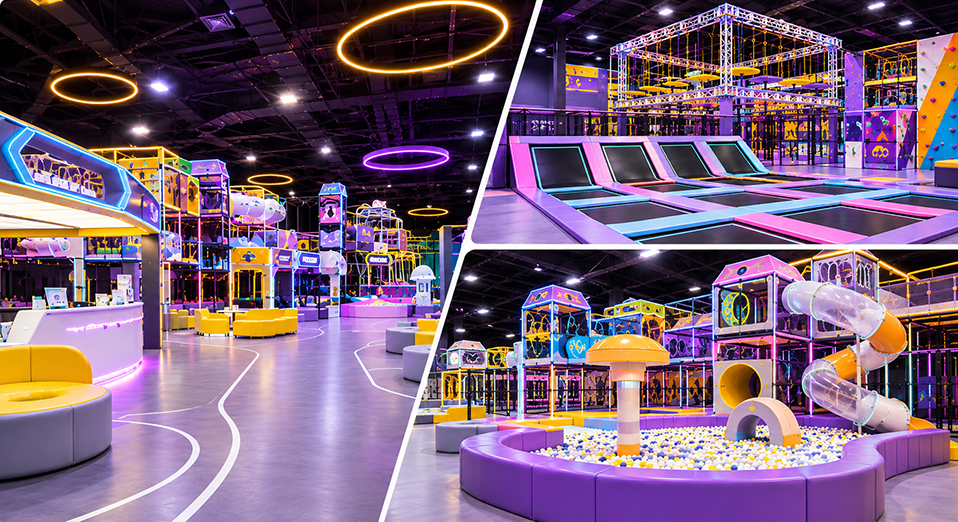
A commercial venue may combine several equipment categories.
| Equipment category | Planning purpose | Buyer check |
|---|---|---|
| Multi-level indoor playground | Main play attraction | Height, routes, supervision and access |
| Toddler soft play | Lower-intensity play | Age separation, visibility and cleaning |
| Trampoline and challenge attractions | Active play for suitable users | Clearances, staffing, inspection and spares |
| Interactive and ball-play features | Supporting activities | User suitability, circulation and maintenance |
Not every venue needs every category.
A common mistake is trying to create a better FEC simply by increasing the number of attractions.
More equipment also means more supervision, cleaning, inspection and maintenance.
The stronger approach is to give every zone a clear purpose.
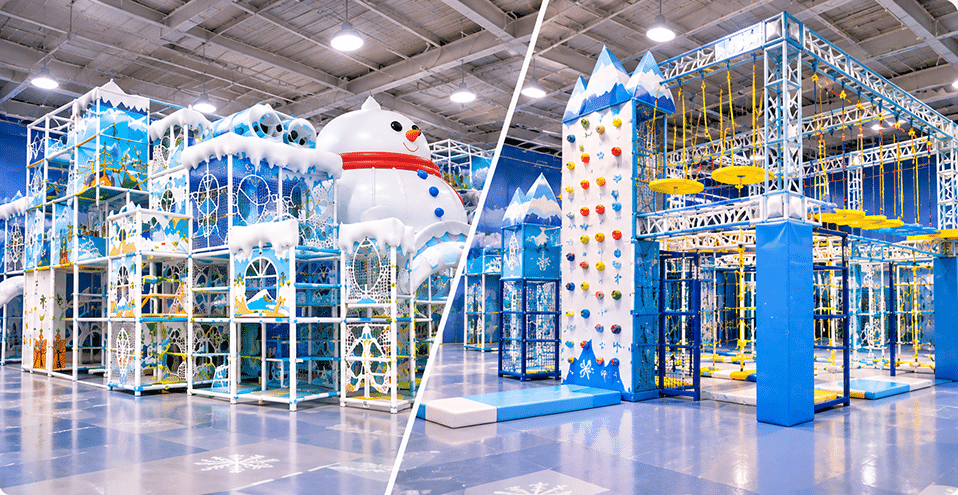
Commercial indoor playground equipment should match the children or families actually using the venue.
Toddler zones normally need lower-intensity activities and clear caregiver visibility.
Possible features include:
The toddler area should not be placed directly in the circulation path of older or more active users.
A main indoor playground may include:
The challenge level should increase gradually rather than forcing every visitor into the same activity level.
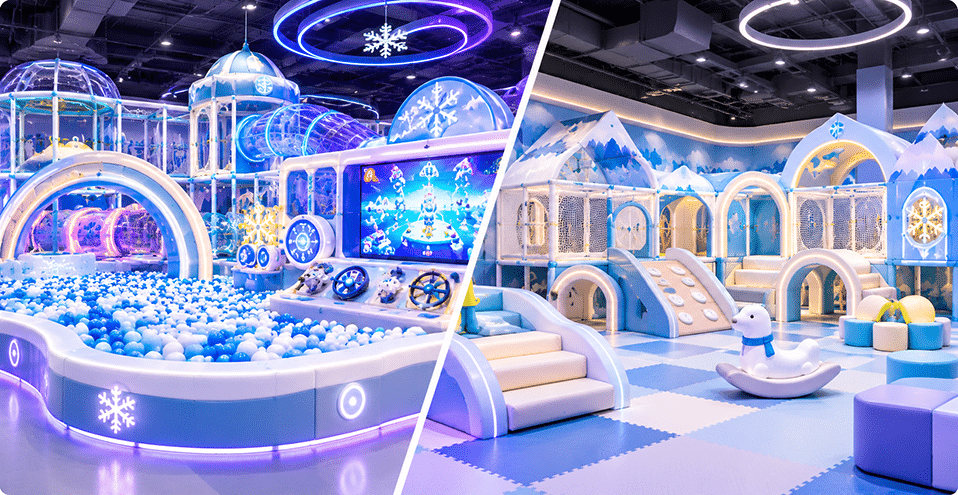
Where the venue, ceiling height and operating model support them, buyers may consider:
These attractions can broaden the customer mix, but they usually introduce different supervision and maintenance requirements.
Materials are an important part of commercial equipment procurement, but buyers should avoid relying on broad phrases such as “premium materials” or “commercial grade.”
Ask suppliers for actual component specifications.
For soft play equipment, buyers may need information about:
Also ask how these materials should be cleaned and maintained.
A visually attractive soft play structure can still create operational problems if high-touch surfaces are difficult to clean or damaged covers cannot be replaced separately.
For high-use components, buyers should ask whether replacement parts can be identified and ordered individually.
Equipment quality should not be evaluated separately from the manufacturer or supplier behind it.
Commercial buyers should understand who controls the complete project.
Ask:
A manufacturer should also be able to connect the approved design with the final equipment schedule.
If an attraction appears in the 3D rendering but is not included in the quotation, the project scope is not yet clear enough.
Soft play is often used by younger children, which makes material condition, padding, edges and maintenance especially important.
Buyers should review:
Applicable requirements depend on the destination market and equipment type.
Buyers should ask suppliers which standards or test documents apply to the specific equipment being purchased instead of accepting a general claim that the equipment is “internationally certified.”
Equipment documentation also does not replace local building, fire, accessibility, insurance or operating requirements.
Trampoline attractions can work well in an FEC or active entertainment center, but they should not be added automatically.
Before including a trampoline zone, check:
A venue serving younger families may benefit more from a stronger indoor playground and soft-play mix.
A venue targeting older children, teenagers or active groups may benefit from trampoline or challenge attractions.
The business model should guide the equipment decision.
Commercial indoor playground equipment is only one part of a family entertainment center investment.
The layout also needs space for:
For this reason, buyers should not treat all leased floor area as equipment area.
A 500㎡ venue with efficient circulation may operate better than a larger venue that is overloaded with attractions.
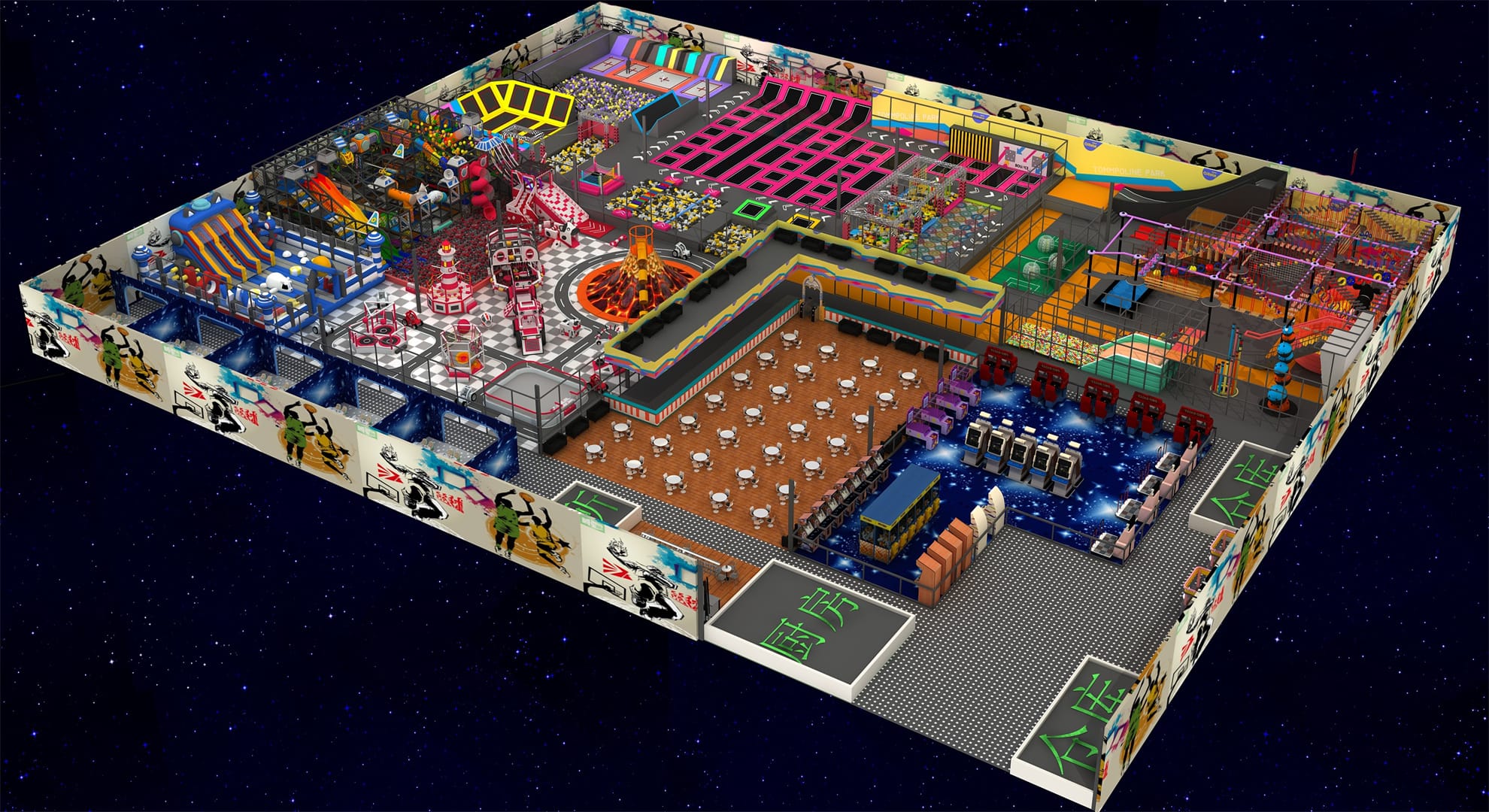
A practical FEC layout usually begins with one anchor attraction and then adds supporting zones.
For example:
Main Attraction: Multi-level indoor playground
Supporting Zone 1: Toddler / soft play
Supporting Zone 2: Selected climbing or challenge activity
Commercial Support: Party room and parent seating
This creates a clearer customer experience than several disconnected attractions competing for limited space.
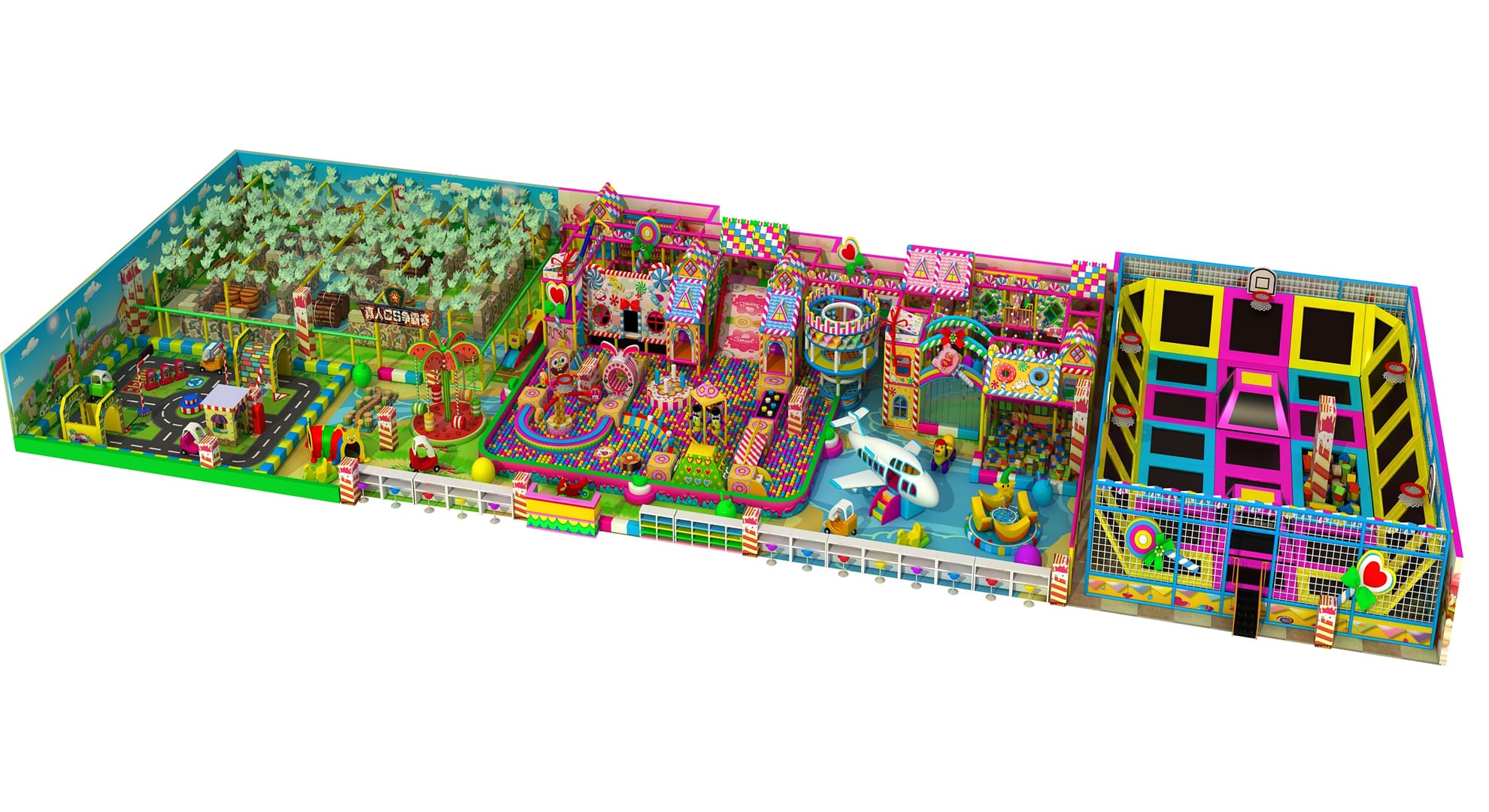
Real project cases can help buyers understand whether a supplier has experience turning design concepts into installed commercial venues.
However, case studies should be reviewed carefully.
Look for:
A supplier showing only finished photographs may not demonstrate which parts of the project it actually handled.
The strongest case study connects the original site conditions with design, equipment selection, manufacturing and installation.
A useful quotation begins with a useful project brief.
Prepare:
Then send the same information to every supplier.
This makes quotation comparison much more meaningful.
Instead of comparing only the final number, review:
The lowest quotation is not automatically the lowest project cost.
The equipment mix depends on target users, floor area, clear height and business model. A typical family-focused venue may combine a main indoor playground, toddler soft play, slides, climbing and selected interactive or challenge attractions.
Review design capability, manufacturing arrangements, quality control, project evidence, documentation, shipping, installation and after-sales support. Do not compare suppliers by price alone.
They can be combined when the building, target audience, available space and operating model support both. Different activity levels should be planned carefully.
There is no universal percentage. Reception, circulation, parent seating, party rooms, storage and exits also require space. The actual floor plan should determine the equipment footprint.
Send the destination, venue type, floor plan, usable area, clear height, target ages, preferred attractions, theme, budget range and opening date.
Choosing commercial indoor playground equipment is a project-planning decision, not a catalog-selection exercise.
Buyers should first understand the venue, customers and operating model, then compare equipment, manufacturers and quotations on the same basis.
A strong supplier should be able to explain how the project moves from floor plan and equipment selection through design, manufacturing, quality control, shipping, installation and after-sales support.
Before requesting a quotation, prepare your country, floor area, clear height, target ages, preferred attractions and floor plan. This gives the supplier enough information to propose equipment that fits the real project.
Discuss your project with NanPlay, review the installation support required, and send your floor plan for an equipment proposal.
Thank you very much for your inquiry! Your trust is our greatest motivation. We are committed to offering playgrounds that combine high quality with affordable pricing. Let us bring vitality to your venue!