18 8 月 2026
18 8 月 2026
18 8 月 2026

18 8 月 2026
18 8 月 2026
If you are planning to open a family entertainment centre (FEC) in 2026, you may have felt that this industry is very different from before. In 2024, the global indoor entertainment market will be 52.4 billion US dollars, and it is expected to rise to 137.2 billion US dollars by 2034. Now families are more willing to spend money on experiences rather than shopping, and the indoor playground is just in line with this change.
Your core diversion project is the heart of your whole business. It determines who will come, how long they will stay, and how much it will cost. If you choose the wrong one, you will be dragged by expensive and difficult equipment.
The trampoline park is fast-paced and energetic and can cover a wide range of age groups. The indoor adventure park is more likely to involve climbing, balance, and crossing obstacles. The vertical space is more attractive to older children and teenagers. Both can make money. This guide will break down the differences and help you see which one is more suitable—and if you are looking for a turnkey partner to bring your vision to life, NanPlay is worth checking out.
A trampoline park is a large indoor venue covered with interconnected trampoline mattresses. At present, trampoline parks will also add dodgeball courts, foam pools, dunk alleys, and some will also be specially designed for children to play. The core thing is simply to spend money to jump, which is an active, fun, and a group of people can play together.
The main equipment in a typical trampoline park is an interconnected trampoline mattress that covers most of the ground, as well as a dodgeball court, a bubble pool, a dunk track, and a children’s area. Some parks will also add ninja obstacle tracks or some interactive digital devices.
Trampoline parks attract people aged five to forty. The main audience is concentrated in children and teenagers aged six to sixteen. Birthday parties and group activities account for a lot of income. There are now more than 1,300 trampoline parks in the United States, which is the most popular among various FEC projects.

The indoor adventure park is different from the trampoline park. The guests do not jump around, but climb, balance, swing, and cross all kinds of obstacles. It’s a bit like rope lessons, climbing walls, ninja warrior challenges, and ziping ropes. The core is to test physical quality, strength, balance, agility, and courage.
The main equipment in the adventure park includes rope courses, climbing walls, ninja warrior obstacles, zip lines, and challenge towers. Some will also give children a soft play area, but what is really attractive are those projects that require high skills.
The adventure park is very good at using vertical space. The trampoline park needs a large area of flat ground. The adventure park can be built higher. Even if the land area is not large, it can be stuffed with many things. The rope course and climbing wall can be 20 to 40 feet high, so if the ceiling is high enough but the ground area is limited, exploring Dangerous Paradise is a clever choice.

The trampoline park needs an open and flat ground, and the ceiling height should be between 16 and 20 feet. A competitive trampoline park usually needs an area of 25,000 to 35,000 square feet. The requirements for the ground area of the adventure park are not so high, but the ceiling should be higher, at least 20 feet. Rope courses, sometimes forty feet is enough.
The trampoline park can accommodate a lot of people at a time and circulates quickly, but it needs more employees to watch over the venue. The reception capacity of the adventure park is relatively low, but each guest spends more money and requires fewer inspectors, which can save more labour costs.
The trampoline park needs to be maintained frequently. The jumping pads, springs, and soft bags will be worn out and replaced after a long time. The filling of the foam pool also needs to be replenished. The adventure park is different. The ropes and climbing points need to be checked regularly, but they can usually be used for a longer time, and the structural parts themselves are designed to be more durable.
There are more cases of injuries in trampoline parks. Ankle sprains, fractures, and collisions are common, so the insurance cost is also higher. Adventure parks are also risky, but more often caused by falls and improper operation of equipment. ASTM F1487 and EN1176 are safety standards that both types must comply with.


A large part of the income of the trampoline park comes from birthday parties and group activities. These reservations are profitable and usually full several weeks in advance. The income structure of the adventure park is more balanced. Pay-by-time charges can ensure the daily passenger flow, and parties and company activities increase profits.
The initial investment in opening a trampoline park is not low. The cost of a medium-sized site of 20,000 to 30,000 square feet is between one million and three million dollars, and the equipment is about 25 to 50 dollars per square foot. The threshold of the adventure park is relatively lower. A compact ninja obstacle track may cost 50,000 to 100,000 US dollars. If you take it, the large independent park may exceed 500,000 yuan. The cost of equipment per square foot is usually lower and easier to install.
The annual income of trampoline parks with good site selection and operation can reach 1.5 million to 3 million US dollars. If you do it well, you can usually get a return on investment in 18 to thirty-six months. The return cycle of adventure parks is often a little longer, generally two to four years, but less investment in the early stage can also offset the pressure caused by slow revenue growth.
It is more troublesome to expand the back of the trampoline park. The equipment is fixed, and part of the expansion has to be closed to install new things. The adventure park is more flexible. You can build a basic rope course first, and then slowly add climbing walls, ninja obstacles, and ziping ropes.

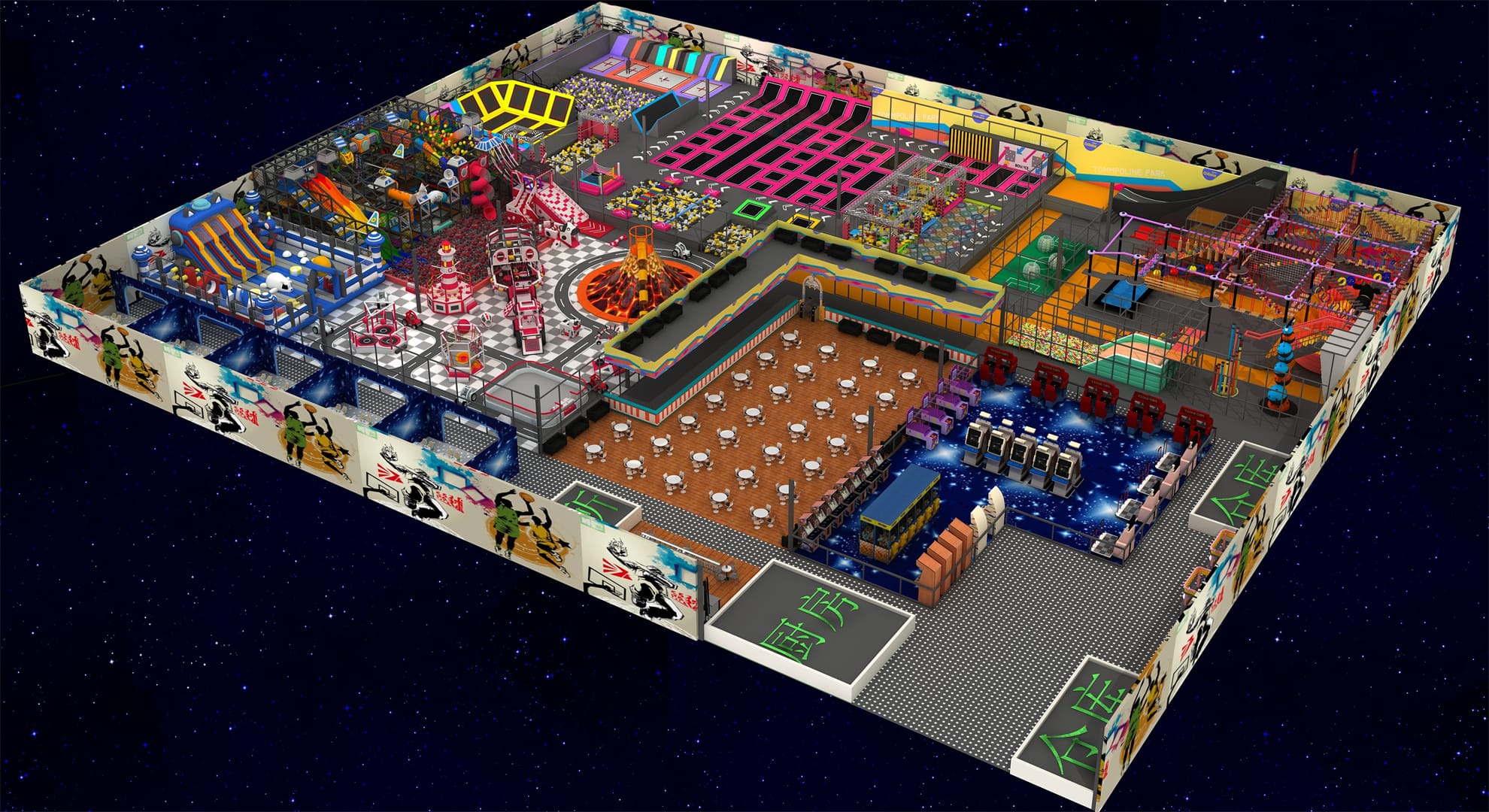
There can’t be only one project in the venue. There must be several different areas. The FEC that has been done well in 2026 is mixed, and the trampoline, ninja obstacles, arcades, and party rooms are all placed in one place.
When designing, it is necessary to balance the play area, aisle, seating area, and the places that parents can see. Parents must be able to see their children at any time. Too many people are unsafe, and too many empty places waste the opportunity to make money.
Corresponding areas should be reserved for young children, school-age children, teenagers, and adults. The place where parents and children can play together will make people willing to come back, and the income of the venue that can be attracted by all ages will naturally increase.
The vision should be clear, the fall area should be left enough, the ground cushion should be in place, and there should be more emergency exits. Only a safe park can make money.

Before spending money, figure out the market. How many families are within the range of 20 minutes’ drive? Several houses of the same type have been opened nearby. The more detailed the research is, the less likely it is to make a wrong decision later.
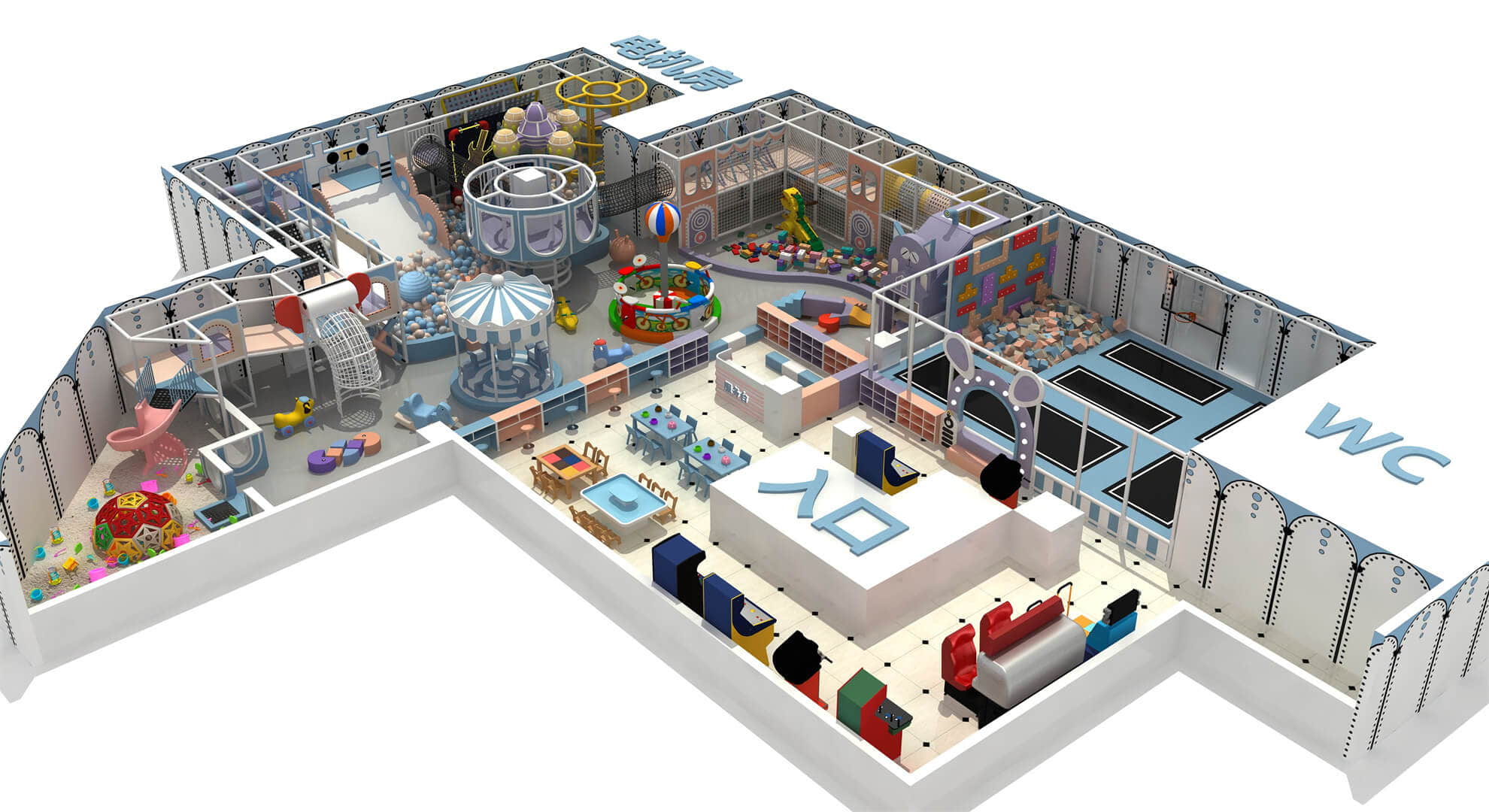
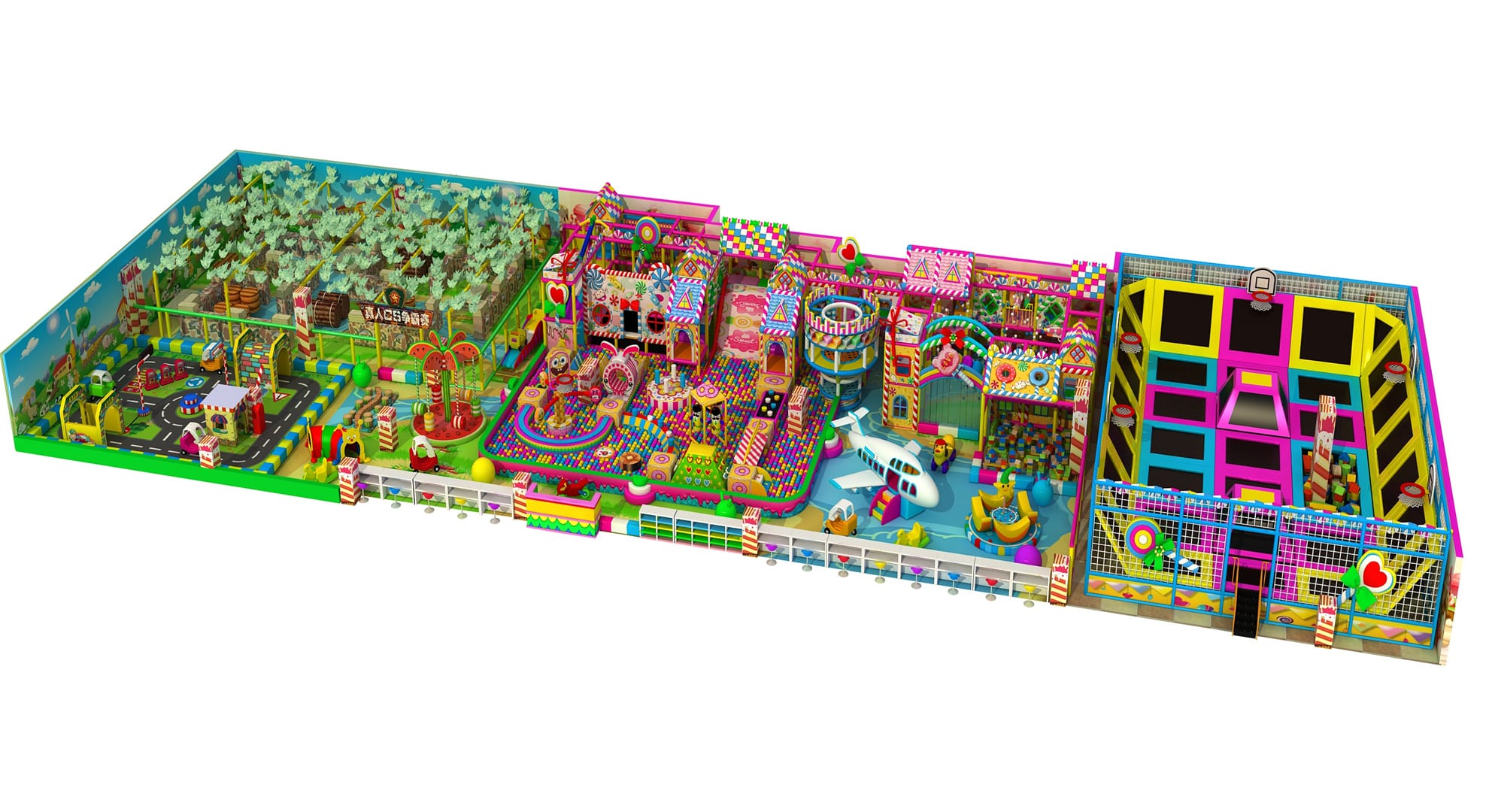
Before buying equipment, find a designer to plan the layout. 3D design allows you to intuitively see how the space is used, and you can also find out in advance where there may be problems.
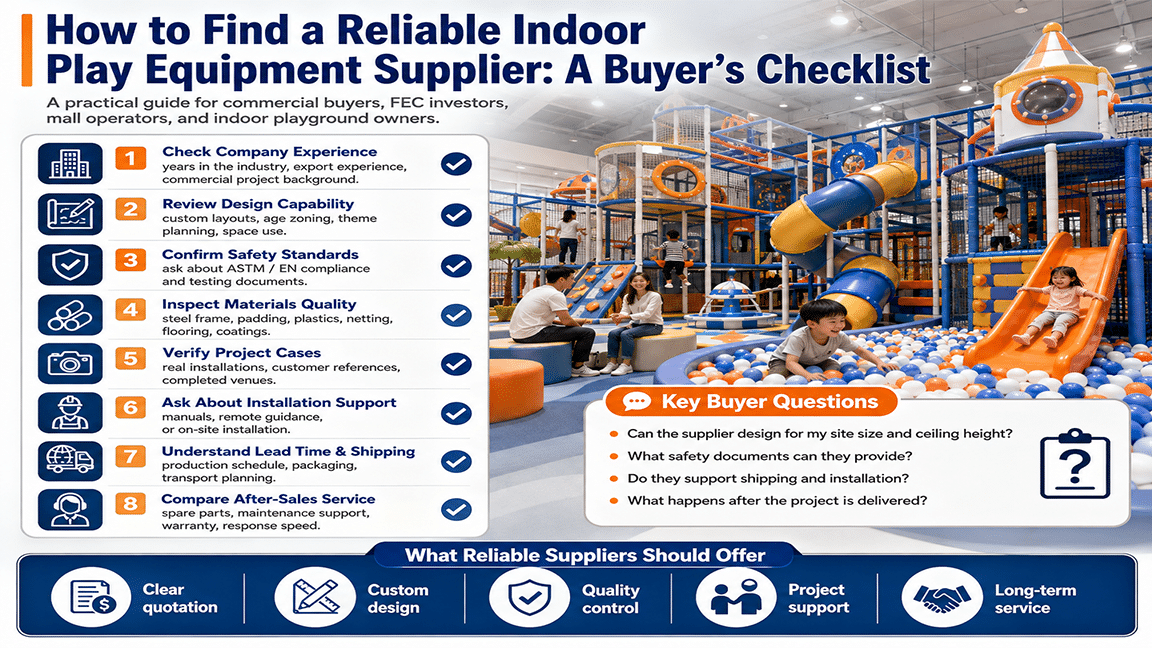
You buy a complete plan instead of just buying a few pieces of equipment. The one-stop manufacturer will take over the design, production, transportation, installation, and after-sales service.
The equipment should meet ASTM F1487 (American standard) or EN1176 (European standard), cooperate with the supplier to verify the certification documents clearly, and the installation should also be in place.

ASTM F1487 is the main standard for public amusement equipment in the United States, and EN1176 is for Europe. The two core standards are anti-fall, stable structure, and preventing children from getting stuck.
Structural parts should reach industrial-grade strength, and impact protection such as foam soft bags and ground materials should also meet the requirements of fall height protection, which are all rigid regulations.
Daily inspection should not be sloppy. Every day depends on whether the soft bag is worn, whether the screw is loose, whether the protective net is broken, and whether there is any problem with the structure. Good suppliers will give you maintenance guidance and spare parts support.

The single-attraction venue is fading. The future belongs to the hybrid FEC. By combining trampolines, ninja courses, and indoor playgrounds, operators can capture the entire family demographic and justify higher ticket prices.
Interactive play systems—projection games, motion tracking, AR/VR—are becoming standard in modern FECs. They appeal to tech-savvy kids and create shareable moments.
Nature-inspired design is trending. Soft, organic shapes and earthy colors create a calming environment. Sensory-inclusive features cater to children with autism and other sensory processing needs.
Sensors and software track customer flow, equipment usage, and revenue in real time. Data-driven decisions improve operations and profitability.

Adventure parks are better for limited floor space because they use vertical space. Trampoline parks need wide, open floor areas.
Trampoline parks have higher ongoing maintenance costs because mats, springs, and foam pits wear out faster. Adventure park equipment tends to last longer with less frequent replacement.
ASTM F1487 for the US market. EN1176 for Europe. Both cover structural integrity, fall protection, and entrapment hazards.
Yes. Hybrid models combine the best of both worlds, capture the entire family demographic, and justify higher ticket prices.
Trampoline parks: 6 to 18 months in good locations. Adventure parks: 2 to 4 years. Hybrid models fall somewhere in between.
Both trampoline parks and indoor adventure parks can be profitable when following a comprehensive FEC investment guide. Trampoline parks offer higher indoor playground throughput and faster payback but need more space, staff, and ongoing maintenance. Adventure parks have lower entry costs, use vertical space well, and appeal to older kids and adults. The right choice depends on your space, budget, and target audience.
The industry is shifting toward hybrid models. Customers prioritize variety, making the combination of different high-performance FEC attractions a key strategy for success. Whether you prioritize indoor playground throughput or specialized adventure zones, successful facility design must integrate safety, scalability, and a premium customer experience to protect your commercial play equipment ROI.
If you are ready to start, talk to a supplier who can show you what your FEC will look like. NanPlay offers turnkey solutions from 3D design to installation. See your space in 3D before you buy—that is how you avoid costly mistakes and build an FEC that families will love.
Thank you very much for your inquiry! Your trust is our greatest motivation. We are committed to offering playgrounds that combine high quality with affordable pricing. Let us bring vitality to your venue!