15 September 2026
14 September 2026

14 September 2026
14 September 2026
1 September 2026
Trampoline park supplies should be planned before opening because high-use components may need inspection, adjustment, or replacement during normal commercial operation. Operators should ask the equipment supplier to identify the project’s beds, springs, or connection components, padding, nets, fasteners, soft protection, and other replaceable wear parts. The objective is not to stock a warehouse of unused components. It is to understand which parts are critical, how they are labeled, what can reasonably be kept on site, and how replacement support will work if an item is damaged or reaches its service limit.
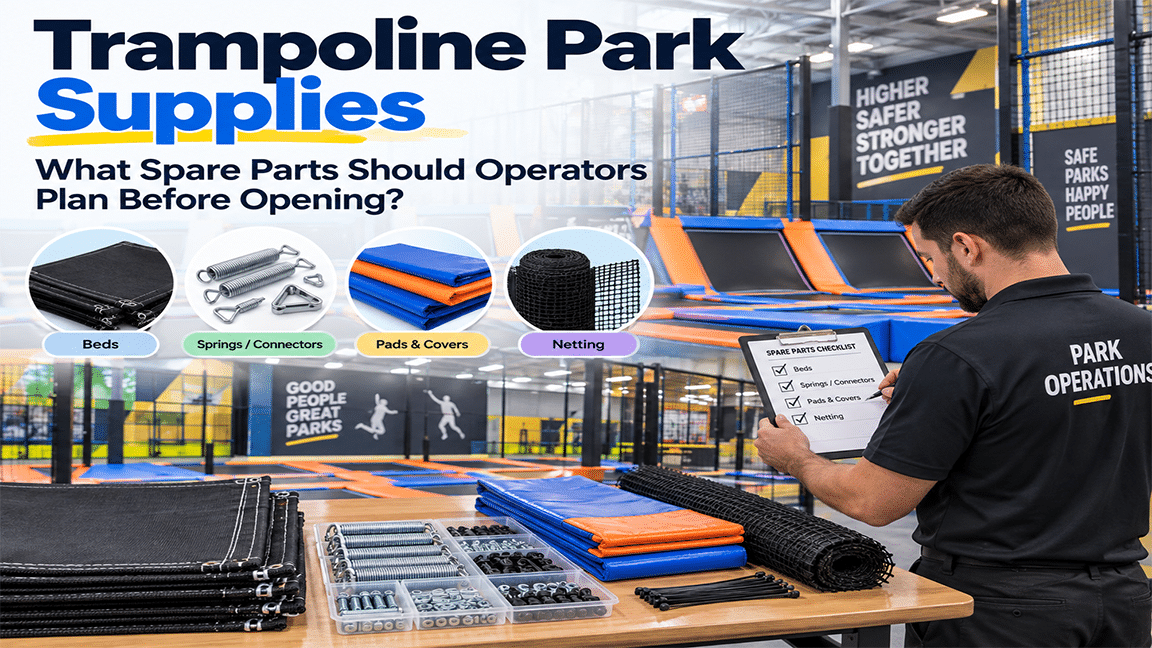
The exact spare-parts list depends on the trampoline park equipment system, but common high-use categories can include trampoline beds, springs or connectors, edge pads, soft covers, netting, fasteners, straps, and other protective components. The supplier should identify the actual part numbers or labels used in the project. Operators should avoid ordering generic components that merely look similar, because size, connection method, material, or performance requirements may differ.
A practical opening-spares list considers how quickly a part can wear or be damaged, how long replacement delivery takes, and whether the attraction must close if the part is unavailable. Small critical components may be sensible to hold locally, while larger or rarely replaced items can remain supplier-ordered parts. The commercial indoor playground equipment supplier can recommend a starting list, but the operator should adjust it based on actual inspection history after opening.
Clear records make replacement faster. The operator should keep the equipment list, drawings, manuals, packing list, warranty terms, supplier contacts, and a cross-reference between installed locations and replacement parts. Photos of labels or installed components can also help. Without this information, staff may spend unnecessary time trying to identify a damaged part or may order the wrong component.
Spare parts are most useful when they are tied to a documented inspection routine. Operators should record which components were checked, any wear or damage observed, temporary closures, repairs, replacements, and follow-up actions. Inspection frequency and acceptance criteria should follow the equipment instructions and applicable local requirements. The purpose of the record is to identify trends and support timely maintenance, not simply to create paperwork.

Before opening, ask which common parts can be replaced by trained venue staff and which require qualified technicians or supplier guidance. The supplier should provide appropriate instructions and explain whether special tools, tensioning procedures, access methods, or post-replacement checks are needed. Operators should not improvise repairs on safety-related components. When the correct procedure is unclear, the affected attraction should remain out of service until the issue is resolved.
Prepare the final indoor playground equipment list, drawings, manuals, warranty schedule, part labels, supplier contact information, and a proposed inspection record. Ask the supplier for a recommended opening-spares list and the replacement procedure for each high-use component category.
It is practical to have an agreed opening-spares plan for critical or frequently used components, especially when replacements require international shipping.
The answer is project-specific. Ask the supplier to identify critical, high-use, and easy-to-store components, then adjust the list after observing real wear.
No. Some work may require qualified technicians or supplier guidance. The equipment instructions should define the appropriate procedure.
Records help operators track wear, identify repeated issues, support warranty discussions, and plan future spare-parts inventory.
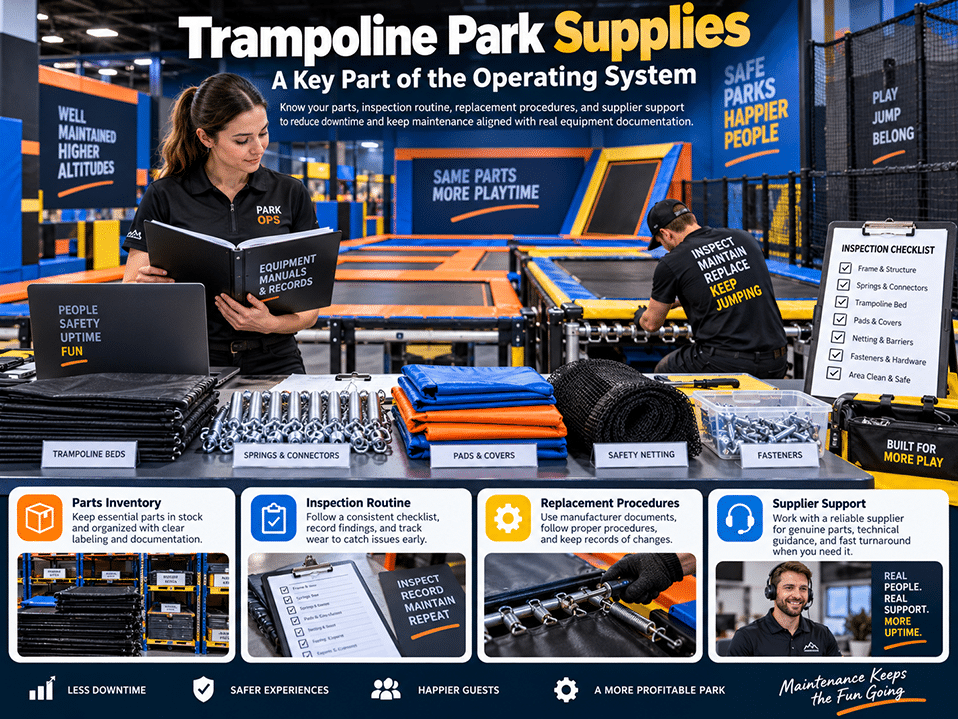
Trampoline park supplies are part of the operating system, not a separate afterthought. A venue that knows its parts, inspection routine, replacement procedures, and supplier support can respond more efficiently when normal wear or damage occurs. That planning can reduce avoidable downtime while keeping maintenance decisions tied to the actual equipment documentation.
Reference: https://www.nanplay.com/commercial-trampoline-park-equipment
Thank you very much for your inquiry! Your trust is our greatest motivation. We are committed to offering playgrounds that combine high quality with affordable pricing. Let us bring vitality to your venue!