21 September 2026

15 September 2026

14 September 2026

14 September 2026

14 September 2026
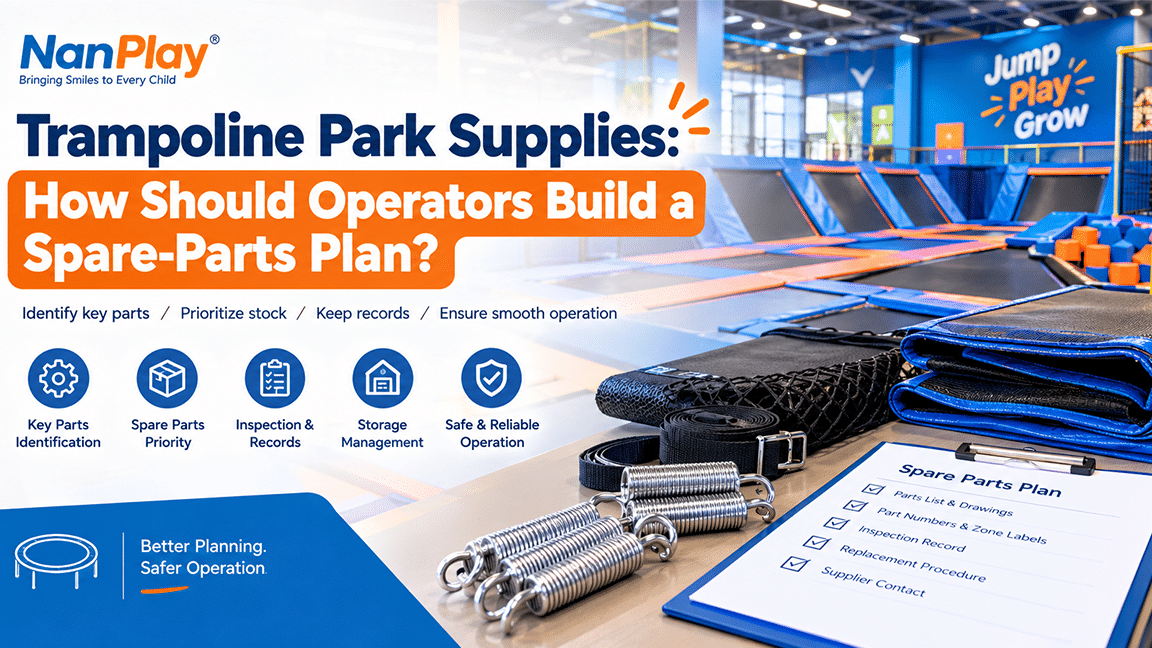
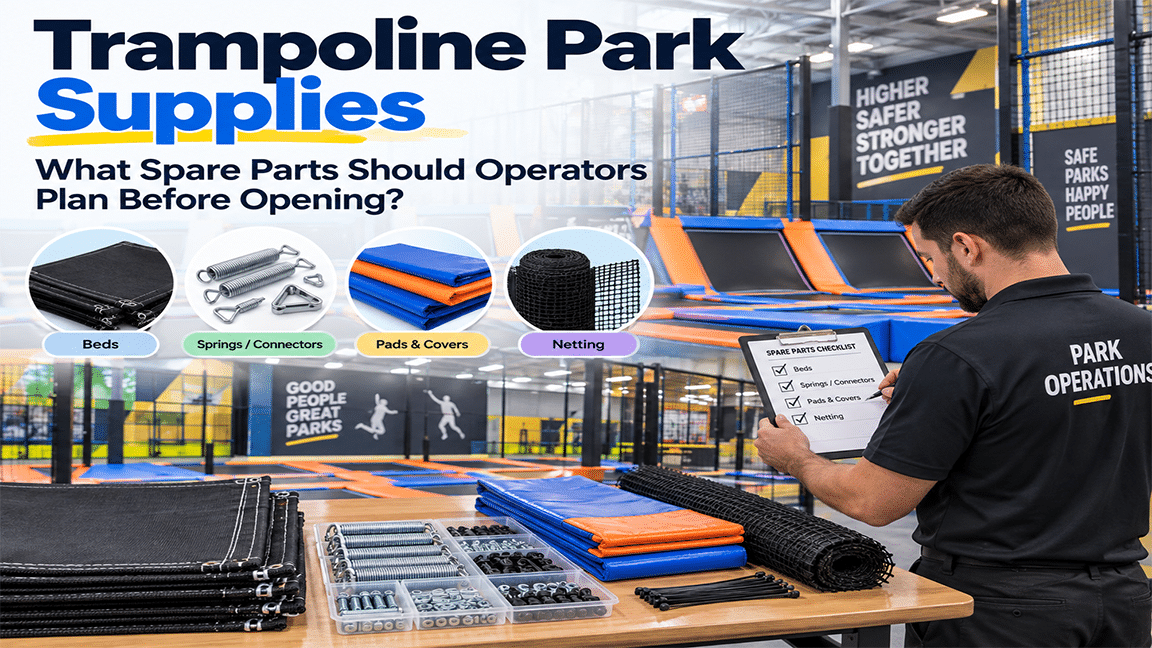
A practical trampoline park supplies plan begins by identifying the project’s actual high-use and replaceable parts, then organizing part numbers, inspection rules, storage, replacement procedures, and supplier contacts before opening. Operators do not need to stock every possible component. They should know which parts are critical to downtime, which can reasonably be kept on site, which replacement work can be completed by trained staff, and which situations require qualified technicians or supplier guidance.
The exact list depends on the trampoline system, but operators should identify the major replaceable and high-use components in the installed project.
Examples can include trampoline beds, springs or connection components, padding, soft covers, netting, fasteners, gates, protective elements, and selected landing-system components.
The supplier should connect these parts to the final drawings or equipment list so the operator can order the correct item later.
Not every replacement item needs to be stored on site. A useful way to prioritize is to consider how often the part is inspected, how likely normal wear is, how long replacement delivery may take, and whether the attraction must close if the part is unavailable.
High-use, project-specific, or low-cost items that can stop an attraction may be practical candidates for an opening spare-parts kit.
Large structural items or rarely replaced components may be better handled through supplier support rather than local stock.
A customized trampoline park can contain many similar-looking components with different sizes or specifications. Clear part numbers, zone labels, and equipment references help the operator identify the correct replacement.
Operators should keep the final equipment list, drawings, packing references, spare-parts list, and supplier contact information together.
This reduces the risk of ordering the wrong component after staff changes or months of operation.
Before opening, ask which common parts can be replaced by trained venue staff and which require qualified technicians or supplier guidance.
The supplier should provide appropriate instructions and explain whether special tools, tensioning procedures, access methods, or post-replacement checks are needed.
Operators should not improvise repairs on safety-related components. When the correct procedure is unclear, the affected attraction should remain out of service until the issue is resolved.

Inspection records show which areas experience wear and which components are replaced over time. This helps the operator adjust local stock based on actual use instead of guesswork.
Records should identify the date, indoor trampoline park equipment zone, observed condition, action taken, replacement part, and person responsible where appropriate.
They can also help when discussing warranty, recurring wear, or future spare-parts orders with the supplier.
Spare parts should be stored in a way that protects them from damage, moisture, contamination, deformation, or loss.
Labels should remain readable, and staff should know which stored parts are approved for which equipment zones.
A simple inventory record can help operators avoid discovering at the wrong moment that a critical spare has already been used.
Before opening, collect the final drawings, commercial trampoline park equipment list, part references, recommended spare-parts list, inspection instructions, maintenance procedures, replacement guidance, warranty terms, and supplier support contacts.
There is no universal quantity. Stock should reflect the actual equipment, wear pattern, lead time, downtime risk, and supplier recommendation.
They can be useful spares in some projects, but the exact quantities and specifications should match the installed system.
Only when the equipment documentation and supplier guidance allow it and staff are properly trained. Some work may require qualified technicians.
Use the final drawings, equipment list, part numbers, zone labels, photos, and supplier records.
No. Spare parts support maintenance, while routine inspection is needed to identify when action is required.
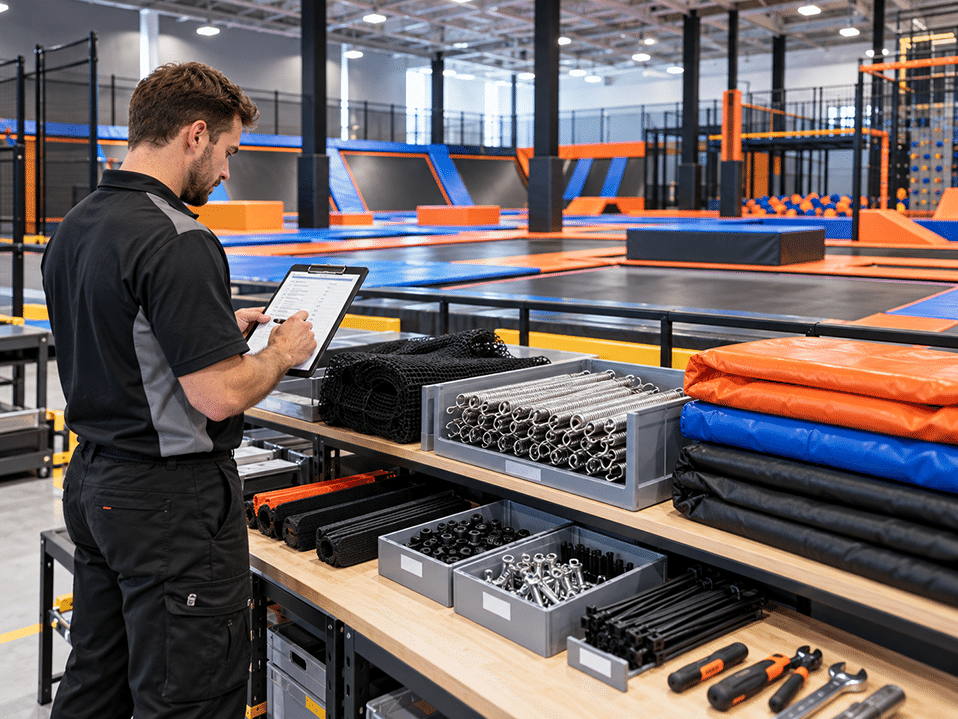
Trampoline park equipment supplies are part of the operating system, not a separate afterthought. NanPlay recommends building the spare-parts plan from the actual installed equipment, keeping part references and inspection records organized, and confirming replacement procedures before opening so maintenance decisions are faster and more controlled.
Thank you very much for your inquiry! Your trust is our greatest motivation. We are committed to offering playgrounds that combine high quality with affordable pricing. Let us bring vitality to your venue!