18 8 月 2026
18 8 月 2026
18 8 月 2026

18 8 月 2026
18 8 月 2026
An indoorn indoor play center is a commercial facility designed for kids and families to enjoy physical activities and social interaction. The indoor playground equipment focuses on business arrangement and site management. In other words, you make your facilities in deliberate order to attract your customers, making profits from it. The more time they stay, the more money you earn.
The main reason may lie in poor site design. If you put your equipment in a terrible site, your clients may be confused or get tired very soon. Thus, you have to make a reasonable design. The design will not only control crowd density but also make your monitor more efficient. In addition, it will reduce the risks of injuries, making your customers more trusting. Therefore, you can improve children’s experiences and keep a stable customer flow.
There is increasing demand for an indoor play zone. Customized playgrounds are taking a large part of the market. Our industry tends to become a standardized area. To be more specific, it tends to be divided into different ages and functional areas. In contrast, in the retail industry, the commercial mode is well developed. To complete it, our customized indoor play facility is a nice choice.

An indoor play zone is a kind of commercial area. It makes profits from tickets and has operational rules. What’s more, the core element of it lies in managing different zones and taking care of children of different ages. Let them play safely.
Basic indoor play is about simply playing around with equipment. Indoor play centers have specific rules and functional zones. It also has a space for parents to spend their time. When it comes to FEC, it combines amusement, retail services, and catering. Thus, it is a multi-functional commercial zone.
Target audiences are about children who are 1 to 12 years old. There are three mainstream business models that cover mall rental venues, independent community-operated play halls, and preschool cooperative play spaces. Each model adopts independent design standards based on site area and crowd positioning.
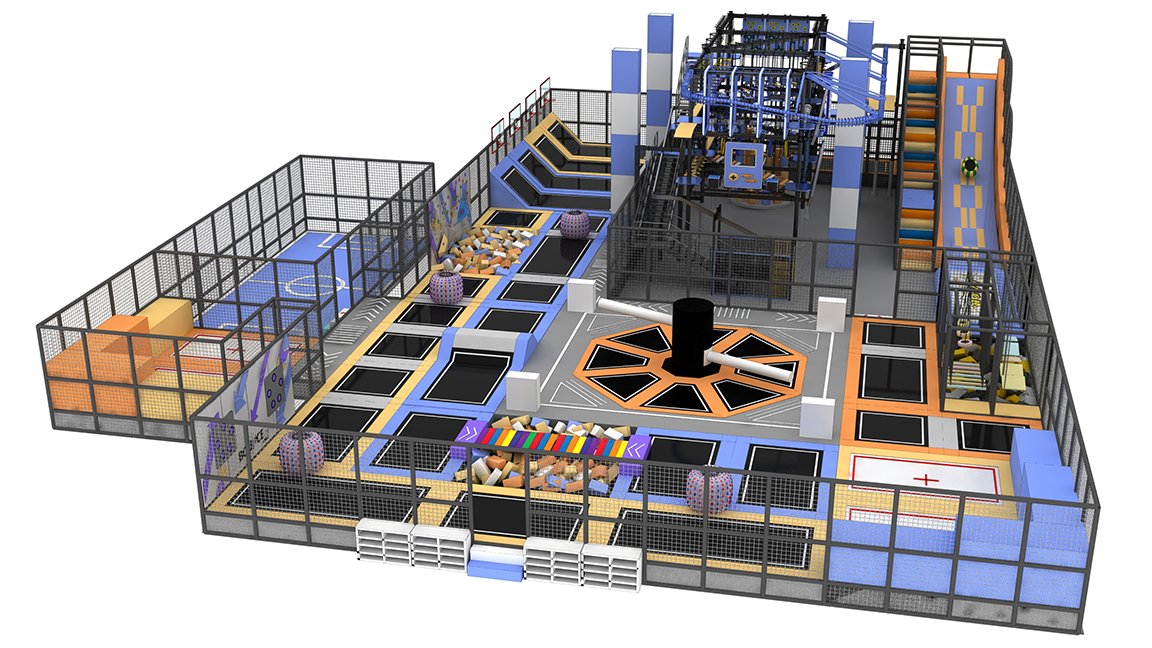
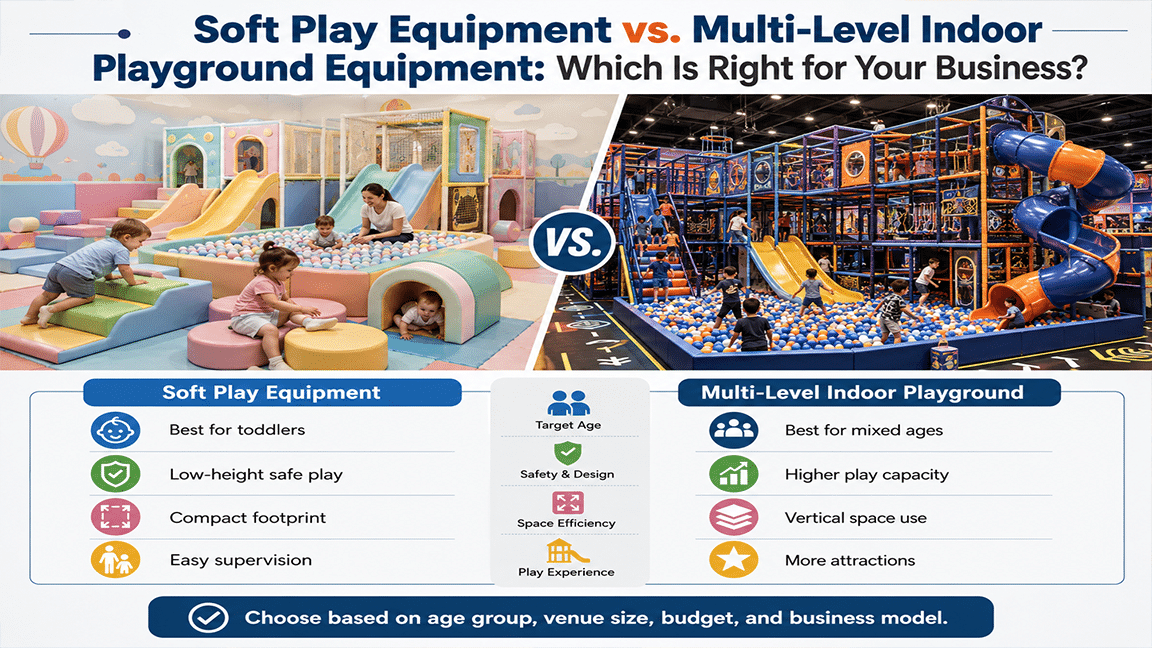
We suggest that you divide your indoor play facilities into several parts. The first part is designed for toddlers. Thus, you ought to make it low-height. The second part is for highly motivational activities. These steps help you reduce preventable injuries. What’s more, you can also provide a peaceful zone for people with special needs. Because someone may want to be quiet and have less energy. Additionally, an area for parents also can’t be ignored.
To avoid overcrowding, we tend to design a loop-type one-way. It has to reserve 1.8 meters for the stroller and staff patrol passage. Also, you have to separate entrance checkout lines, internal play routes, and emergency evacuation passages.
To make your observation clear, you should not use high-height partition boards. Meanwhile, all of your zones should be monitored, even just a small angle. These designs help you save money on observation and reduce management costs.
According to the global commercial playground standard, it defines 3 square meters per child as effective occupied space to calculate maximum site capacity. However, you should reserve a certain space to adapt to some unreasonable designs.
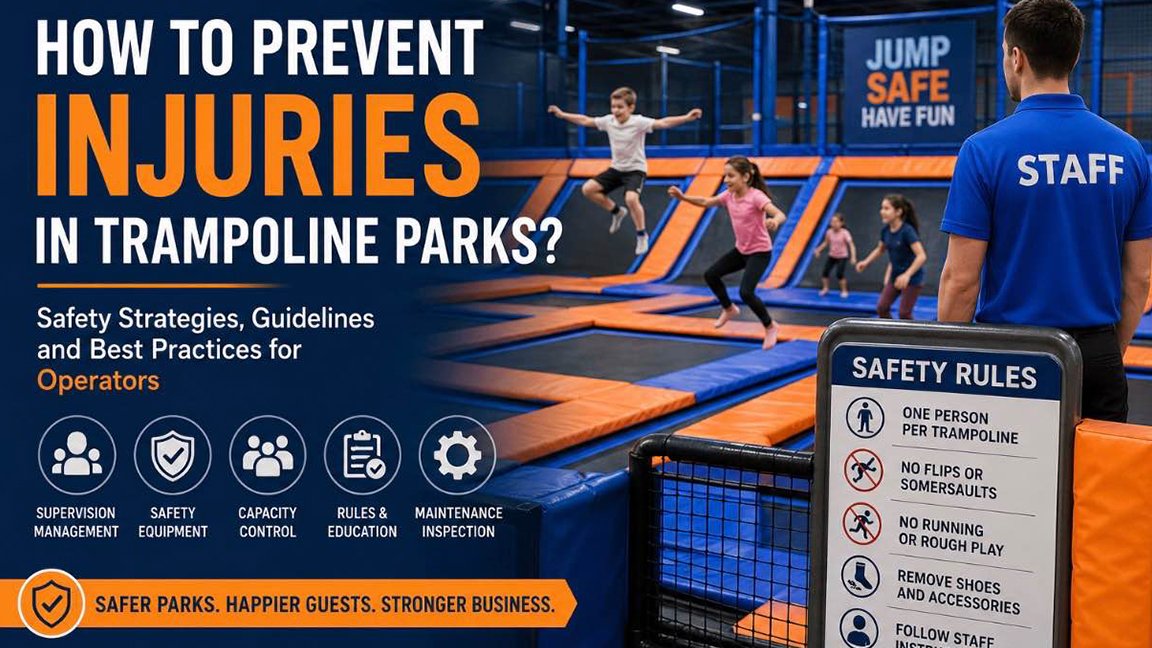
You should isolate high-risk adventure zones and toddler zones. Also, every corner of the walls and facility edges should be installed with anti-collision protective accessories.

You can improve your competition and brand recognition by integrating venue themes. About adventure-themed venues, it focuses on challenging activities for older children. Also, you can apply a futuristic structural design for immersive scene building. What’s more, LED, combining hardware, enriches your play content. If your indoor play equipment could cover multiple scenes, you may be competitive and attract more clients.
All of your play equipment must match the site zoning and confirmed theme style. Also, your core equipment categories should include flame-retardant customized soft play structures, modular climbing obstacle systems, buffered safety slide and pipe network sets, ground and wall interactive digital devices, and targeted sensory educational play facilities. As for the modular equipment, it is recommended for commercial projects to support later space adjustment and secondary renovation cost control.
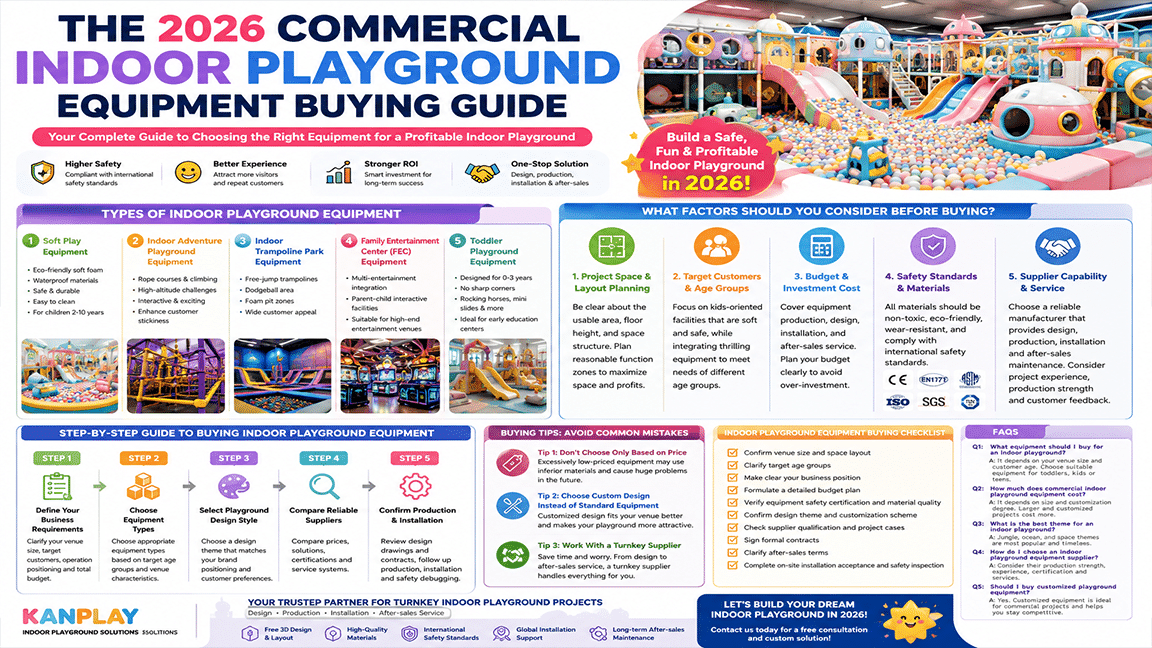
You should have pre-opening planning before you start your business. First, you shall complete local audience consumption research to confirm relevant information, like age positioning, match site area with zoning proportion, budgets, and so on. Additionally, equipment compliance should be taken higher priority over low procurement cost in supplier selection.
Your total project costs are divided into five fixed modules. The per-square-meter equipment procurement cost accounts for the largest expense. Secondly, theme scheme and render design fees are fixed upfront costs. Thirdly, On-site space reconstruction, ground buffer paving, and hardware installation form construction costs. Daily material replacement, facility maintenance, and labor wages belong to recurring operational costs. Total investment of 300㎡ to 800㎡ standard venues fluctuates based on location grade and theme customization degree.

You can earn money from big parties, corporate activities, and so on. As for the mature FEC venues, you may charge nearly 40% from all of these activities.
Your indoor play design plays an essential role in making profits. For the standard mall, indoor play venues have a 12-24 month average investment payback period. As for the ground-floor mall locations with stable pedestrian flow increase overall revenue by 30% compared with high-floor remote sites.
If you put your equipment in a mess, your facilities may be overcrowded and lose competition. Therefore, you should make a clear route for clients and guide them, especially during peak times. Otherwise, you may need to spend a large amount of money on repairing it.
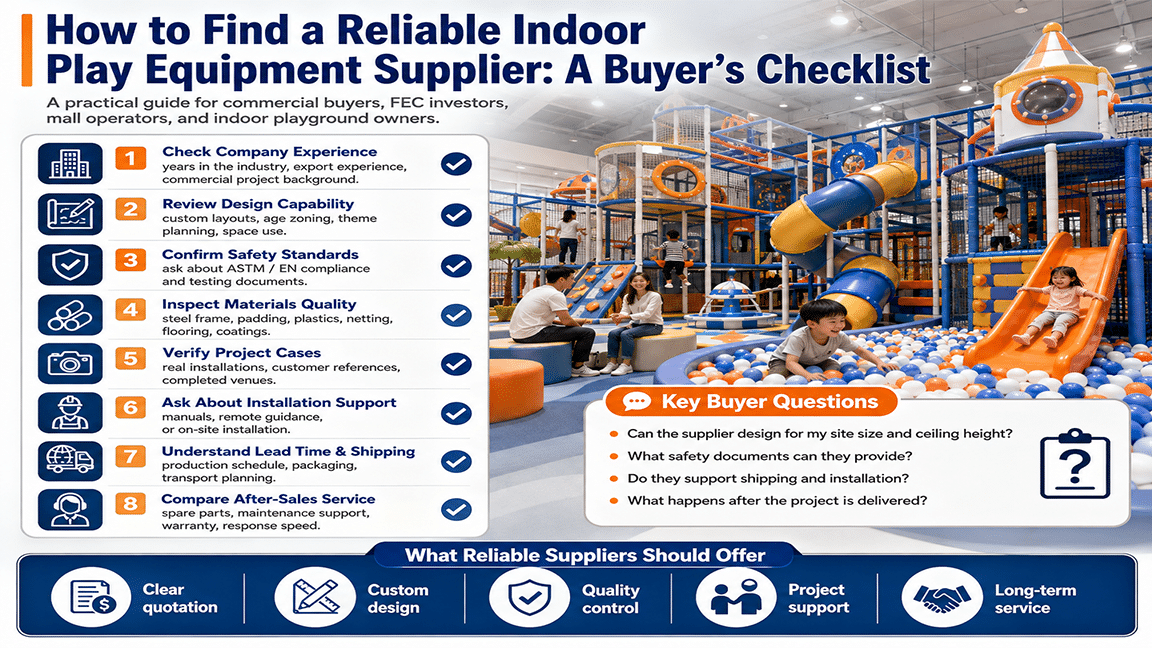
All of your commercial indoor play facilities must comply with ASTM and EN1176 international playground safety standards. For the full site, non-toxic, low-VOC raw materials are mandatory for foam and plastic parts. Also, the full-coverage impact buffer ground shall be paved for anti-fall protection. Evacuation passages must remain unblocked permanently. What’s more, to pass official safety audits, your operators need to establish a regular monthly inspection and maintenance mechanism.
There are several types of indoor play zones. To be more specific, you can apply an indoor entertainment facility if you are in malls. You have to make a detailed plan combining customers and the sites. Thus, you may have sustainable development in the future.
The trend in 2026 tends to be innovative. It includes artificial intelligence to manage passenger flow, using digital data. There gonna be more digital facilities, replacing traditional equipment. What’s more, your indoor play zones tend to be detachable modular playground systems. It combines retail and entertainment to better help you increase interests and customers.

It’s about a commercial business, including a standardized zone and management.
Medium-sized formal venues cost $45-$110 per square meter for full design, construction, and equipment deployment.
Age-separated zoning plus loop pedestrian flow is the most practical playground layout.
Nature-immersive and sci-fi themed projects rank top in the 2026 market popularity.
Reasonably located standardized venues gain steady profits relying on diversified non-ticket revenue.
There are three core factors that determine your indoor play project’s success: compliance with site layout, unified theme design, and complete pre-opening planning. Because these directly influence your long-term profits and sustainable development. More notably, if you can make your facilities more reasonable in Commercial Indoor Playground design, it can effectively avoid preventable risks of injuries. To sum up, maintaining your business really needs your efforts put into every detail.
Thank you very much for your inquiry! Your trust is our greatest motivation. We are committed to offering playgrounds that combine high quality with affordable pricing. Let us bring vitality to your venue!