23 October 2026
23 October 2026
22 October 2026
22 October 2026
22 October 2026
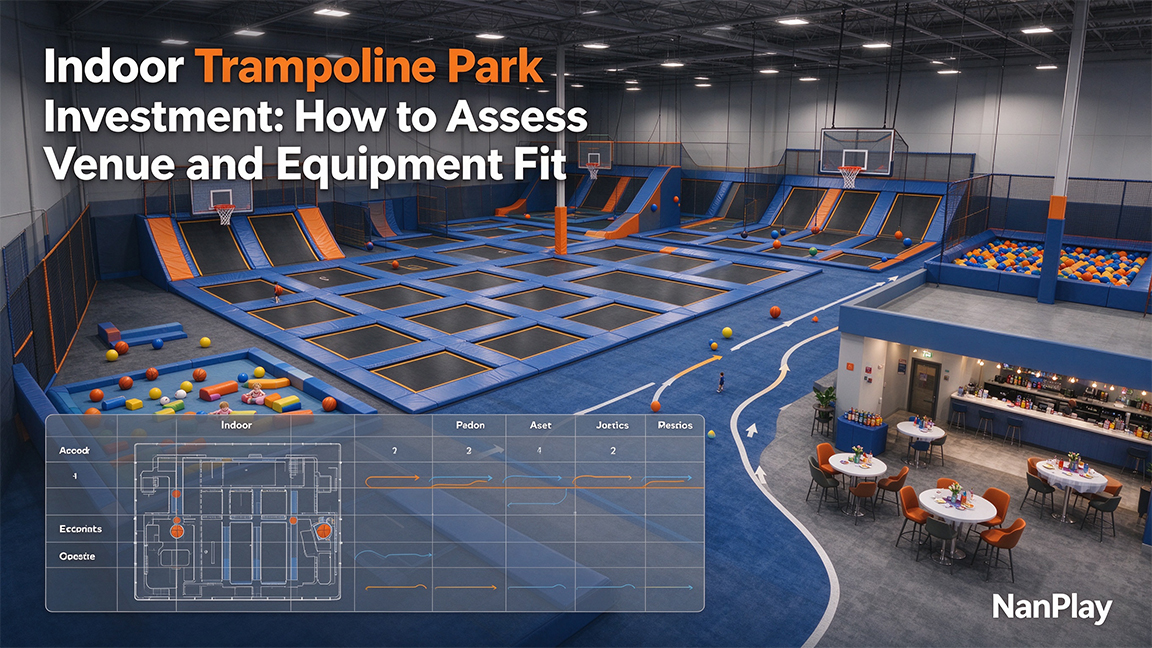
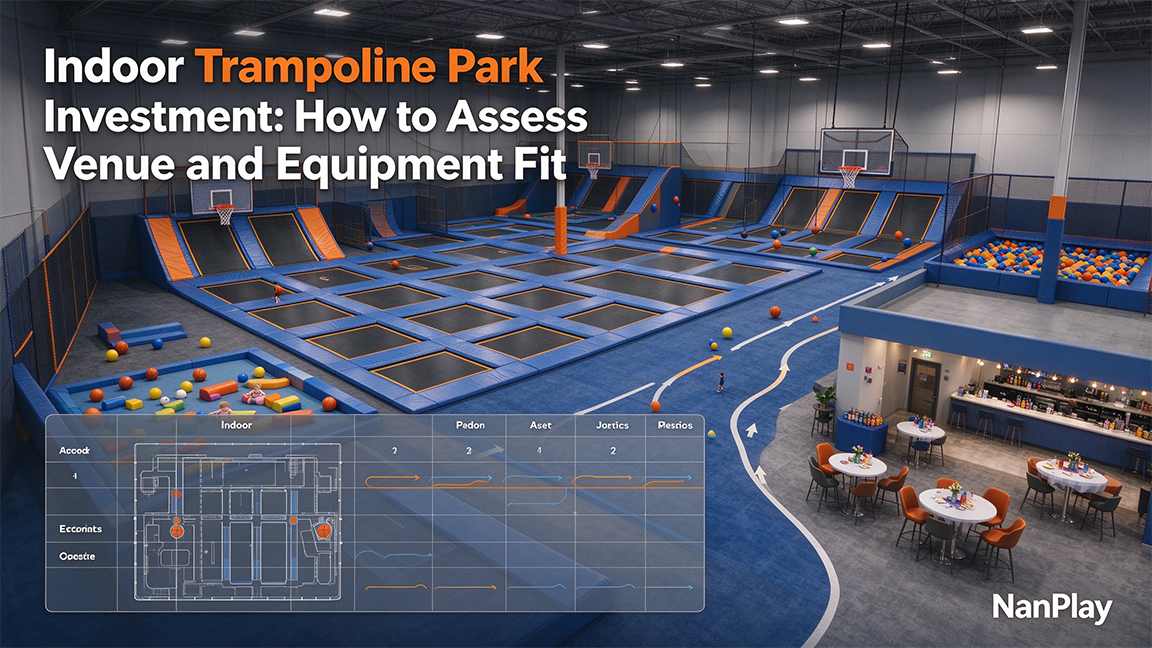
When investing in an indoor trampoline park, the key point is not about purchasing the equipment, but about how to match the venue with the business plan. A high-quality trampoline park located improperly will quickly suffer losses, while a normal trampoline park with a suitable location can operate well. This guide will help you assess the two key factors that determine success or failure – the venue and the trampoline equipment – before signing the lease contract or placing an order.
First, inspect the venue, then inspect the equipment. Look for available ground area, sufficient clear height, convenient access routes, and a place that suits the actual target audience. Then, match the trampoline park equipment based on the venue space and budget. If you skip the venue inspection, you might end up with unsuitable equipment, or even worse, the building itself cannot accommodate the equipment. Separate these two decisions for consideration, and you can make a more informed choice.

Yes, it is viable for investors who focus on fundamentals, but not for those who blindly follow the trend and buy randomly. A well-positioned indoor trampoline park usually generates stable cash flow and can recover its costs within 2 to 4 years. However, the industry has high fixed costs – such as rent, wages, and insurance – which are incurred regardless of whether the venue is fully occupied or not. The combination of the venue and equipment determines whether these fixed costs can be covered.
| Assessment factor | What to check | Why it matters |
| Floor area | Usable m² after columns and paths | Sets capacity and revenue ceiling |
| Clear height | Height at the lowest beam | Decides multi-level equipment options |
| Access | Loading doors, parking, public transport | Cuts install cost, drives foot traffic |
| Target users | Age range and expected daily visits | Picks the right equipment mix |
| Attraction requirements | Space per attraction + fall zones | Stops the mix from being unbuildable |
Fill in these five boxes honestly, and half of your investment questions will be answered by themselves. The rest all fall under budget management.
The total investment is divided into four parts: site, equipment, transportation, and installation. Most investors tend to underestimate the costs of the first two and the last two items. Here is the detailed breakdown for your reference when planning.
Rent deposit, decoration, flooring, HVAC, bathrooms, and entrance. Usually the most unexpected part of the budget.
The equipment of the trampoline park itself – the venue, the foam pits, the dodgeballs, and the ninja-themed additional attractions. These are the main highlights.
The products are directly packaged at the factory and then delivered to your doorstep. For overseas projects, the scale far exceeds the expectations of most buyers.
On-site construction, safety inspections, and employee training. Budget it as actual work rather than as free additional items.
| Block | Typical range | Notes |
| Venue (fit-out + deposit) | $200k–$400k | Depends on lease and building condition |
| Trampoline Park Equipment | $300k–$700k | Courts, foam pits, dodgeball, ninja |
| Shipping | $20k–$60k | Varies by distance and container |
| Installation + training | $40k–$80k | On-site build and safety setup |
| Total | $560k–$1.24M | Varies widely by size and spec |
When choosing the location, one should focus on the foot traffic and rental situation rather than the appearance. Trampoline parks rely on repeat visits and birthday bookings to maintain their operation, so the location is more important than the ceiling. However, avoid choosing a place that is physically unusable or has obvious height restrictions, no loading/unloading channels, and is full of pillars. If the location is not suitable, don’t force it – the equipment quotation cannot make up for the wrong location choice.
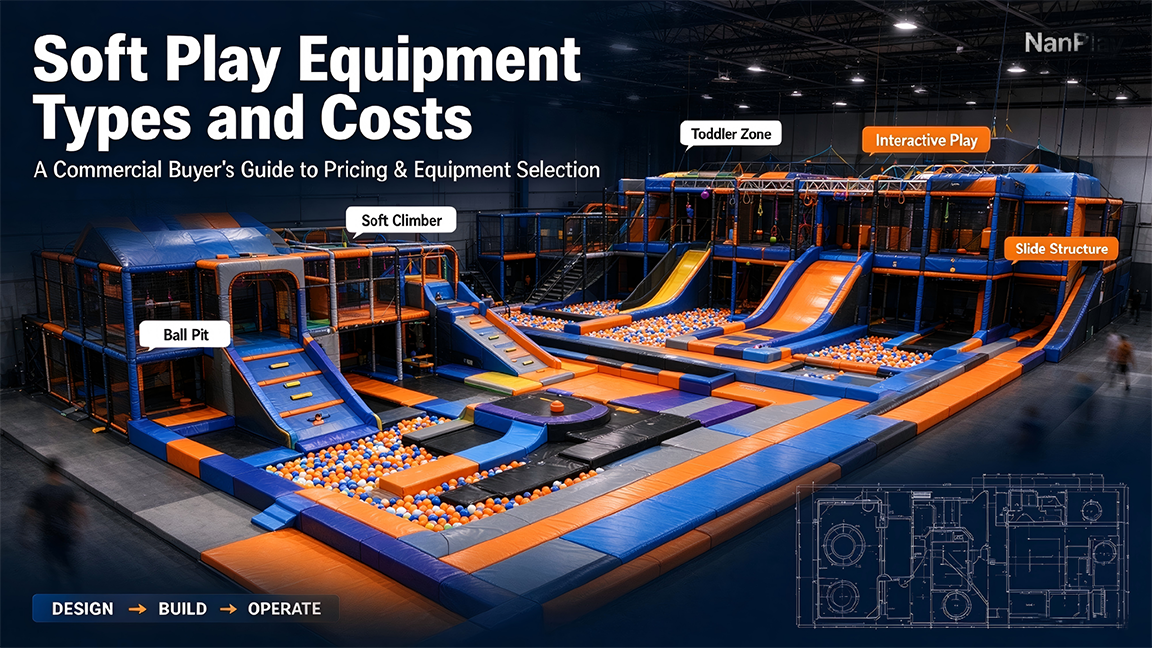
A reasonable combination can meet usage requirements while avoiding increased maintenance burden. Each additional facility not only enhances appeal but also increases maintenance costs. Therefore, please match the corresponding configuration based on the target user group and space layout.

Revenue is generated through three main sources: admission fees, membership fees, and party activities. Catering services are regarded as additional income that boosts profits. The number of attendees should be estimated based on actual foot traffic rather than optimistic projections. Then, calculate the payback period: total investment divided by the annual disposable cash flow. If the model shows that the cost can be recovered within 2 to 4 years, it indicates a good operational situation; if it exceeds this period, it suggests problems with the venue or business combination.
Before conducting a detailed analysis, perform a simple rationality check first: multiply the projected daily attendance by the average ticket price, then multiply by the number of open days per year, and finally add the membership fees and party income. This total amount can immediately tell you whether the rent is affordable. Most bad investments fail at this point – the rent has already eaten up all the income before you pay the salaries of your employees.
For insurance, it is necessary to inquire about prices in advance. It is a fixed, large expense. Salaries are the highest fixed expenditure. Don’t allow staff shortages. Rent and water and electricity fees are fixed expenses. Even if the venue is not fully occupied, they still need to be paid. Maintenance projects such as foam, cushioning layer and spring floor require regular inspections. Safety standards like ASTM F2970, EN71, or local regulations can affect costs and equipment selection.
These matters should be arranged before opening. Don’t make up for them afterwards. For indoor commercial amusement parks that want to make profits, the prerequisite is to meet safety standards and have sufficient staff. Investment in safety cannot be spared. Insurance, compliance, and maintenance generally account for 10% to 15% of the operating budget. When making the budget, it should be included in advance.
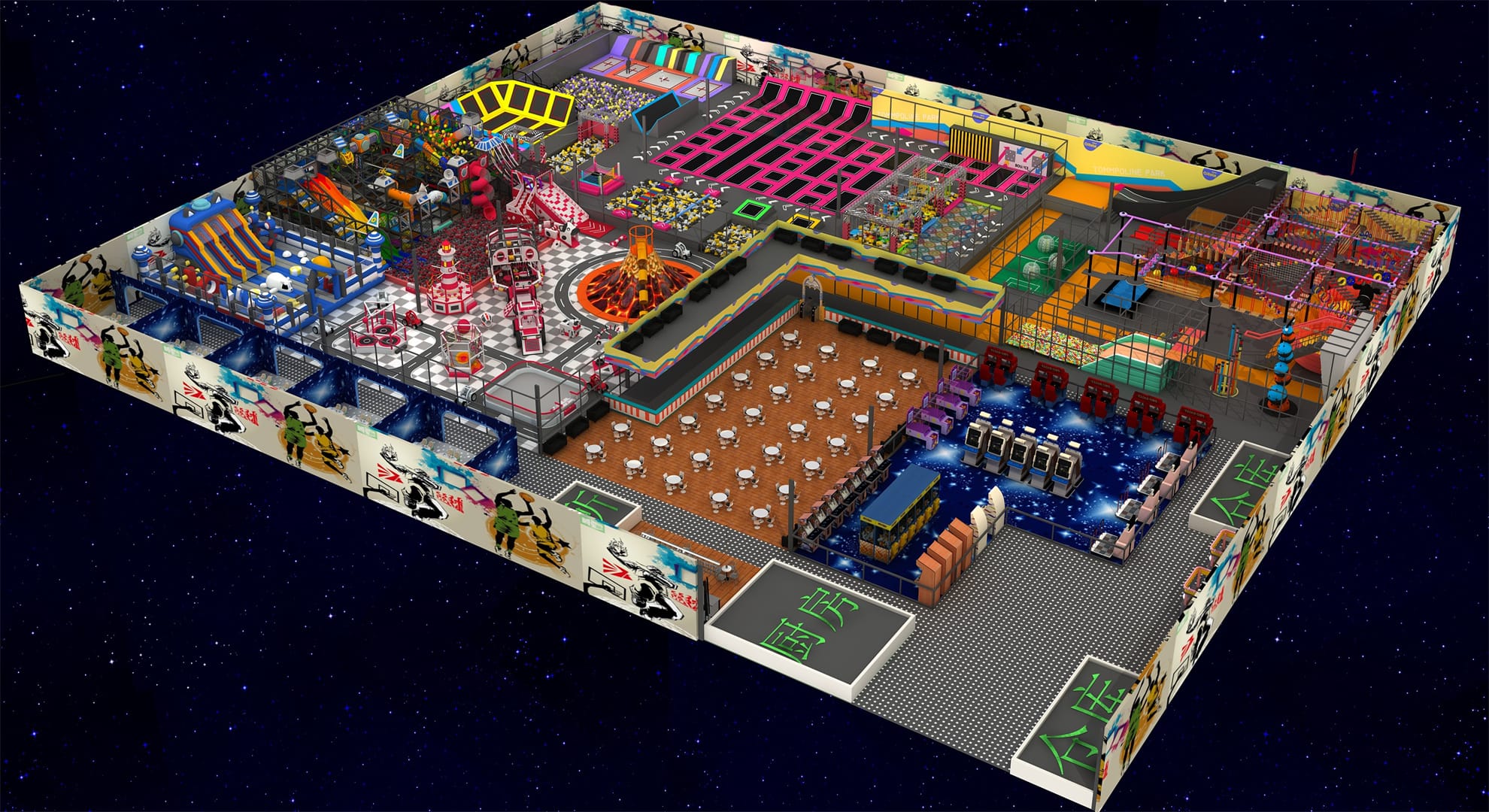
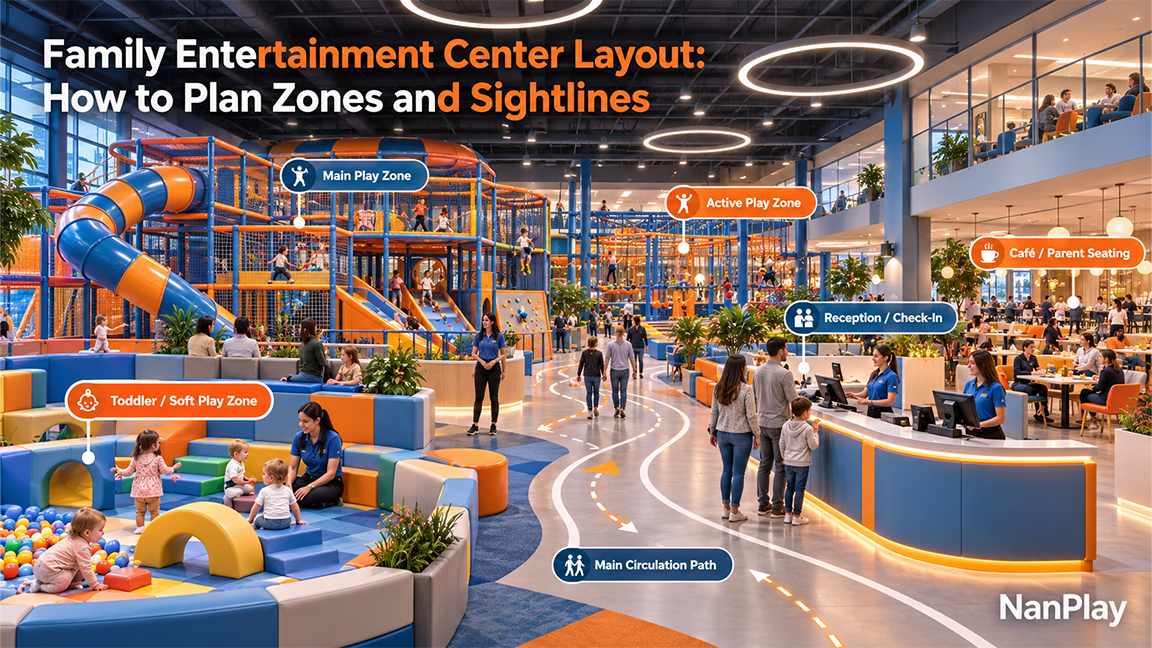
Many investors will add trampoline park areas to large indoor commercial amusement parks instead of building a separate park. This way, the cost of the venue can be spread across more facilities, giving families more reasons to stay. However, space is a consideration: Trampolines require sufficient height and space, so the layout needs to be carefully planned. If designed properly, the trampoline area will become a high-energy center point, attracting people to other areas of the venue.
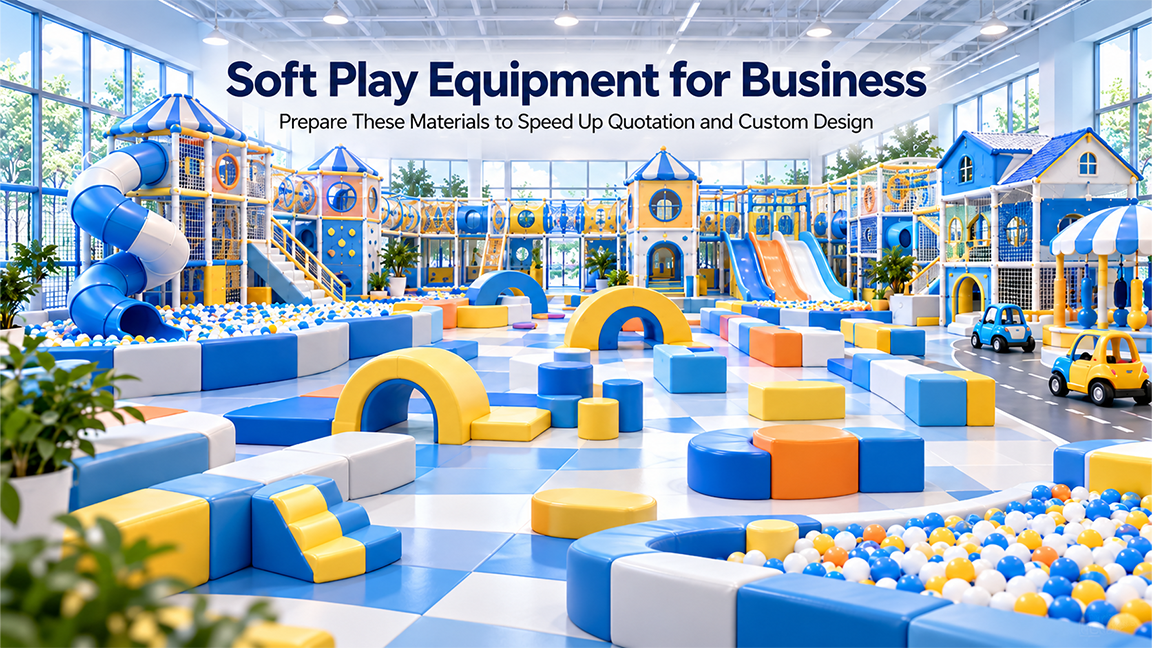
The clearer your requirements are, the faster and more accurate the quotation will be. Before contacting the supplier, please prepare the following information first:
The total investment for a medium-sized park usually ranges from 560,000 to 1.24 million US dollars, covering costs for venue decoration, equipment, transportation and installation. The specific cost will vary depending on the scale and facility configuration.
If the location is chosen appropriately, it is completely feasible – the net operating profit of most health parks can reach 10% to 15%. However, in areas with limited space, the profit is almost zero, so the site selection is crucial.
A feasible park usually requires 1,000 to 1,500 square meters of usable ground area, and the net height should be at least 4 meters. If the area is insufficient, the types of equipment need to be reduced.
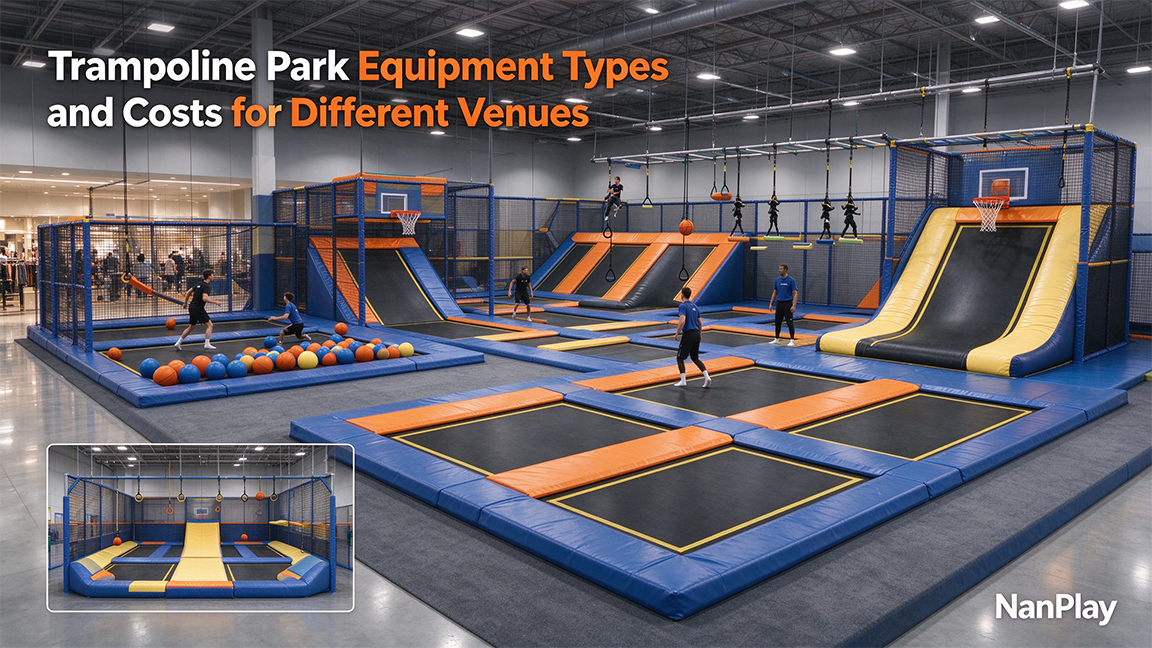
Core equipment includes trampoline areas, foam pits, and safety mats. In addition, dodgeball areas, ninja areas, or children’s areas can be set up according to the target users.
Low net height, dense column arrangements, no loading and unloading channels, and restricted lease conditions, etc., may exclude the use of multi-story structures or large equipment. Before planning the project combination, be sure to check these factors.
When the venue and equipment are well-matched, a trampoline park is a sound investment. Conduct a preliminary paper-based assessment first, and then jointly calculate the costs with a professional who is constantly involved in the construction of such venues. NanPlay offers trampoline park equipment and commercial indoor playground projects worldwide – with over 14 years of experience, we have completed over 1,000 projects in 50+ countries, and our products comply with CE, EN71, EN1176, and ASTM standards. Before you make a commitment, we will help you match the appropriate ground structure with the equipment.

Please send us your floor plan, net height requirements, and budget. NanPlay will review the project scope and provide you with the budget range – completely free of charge, without any commitment required.
Thank you very much for your inquiry! Your trust is our greatest motivation. We are committed to offering playgrounds that combine high quality with affordable pricing. Let us bring vitality to your venue!