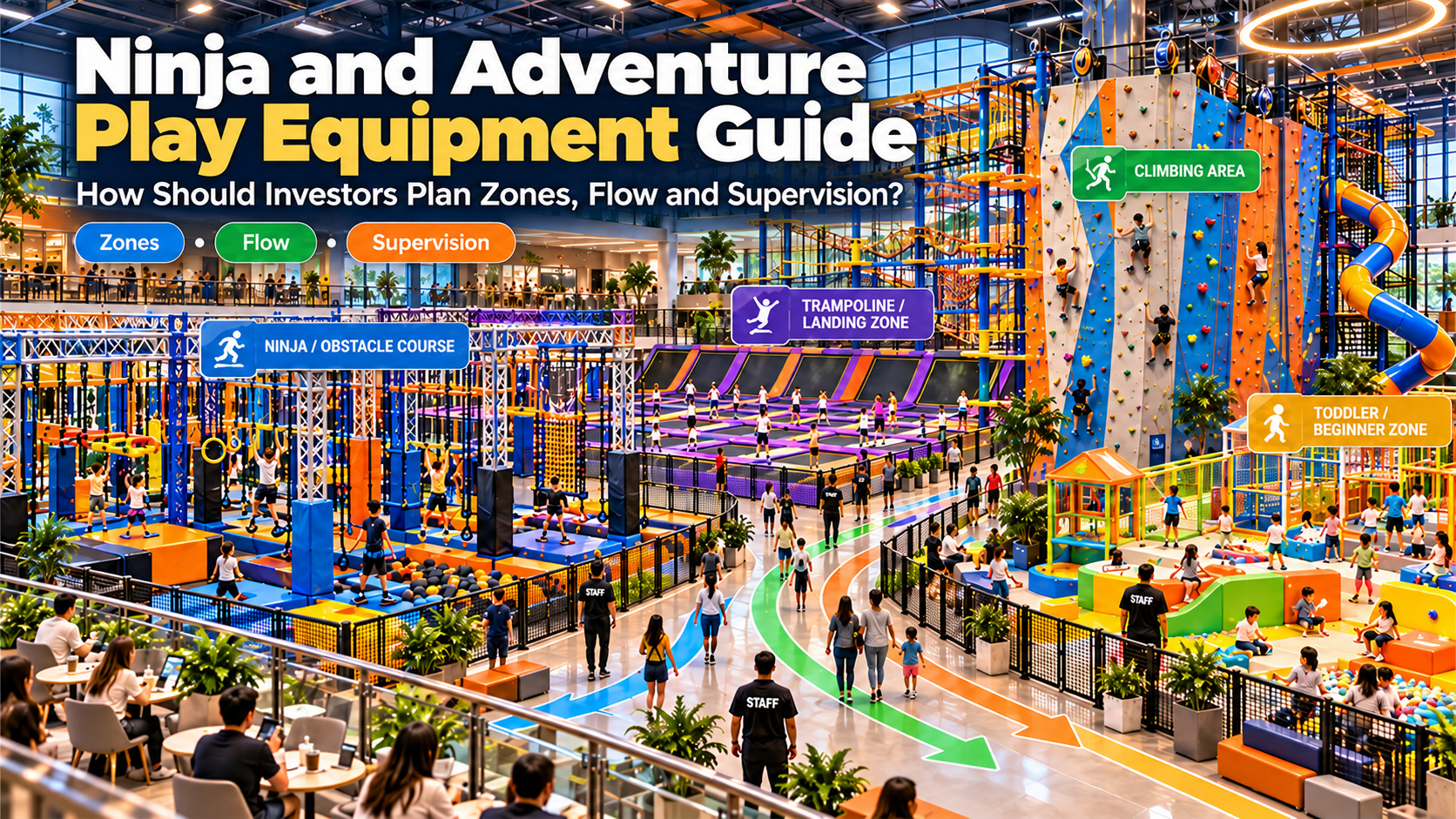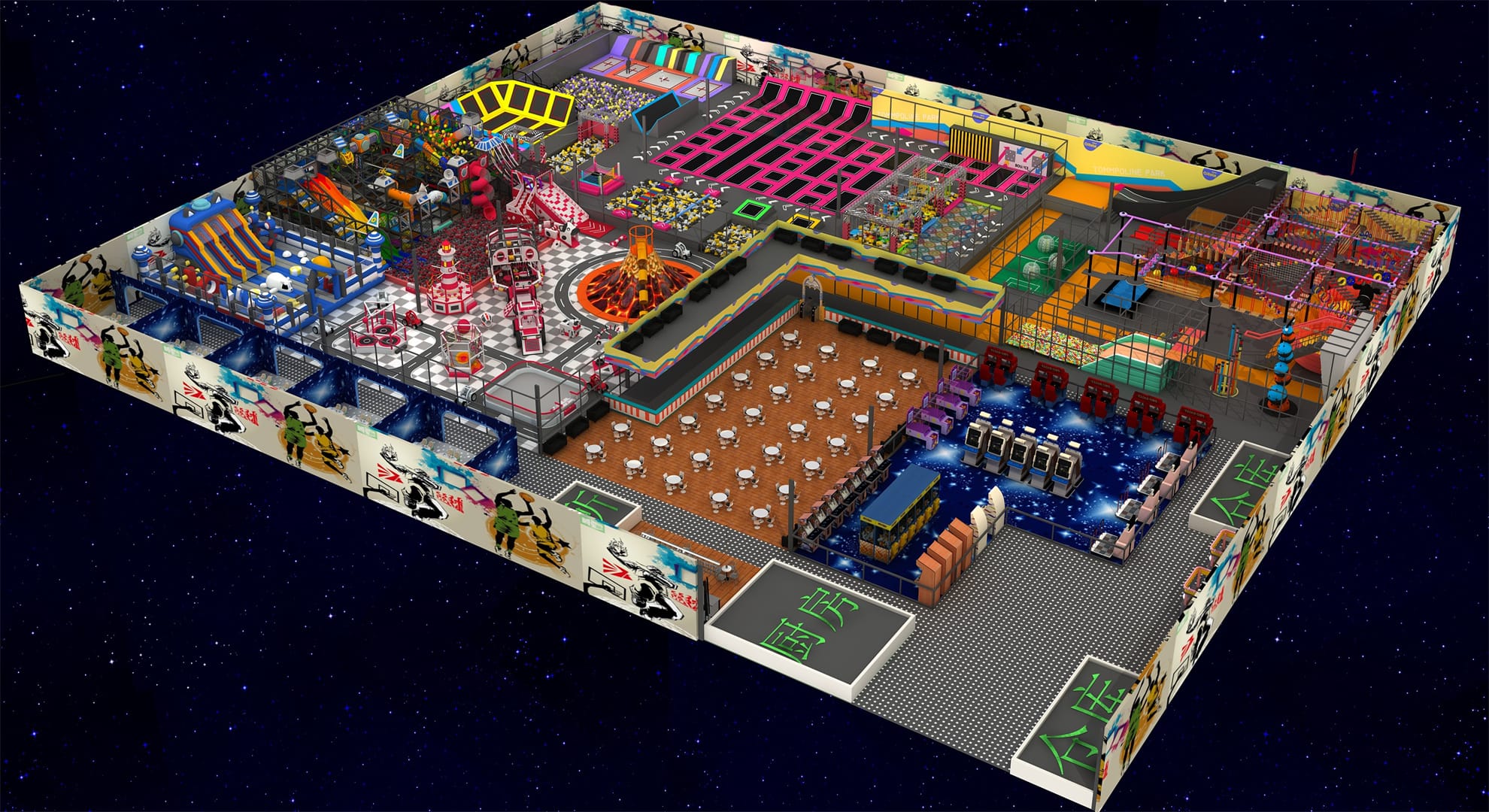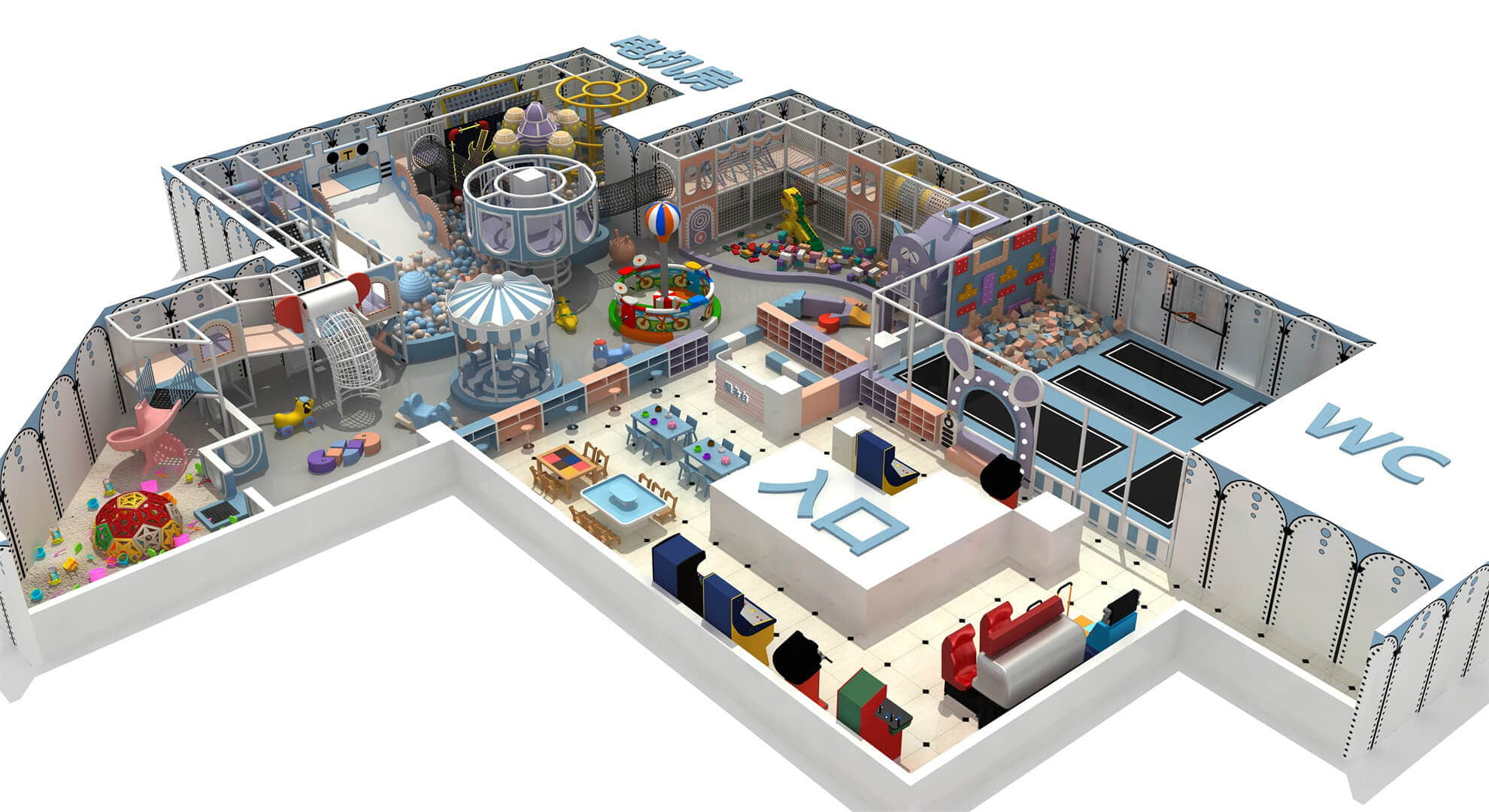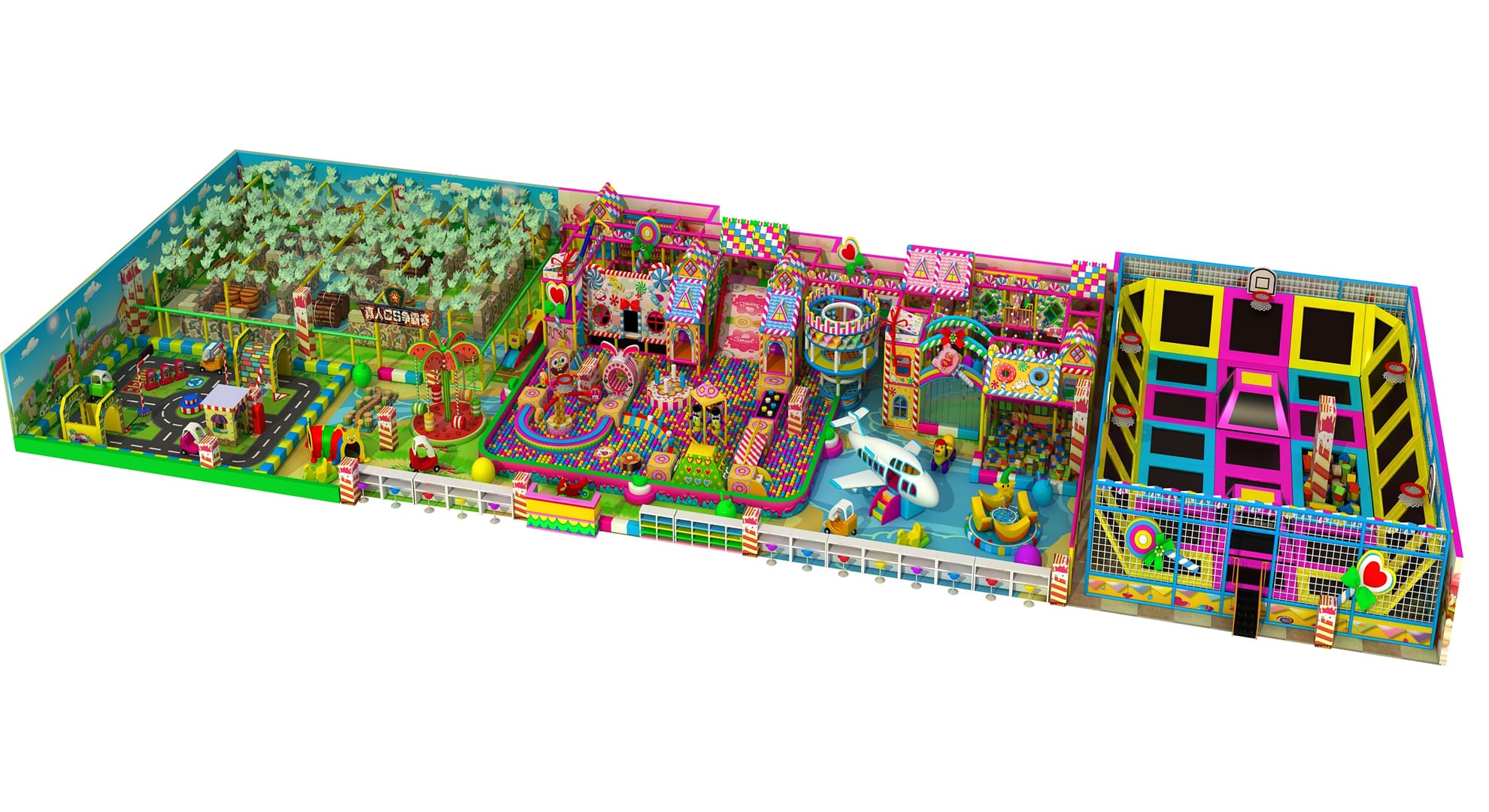
Most people open a trampoline park because it looks fun. Those who stay in business open it because the numbers work. ROI isn’t a number pulled from a supplier quote—it’s a model you build from your own floor area, pricing, and traffic. This guide walks you through: how indoor trampoline parks make money, what it costs to start and run one, and how to estimate when you break even. Keep your own numbers handy—we’ll show you where each one goes.
Short version: After a one- or two-year growth period, a healthy indoor trampoline park typically achieves a net operating profit of around 10-15%, and it usually takes 2 to 4 years to break even. However, these figures assume that the venue is fully occupied, the pricing is correct, and your trampoline park equipment does not eat up your cash during maintenance. Changing any of these factors will cause the answer to swing rapidly. That’s why you should model before construction.
The revenue comes from four sources, but the contributions are not evenly distributed. Most parks mainly rely on ticket sales, and then increase their income by developing memberships and hosting parties, as these are predictable and stable recurring revenue sources. Events and catering are powerful tools for increasing profits – they take up little space but contribute significantly. If you only plan to sell on-site tickets, you will miss out on the lucrative part of the business.
The core of the business. Per-jump or per-hour tickets, priced to fill the floor without emptying your booking system.
Monthly passes smooth out the slow weeks and build a base you can count on. Convert regulars early, and the numbers get stable fast.
Birthday parties are the real margin engine. One party uses the same floor as ten walk-ins but sells far more add-ons.
School events, corporate nights, and the snack bar all add revenue with almost no extra floor space. Thin margin on tickets, thick margin on food.
| Item | Example value | Assumption |
| Revenue — Admission | $420,000 | 75,000 jump hours × $5.60 avg |
| Revenue — Membership | $180,000 | 600 members × $25 / month |
| Revenue — Parties | $160,000 | 12 parties/week × $280 avg |
| Revenue — Events & F&B | $140,000 | corporate nights + food margin |
| Total revenue | $900,000 | |
| Operating cost (rent, payroll, upkeep, insurance, marketing) | $620,000 | Payroll is the largest line |
| Operating profit (EBITDA) | $280,000 | before tax and financing |
| Tax and financing | $60,000 | |
| Cash available for payback | $220,000 | Operating profit minus tax and debt |
| Total startup investment | $880,000 | equipment + building work + working capital |
| Payback period | ≈ 4 years | $880,000 ÷ $220,000 |
Once the business opens, the main long-term expenses are wages, rent, insurance, and indoor trampoline equipment maintenance. Among these, wages are usually the highest expense item – without sufficient manpower, it is impossible to operate the commercial indoor amusement park safely. Maintenance is a hidden cost: foam pads need regular inspections, cushioning materials will wear out, and spring floors also require frequent maintenance. If maintenance is ignored, money can be saved this month, but it will cost more next year.
Return on Investment, or ROI, is quite simple. It is calculated by dividing the profit by the investment. The key point is how the profit is calculated. When preparing a data report, the operating profit before tax and without including financing costs is usually taken as the core data. However, if you want to know how long it will take to recover the investment, you need to look at the actual cash flow that can be used to repay debts, which is the remaining money after deducting taxes and debts from the operating profit. The payback period is calculated by dividing the total investment by this available cash flow. A period of 2 to 4 years is considered ideal. If the period is longer, it basically indicates that there is something wrong with the project.

Four factors move the needle more than anything else. Change one and the whole model shifts.
Foot traffic, household income, and how many competitors sit within 20 minutes. This is the single biggest factor, and the hardest to fix later.
Total jumps per hour and how full you actually run. Payback scales with utilization, not with how big the building is.
Peak versus off-peak, per-hour versus all-day. Small changes here make a big difference across a year.
Trampoline plus ninja, dodgeball, and a foam pit spreads appeal and keeps people on the floor longer.
The equipment is both your biggest expense and the most important source of income. Offering a wider variety of facilities – such as squash courts, foam pits, ninja courses – can extend the stay time, increase the value of the tickets, and boost group bookings. However, each additional facility brings about maintenance costs and space occupation. The ideal situation is to find a balance point where the space capacity can be fully utilized without turning every hour into a nightmare of personnel allocation.
The clearer your briefing is, the faster and more accurate the budget review will be. Before communicating with the supplier, please prepare the following information:
Yes, in the right location – most well-operated trampoline parks can achieve a net operating profit of 10% to 15%. However, in remote or low-traffic locations, the profit is almost zero. Location and usage rate determine how much revenue you can ultimately obtain.
A healthy project typically generates an annual return of about 20% to 30% on the invested capital, meaning the cost is usually recovered within 2 to 4 years. Among these factors, the number of visitors is the most crucial factor affecting the return rate.
A medium-sized park, with an area of approximately 1,000 to 1,500 square meters, usually has an annual gross income ranging from $700,000 to $1.2 million, with a net operating profit generally accounting for 10% to 15% of this amount.
Most owners expect a payback period of 2 to 4 years. If the traffic is high, the payback period will be shortened; if the location is remote or the trampoline park equipment costs increase, the payback period will be extended.
Visitor numbers are the most sensitive variable. A 10% decrease in visitor numbers will shorten the cash flow cycle and delay the time to recover the cost; fixed costs will not change. Before signing any agreement, be sure to simulate and calculate the break-even number of visitors.
The initial costs are often the most significant factor in budgetary impact. Equipment is the main expense, but the construction work surrounding it is usually larger than what people expect. Please calculate these two separately in your mind and in the spreadsheet.
| Item | Typical range | Notes |
| Trampoline Park Equipment | $300k–$700k | Courts, foam pits, dodgeball, ninja add-ons |
| Leasehold improvements | $150k–$350k | Flooring, HVAC, bathrooms, entrance |
| Safety matting & padding | $40k–$80k | Required for ASTM F2970 |
| Design & engineering | $20k–$50k | 2D layout + 3D rendering |
| Permits & insurance deposit | $15k–$40k | Varies by city |
| Working capital | $50k–$100k | Covers the first 3–6 months |

A trampoline park is a business with stable cash flow – as long as the business model is correct. Before investing funds, do some preliminary calculations on paper and work with those who are constantly building such facilities. NanPlay provides trampoline park equipment and commercial indoor playground projects worldwide, with over 14 years of experience. We have completed over 1,000 projects in 50+ countries, and our products comply with CE, EN71, EN1176, and ASTM standards. We will assist you in assessing the site requirements before you make a decision.
Please send us your room dimensions, target location, and budget. NanPlay will review the project scope and provide you with the budget range – it’s completely free, and there’s no need for any commitment.
Thank you very much for your inquiry! Your trust is our greatest motivation. We are committed to offering playgrounds that combine high quality with affordable pricing. Let us bring vitality to your venue!