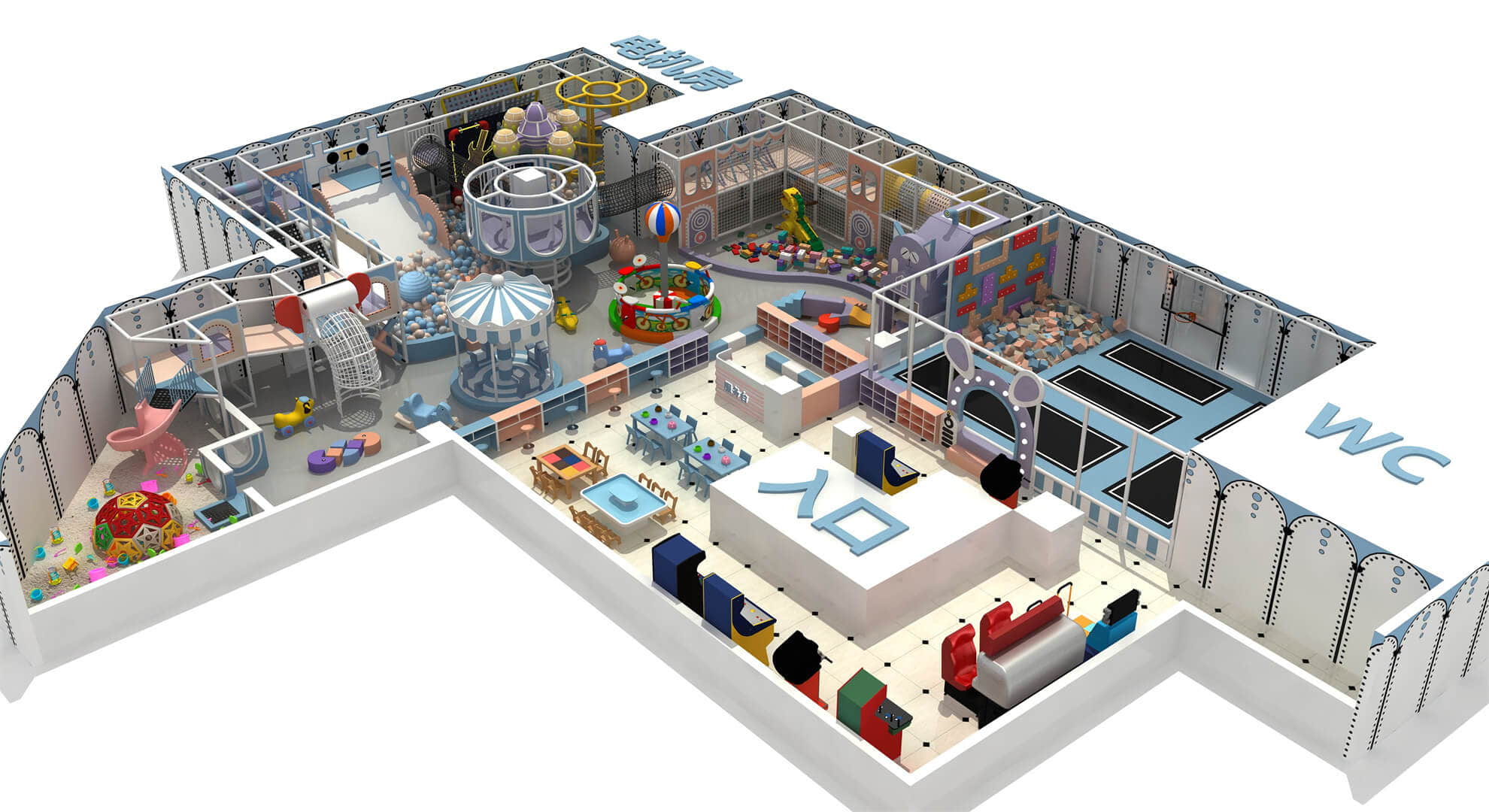
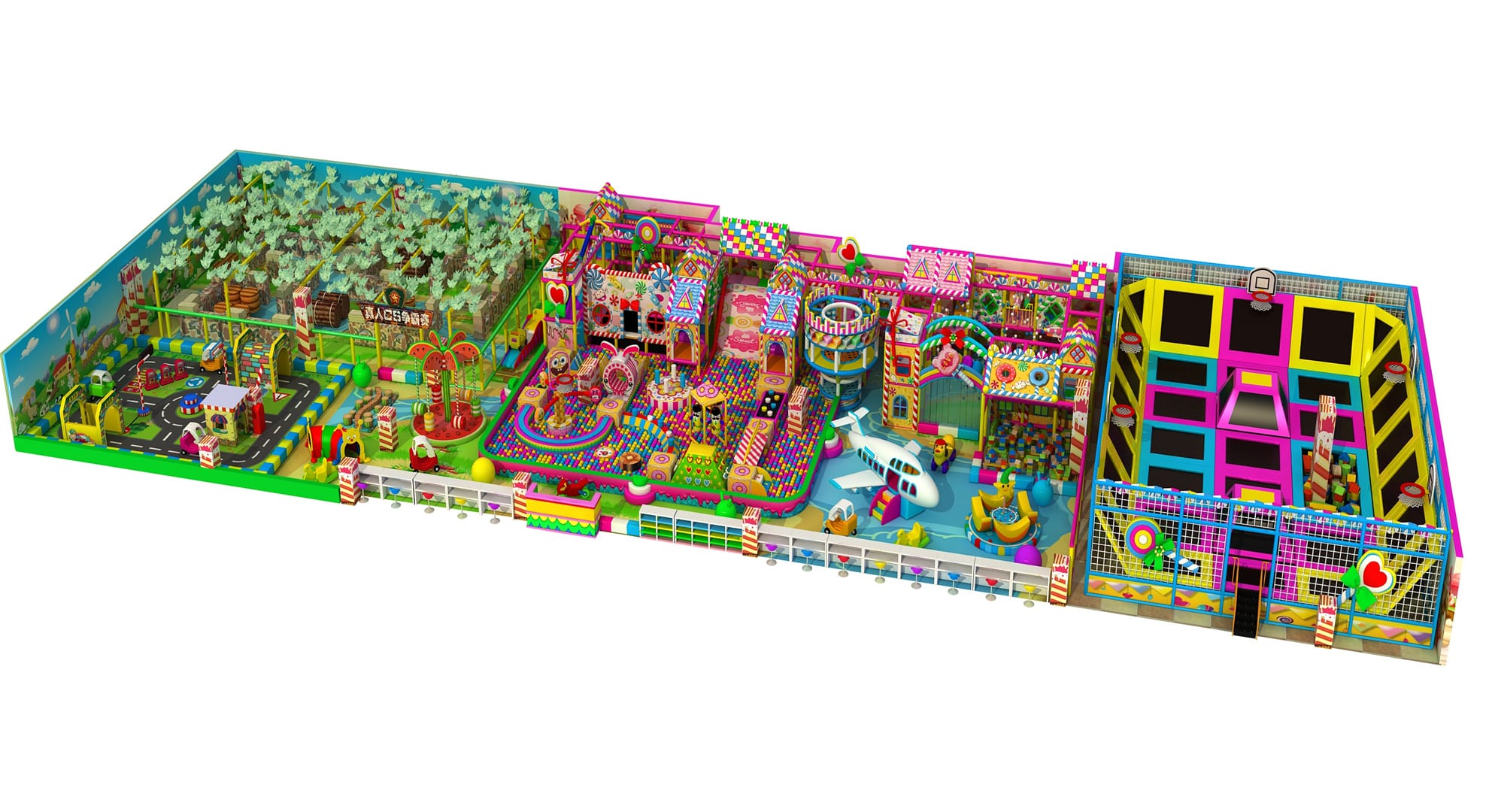
If you want to open an indoor playground, the first question you might meet is: how much do these play equipment need? But the fact is, equipment price is not the same as your project total cost. A lot of new buyers only look at the price of the play equipment, but forget other costs, for example design, shipping, installation, labor. This blog will give you a simple and clear breakdown of indoor playground cost, to help you make your budget in a right way.
If you lack a deep understanding, you might run into some problems like not having enough money, or buying unsafe equipment. Therefore, you need to understand the whole cost structure of a commercial indoor playground in advance, this will help you make more wiser choices.
Equipment price equals total project cost — that is one of the biggest misunderstandings for many people.In fact, the equipment cost usually only take half to two-thirds of the total cost of building an indoor playground.Building an indoor playground also need other costs for shipping, installation, labor, and so on.
Different places have different price. This mainly depends on the safety standard that your location follow, where the equipment is made, the shipping distance, and the plan you choose.
Next, let us look at the average cost for different sizes of playgrounds. These numbers can give you a better former choice.
Cost Range for Small Playground (for starting a business / daycare use): 5,000 to 20,000 dollars.
Cost Range for Medium Commercial Playground (for family entertainment center / mall use): 20,000 to 80,000 dollars.
Investment Cost for Large Indoor Playground (for theme park / entertainment center): 80,000 to over 300,000 dollars.
Now, let us break down each cost one by one. This is the core for you to understand the cost of building an indoor playground.
This will take up a big part. It include a lot ,like the play structures, different play modules, and themed play systems.
If you want a playground that is different from the others, you need to pay for private design. Theme development, space planning, and other stuff — all these are part of this cost.
To turn your idea into reality, you need to hire some workers to install your equipment.So this cost cover things like putting everything together on site, managing the whole project, and checking for safety before you open the doors for business.
If you buy equipment from another country, then you need to pay for international freight. You also need to pay for packaging and shipping protection, so the equipment do not get damaged during transport. Also, when the equipment arrive, you have to pay for customs duties and taxes.
There are always extra expenses that do not show up on the equipment price list, and they can add up faster than you expect.Choose Nanplay, and you will enjoy transparent pricing with no hidden fees at all.
Soft parts like foam and fabric is easy to wear out. Few years later, you need to pay money to fix them or replace them — this is how you make sure the playground still operate for business.It’s a normal cost of running a playground.
Nothing last forever. After running for a while, some parts need to be fully replaced. So,planning for this early can make your playground more safe and lower a lot of risk.
When you operate, your insurance company will ask you about your equipment. If your playground did not pass safety standard certification, then your insurance cost will be much higher. However,good equipment can lower your insurance cost.
When you have to close because of repair work, you will lose some income.If you are closed for one day, that day you make no money at all. Downtime cost a lot for an indoor playground, so you better pick the right time to do repairs.
Not every indoor playground have the same cost. What size and what type you pick — that change everything
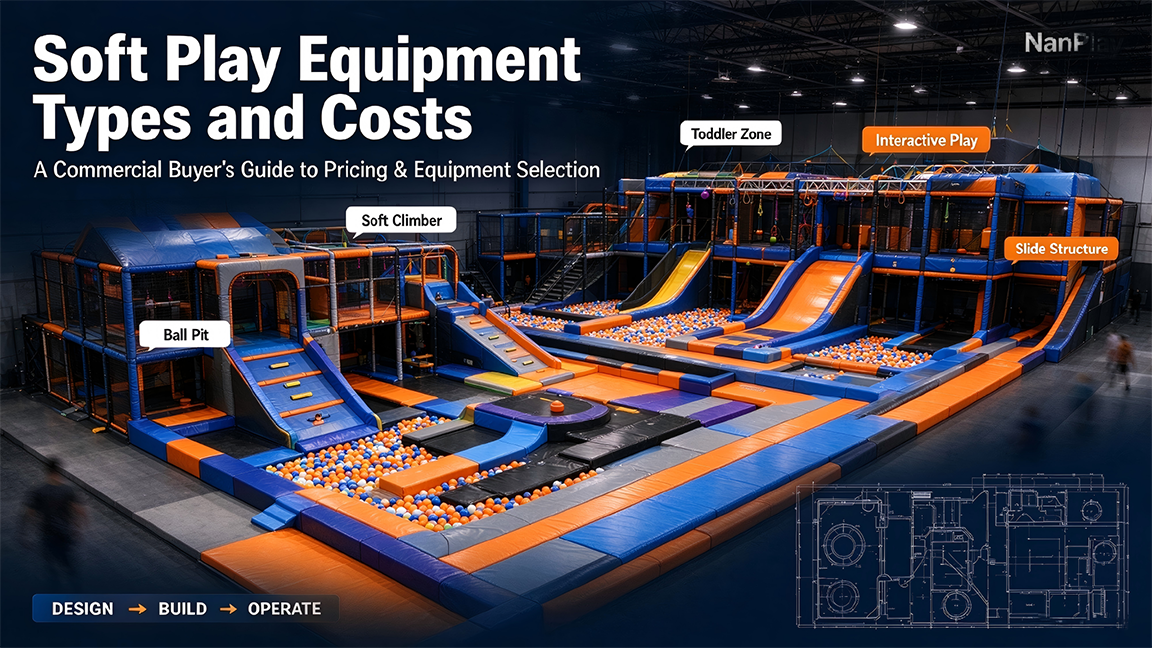
If you choose soft play, it use foam and fabric, and that kind cost less. But adventure play systems include climbing walls, ropes, and parts that move, and because they are more complex, they cost a lot more.
Trampoline parks are always more expensive because they need special engineering, strong frames, and a lot of safety padding. Themed indoor playgrounds are medium to high in cost — the theme itself add to both design and manufacturing cost.
If you go with custom systems, they are made just for your space. These cost the most money, but nobody else will have the same thing. Modular systems come ready-made, so they are cheaper and faster to install.
Franchise models give you a brand name, training, and equipment, but you have to pay more money at the beginning. Independent investments let you choose your own supplier.So You have more control, and you can save more money.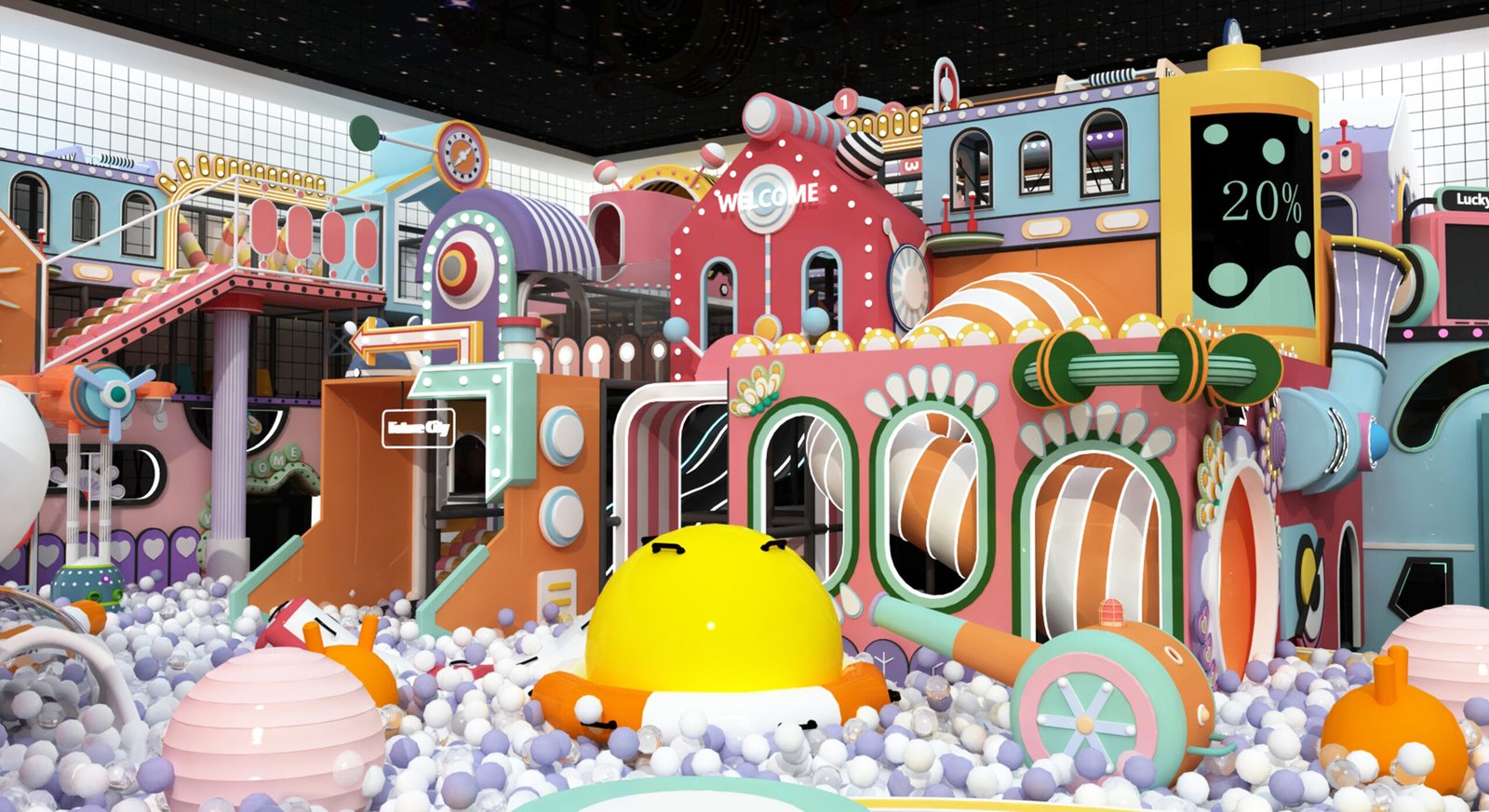
The materials you choose directly affect your playground cost. You might be tempted to save money upfront. Cheap materials cost less now but cost more later,maybe that approach would suit you.
Good steel is thick and shielded with a rust-resistant coating—while cheap steel is prone to bending, rusting, or snapping, making it not only dangerous but far more expensive to fix in the long run.
High-density foam keeps its shape for years, while low-density foam goes flat quickly — and once it flattens, it no longer protects children well and looks bad to parents.
High-quality plastic holds up under sunlight without cracking, but cheap plastic quickly becomes brittle and shatters, creating sharp edges that can cause injury.
Most commercial insurance policies require fire-resistant materials, but low-cost alternatives often fail to meet safety standards — and that can land you in trouble with local inspectors.
Your indoor playground is a business,so the most important thing is understanding your return on investment.
A well-designed indoor playground can earn $500 to $1,500 per square meter each year. Most of this money comes from entry fees, birthday parties, snack sales, and memberships.
Maybe you’re wondering — how long until you earn back your investment? A small playground might break even in six to twelve months, a medium one takes twelve to twenty-four months, and a large playground can take two to three years.
One thing you must know is that parents notice everything. If they see worn foam, dirty mats, or broken parts, they won’t come back. Obviously, high-quality equipment keeps families returning again and again.
Cheap equipment breaks often and looks bad faster. It will hurt your reputation. Meanwhile, over five years, premium equipment actually costs you less in total, since you save on repairs and avoid losing customers.
Let’s compare these three options in simple terms — cheap, mid-range, and premium — and see how they stack up against each other.
This is the most important number. Cheap equipment has the highest total cost of ownership because you pay so much for repairs, downtime, and replacements. Premium equipment gives you the best long-term value.
You can save money the right way without cutting corners on safety — just be smart.
Modular systems are pre-designed. So they cost less than fully custom designs and are faster to install. This way will save you money on both equipment and installation.
Plan your layout carefully. A good design need to use every corner wisely. This can reduce the amount of equipment you need and lower your total cost.
Skip the middlemen. When you work directly with a factory, you get better prices. Agents and distributors add their own fees.
Customization is expensive. Standardized equipment costs twenty to forty percent less. Ask yourself if you really need full customization or if a standard design would work just as well.
Not all suppliers are good. Watch out for them. Here’s how to find one you can trust. When in doubt, go withNanplay — your dependable partner for safe, high-quality indoor playground solutions.
Always make sure the supplier has valid safety certifications like ASTM or EN1176. If they can’t show you the certificates, don’t buy from them — no exceptions.
Ask yourself: does the supplier help with installation? Do they send engineers to your site? A good supplier supports you from start to finish. Anyone else isn’t worth your time.
Don’t just take their word for it — ask for examples of past projects. Have they built playgrounds in other countries? Real experience matters, not promises.
Here’s what a good supplier gives you: a warranty of at least one to three years, plus spare parts and repair support. Cheap suppliers? They take your money and vanish.
Here is honest advice from people who have been in this business for a long time.
The lowest price is tempting, but it is rarely the best deal. Low price usually means low quality, low safety, and high maintenance. You will pay more in the long run.
Do not focus on just one thing. Good equipment is safe, lasts a long time, and gives you a good return on investment. Finding the right balance is the key to success.
First, know your total budget including equipment, shipping, installation, and flooring. Second, know the safety standards required by your insurance company. Third, decide how many years you want the playground to last. Fourth, check the supplier’s warranty and support before signing anything.
Opening an indoor playground requires a complete budget that includes not only equipment costs but also design, installation, shipping, and hidden ongoing expenses.
Choosing certified mid-range or premium equipment ensures safety, durability, and better long-term profitability, whereas cheap options lead to high maintenance and compliance risks.
Using modular or standardized designs and working directly with manufacturers can effectively lower costs without sacrificing safety. Partnering with reliable suppliers is essential to achieve stable returns and sustainable operation.
For all your indoor playground needs, Nanplay stands out as your ideal trustworthy manufacturer partner, delivering certified quality, transparent pricing and one-stop professional support for your long-term business success.
Thank you very much for your inquiry! Your trust is our greatest motivation. We are committed to offering playgrounds that combine high quality with affordable pricing. Let us bring vitality to your venue!