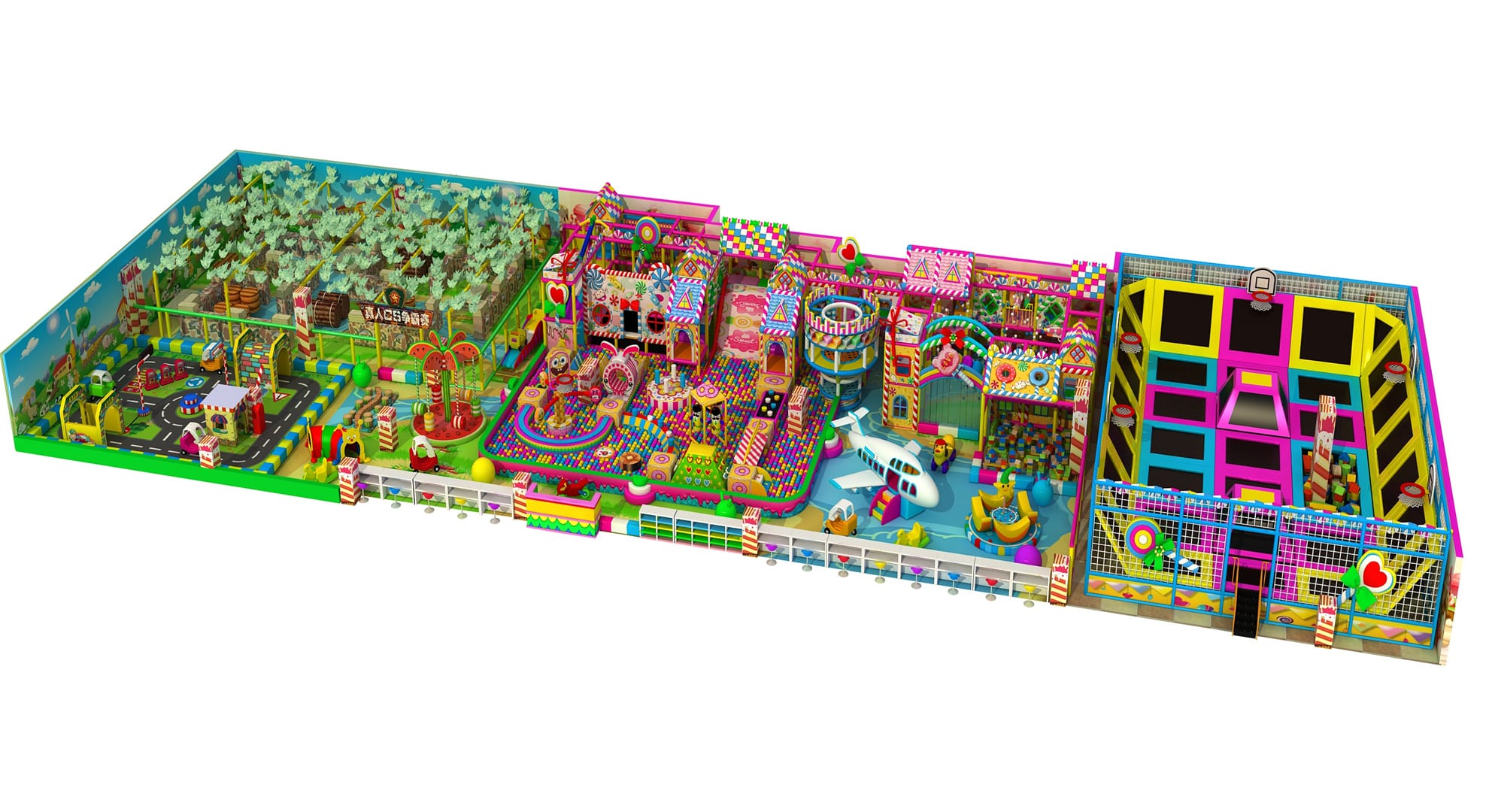
The Infant/Toddler area should be reasonably distinguished from the activity area for older children. Low-height Soft Play, soft ground, and simple exploration elements are more suitable for this age stage.
Preschool children can use more abundant Soft Play, Low Slides, Soft Climbing, and Interactive Blocks. These devices can provide more opportunities for physical activity and exploration, while avoiding structures that are too high or too complicated.
Supervision is an important factor in Daycare design. Staff should be able to observe multiple activity areas from the main location, so the height of the equipment and the spatial layout need to consider Sightlines.
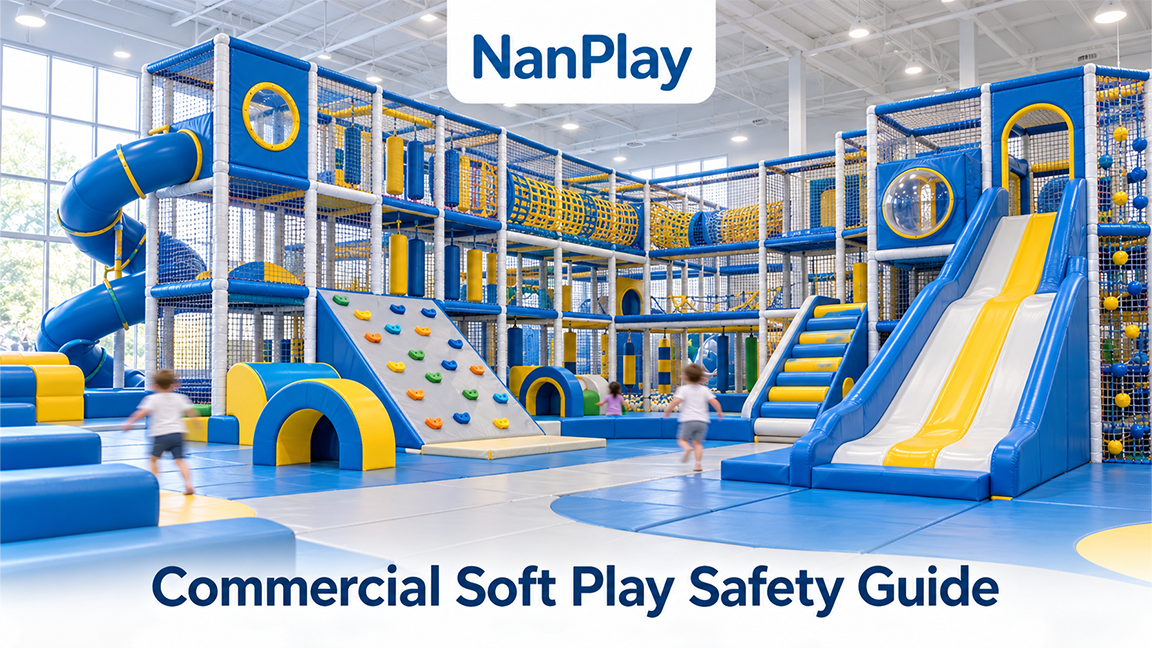
Soft Play is a more suitable basic device for Daycare. The soft structure can provide climbing, drilling, and exploration activities, while facilitating zoning according to age.
Low Slides can provide a simple sliding experience and are more suitable for activities for young children than large Indoor Slides.
Sensory Play can enrich children’s exploration experience with different textures, colors, shapes, and interactive elements, and is also suitable for settings in relatively quiet areas.
Soft Climbing can increase physical activity and coordination training. For Daycare, priority should be given to low-height designs with sufficient soft padding protection.
Interactive blocks allow children to build, combine, and play creative games. The modular design also makes it convenient for staff to adjust the gameplay according to different ages.
Sightlines should run through the whole design. Avoid using too high or too closed structures to block the view of the staff, so that the staff can observe children’s activities in time.
The entrance should be kept clear and easy to manage. Through clear Entry Control, it can help staff control children’s entry and exit and reduce unauthorized entry.
Daycare should not design all areas with high activity intensity. Setting up a Quiet/Sensory Zone can provide independent space for children who need quiet activities.
If the venue allows parents to enter at the same time, it should be ensured that Parent/Staff Access is clear and conflicts between the main passage and children’s high-frequency activity areas should be avoided.

Soft and durable surface materials should be given priority in the activity areas of young children. Soft Surfaces can reduce the risk of collisions in daily activities.
Daycare generates high cleaning needs every day, so Easy-Clean Covers are very important. The material should be easy to wipe and carry out daily maintenance.
Rounded Edges should be used as much as possible to avoid children touching sharp corners during activities.
Choosing a device with Replaceable Parts can simplify long-term maintenance. When local components are worn out, they can be replaced separately without replacing the entire equipment.
Different countries and regions may apply different Safety Standards. Before purchasing, the final installation market of the equipment should be clarified, and the corresponding documents should be requested from the supplier.
The use scenarios of Daycare, Preschool, School, and other facilities are different, so the actual use of the equipment should be clarified when purchasing.
In addition to the standards of the equipment itself, it is also necessary to confirm the local Childcare Requirements, Building Requirements, and site-related regulations.
For specific projects, it is not recommended to rely only on the indoor soft play supplier’s general certification statement, but to confirm the documents corresponding to the equipment and installation market you purchase.
First, clarify the age range of children, such as Infant/Toddler or Preschool, and then determine the height of the equipment and how to play.
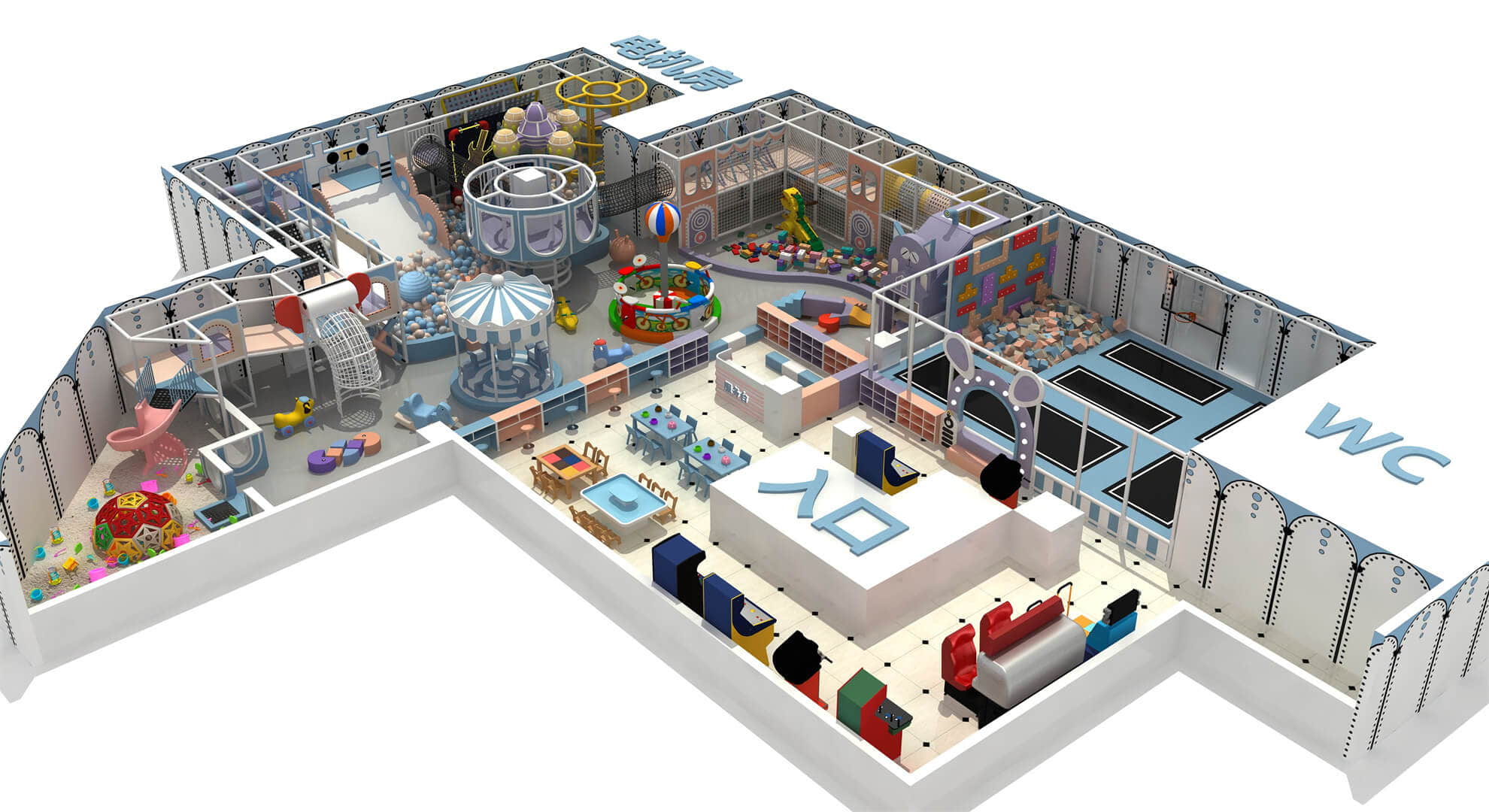
Provide accurate Area, plane size, and entrance location, which is convenient for suppliers to plan the equipment layout.
Confirm the Ceiling Height and the installation height allowed by the equipment to avoid space mismatches at a later stage.
Ask about the materials, cleaning methods, and daily maintenance requirements before purchasing, and give priority to the design of easy-to-clean surfaces.
Confirm the support for the warranty period, Warranty Scope, and Spare Parts, and especially understand the maintenance method after long-term use.
If you are looking for a Daycare / Preschool Soft Play Solution, you can ask NanPlay to customize it according to the child’s age, site area, and functional needs. Its product range includes Toddler Soft Play and other play plans for young children, and provides Custom Design services.

It mainly depends on the age of the children actually received by the daycare. For young children, Soft Play, Low Slides, and Sensory Play should be preferred instead of high-intensity devices.
There is no unified minimum area, because the equipment combination and age zoning will affect the space demand. It’s better to provide an accurate Floor Plan first, and then let the supplier make the layout.
Regular cleaning should be carried out according to the indoor playground equipment materials and supplier requirements, and Easy-Clean Covers and easy-to-maintain structures should be preferred.
It is recommended to focus on soft surfaces, durable covering materials, Rounded Edges, and replaceable components, and confirm that the materials meet the relevant requirements of the market where the project is located.
Yes. Soft Play can be customized according to the age range, venue size, color, and educational theme of the school or Daycare.
If you are planning a Daycare or Preschool Playground, it is recommended to prepare the age range, floor area, ceiling height, cleaning requirements, and local requirements first. Choosing commercial Indoor Playground Equipment for Daycare based on this information can better balance children’s activities, staff supervision, and long-term maintenance.
Thank you very much for your inquiry! Your trust is our greatest motivation. We are committed to offering playgrounds that combine high quality with affordable pricing. Let us bring vitality to your venue!